Skip to content
Welcome, thoughtbot's Giant Robots listeners!Start here
Data Centres: Boom and Backlash
28JUN

Transformer waits stretch to four years

3 min read
12:23UTC

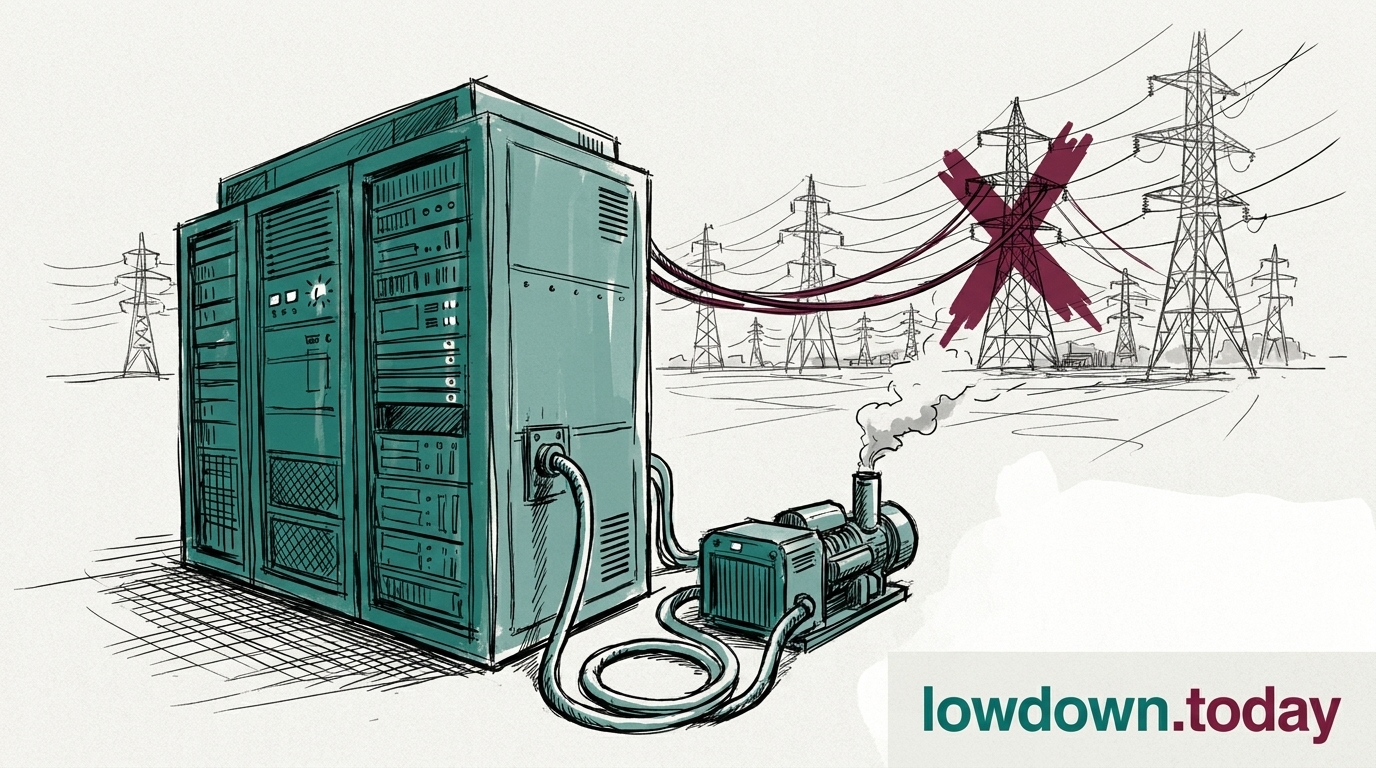
US transformer lead times reached three to four years by May, and only about 5 GW of the 12 GW of data-centre capacity announced for 2026 is under construction. The rest is delayed or cancelled because the hardware cannot be built fast enough.

IndustryDeveloping
Key takeaway

A three-to-four-year wait for transformers has stalled about half the 2026 US data-centre pipeline.

US large-power transformer lead times reached 36 to 48 months, three to four years, as of May, PV Magazine reported, up from a 128-week wait recorded only two months earlier⁠1. Of the 12 GW of new US data-centre capacity announced for 2026, only about 5 GW is under active construction; the rest is delayed or cancelled on supply-chain grounds, not planning refusals.

Hardware no zoning vote can release has stalled roughly half the 2026 US pipeline. Large power transformers are bespoke builds, and the bottleneck sits in two inputs, grain-oriented electrical steel and high-voltage bushings, rather than in assembly capacity. That is what sets the multi-year clock, and it is why a fully consented, construction-ready site can still sit idle waiting to energise.

The binding constraint has rotated in under two years: capital in 2024, community consent in early 2026, and physical hardware now, each shift arriving faster than regulators can respond. Demand is migrating toward markets with existing transformer stock or captive generation, and a grey market in refurbished units is forming as buyers chase anything that ships sooner.


Deep Analysis

In plain English

A large power transformer is the piece of equipment that connects a new electricity user, like a data centre, to the grid. Transformers step electricity up or down to the right voltage for transmission or use. They are custom-built, and building one takes about a year to 18 months after the order is placed. Data-centre construction has accelerated so quickly in 2025-2026 that US transformer manufacturers cannot keep up. The wait time for a large transformer has grown from about two and a half years to three or four years. This means that of the 12 GW (gigawatts) of data-centre capacity that companies announced they would build in 2026, only about 5 GW is actually under construction. The other 7 GW is waiting for hardware. This is different from the planning fight that attracts public attention: it is a factory bottleneck, not a protest or a government refusal, that is slowing down roughly half the 2026 US data-centre pipeline.

Deep Analysis
Root Causes

Three structural constraints underlie the 36-48 month lead time.

First, each large-power transformer is custom-wound to match a substation's local grid voltage, impedance class, and cooling requirements; a data-centre substation transformer takes 12 to 18 months to produce after the order is placed, and manufacturers will not hold units in inventory against uncertain future demand.

Second, US domestic manufacturing capacity has not kept pace with demand growth because transformer manufacturers face the same grid-connection uncertainty as data-centre developers: a manufacturing plant built to serve a demand wave that arrives two years later than forecast carries stranded-asset risk that privately held manufacturers are unwilling to absorb unilaterally.

Third, the transformer shortage interacts with the grid-connection queue to create a lock: operators cannot get a grid connection quote without knowing transformer availability, and transformer manufacturers will not accept orders without a confirmed grid connection. Operators without a cleared site are therefore stuck in a two-sided bottleneck that neither FERC's docket RM26-4-000 nor ERCOT's Batch Zero process directly resolves.

What could happen next?
  • Consequence

    The 7 GW stall defers approximately $14bn in annual cloud revenue across US hyperscalers, creating earnings risk for the 2027-28 guidance cycles that management has not yet flagged publicly.

    Medium term · Suggested
  • Opportunity

    Domestic transformer manufacturers who can credibly commit to 18-month delivery on a 10-unit minimum order will command premium pricing; GE Vernova and ABB's US operations are positioned to capture that margin if they invest in additional winding capacity in 2026.

    Medium term · Suggested
  • Risk

    The two-sided bottleneck (no grid quote without confirmed transformer, no transformer order without grid quote) may require a federal procurement intermediary, similar to the US Strategic Transformer Reserve proposed under the 2021 Infrastructure Investment and Jobs Act, to break the deadlock.

    Medium term · Suggested
First Reported In

Update #8 · Data centres build their own power plants

PV Magazine USA· 28 Jun 2026
Read original →
Causes and effects
This Event
Transformer waits stretch to four years
A multi-year wait for the giant transformers that connect data centres has decoupled planning approval from actual construction.
Different Perspectives
MUFG
MUFG
Mitsubishi UFJ (MUFG) and Morgan Stanley are preparing to sell a loan of about $4.5bn secured on the GPUs CoreWeave runs for Meta in Dalton, Georgia, with price talk of 7% to 7.5%, Bloomberg reported. Meta's contract is expected to win the loan investment-grade ratings, though CoreWeave is rated below investment grade and the loan has not priced.
CX Tech
CX Tech
CX Tech's £16.5bn, 1,000 MW plan for the former Chapelcross nuclear site has drawn more than 10,000 representations, the most Dumfries and Galloway's planners have received, BBC News reported. The company says the scheme could support up to 750 construction jobs and about 540 permanent posts; comments close on 29 November.
Nate Glubish, Alberta's technology and innovation minister
Glubish tabled Bill 42 on 18 November to ban power plants and data centres on Class 1 and 2 farmland and within 600 m of homes, a day after the regulator approved a 1,494 MW plant that fails both tests. The bill exempts projects already approved or under review, so the Indus plant stands.
NEXTDC's chairman and chief executive
After a second pay strike and a defeated spill on 20 November, NEXTDC's leaders said they are exploring a joint venture for the S4 Sydney campus and do not expect to raise shareholder capital for contracted capacity. They raised FY27 underlying EBITDA guidance to A$260m-A$275m, still excluding about A$140m tied to Melbourne's stalled M3 site.
Friends of the Irish Environment, Friends of the Earth Ireland and ClientEarth
The three groups argued in the High Court on 18 November that the CRU's data-centre connection framework breaches the 2015 Climate Act by ignoring carbon budgets, which the CRU denies. Judge Micheal O'Connell reserved judgment with no date, so the framework stands meanwhile.
South Korean data-centre industry groups
Industry groups told Etnews on 13 November that tougher grid scoring for one sector alone is unfair, three days before the climate and energy ministry raised the capital-region pass mark to 75 from 70. Pending applications are judged on the new bar; the pilot assessed 28 capital-region projects worth 1.9 GW.

AI-assisted, human-edited under the editorial responsibility of Bannermedia Ltd. Reviewed by Ed Woodcock on 28 June 2026. Editorial standards.