Skip to content
Briefings are running a touch slower this week while we rebuild the foundations.See roadmap
Data Centres: Boom and Backlash
26MAY

Meta buys Wyoming solar from Enbridge

3 min read
11:34UTC

Enbridge will invest $1.2 billion in a 365 MW solar and 200 MW battery storage project in Wyoming serving Meta, entering service by end-2027, as operators chase firmed non-gas power away from the BTM fleet now under federal curtailment scrutiny.

IndustryDeveloping
Key takeaway

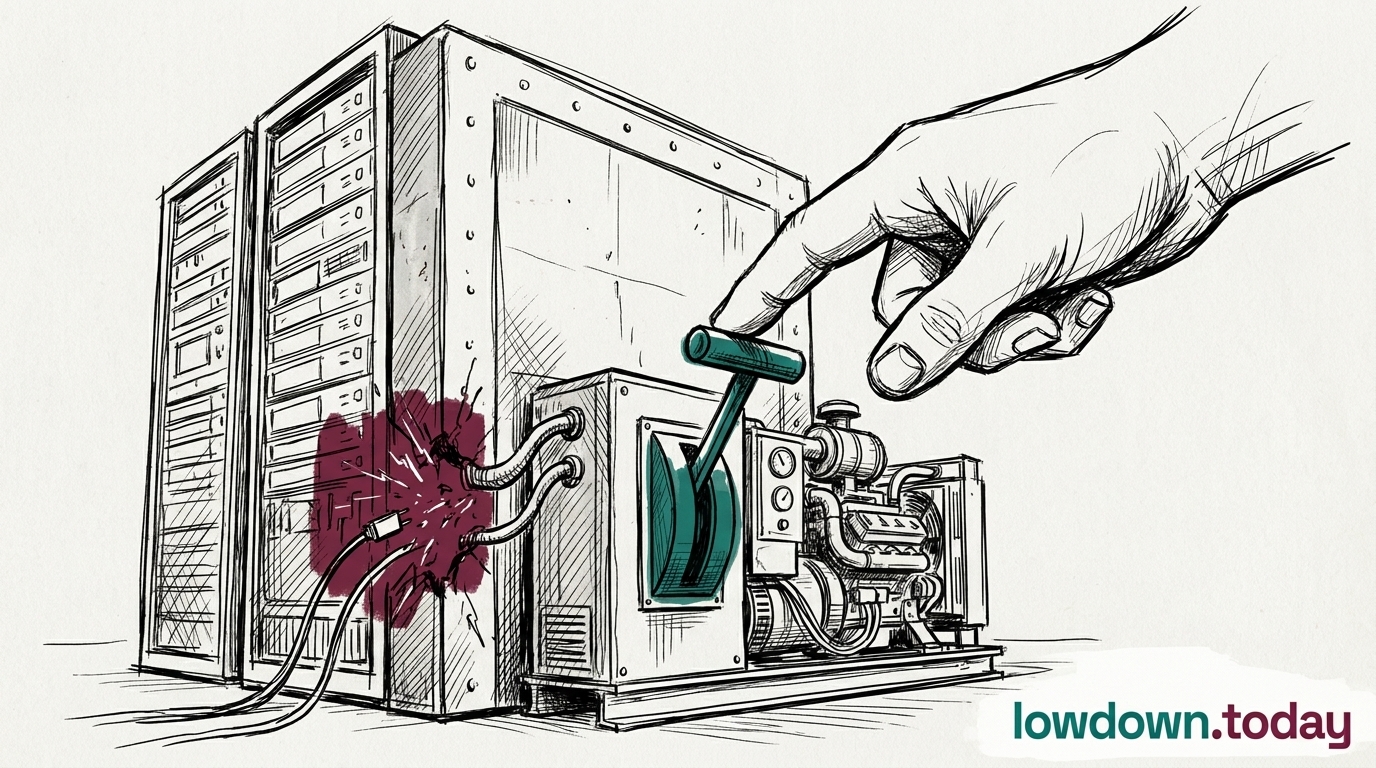
Meta is replacing BTM gas exposure with long-term firmed solar-plus-storage to reduce regulatory curtailment risk.

Meta signed an agreement with Enbridge, the Canadian pipeline company, for a 365 MW solar and 200 MW battery storage project in Wyoming, with Enbridge investing $1.2 billion and the project entering service by end-2027. 1 It is Meta's largest renewable procurement to date and secures firmed power outside the behind-the-meter gas fleet.

The contract is the demand-side answer to the gas escape route's own queue. GE Vernova's turbine backlog, with deliveries stretching into 2029 , means an operator ordering BTM gas now waits years for it. With the DOE order also attaching curtailment risk to that fleet, an operator with the scale to contract at 365 MW has reason to switch generation type rather than join the turbine wait. A pipeline major taking the build is the tell: Enbridge is routing capital it would once have committed to gas infrastructure into solar-plus-storage for a single hyperscale customer.

The Wyoming deal does not run all day on its own, which is why the storage tranche matters and why Meta paired it the same fortnight with a gas-free baseload contract in New Mexico. Operators are no longer only moving where the power sits; they are changing what generates it.

Deep Analysis

In plain English

Enbridge is Canada's largest pipeline company, best known for moving crude oil and natural gas across North America. It is now building 365 megawatts of solar panels and a 200 MW battery storage system in Wyoming, enough to power roughly 150,000 homes, with Meta as the customer. Battery storage is the critical piece: solar alone only generates electricity when the sun shines. When you pair it with large batteries, you can store daytime energy and dispatch it at night, making the combination act more like a conventional power plant that runs around the clock. For Meta, this matters because its gas-powered backup generators can now be switched off by the grid in an emergency. Firmed solar-plus-storage cannot be curtailed the same way, so it reduces Meta's regulatory risk while also helping the company meet its carbon commitments.

Deep Analysis
Root Causes

Meta's procurement pivot from BTM gas to firmed renewables has two simultaneous drivers: the DOE 202(c) orders that reclassified BTM gas as interruptible grid reserve, and Meta's own 2030 net-zero commitment, which requires moving away from Scope 2 emissions from purchased electricity.

Enbridge's pivot from pipelines to renewable build reflects the structural demand signal: hyperscalers contracting 365 MW in a single deal with end-2027 delivery justify the capital allocation model of a pipeline company building renewable generation rather than simply transporting fossil fuels.

What could happen next?
  • Opportunity

    Pipeline infrastructure companies with capital allocation models suited to multi-decade energy assets gain a new revenue stream serving hyperscaler renewable procurement at scale.

  • Risk

    Solar-plus-storage reliance for 24/7 AI compute creates a winter reliability gap that may require supplemental gas or nuclear purchase during cold snaps, partially negating the regulatory risk reduction.

First Reported In

Update #4 · Grid wins power to switch off data centres

Utility Dive· 26 May 2026
Read original
Different Perspectives
EdgeConneX in Italy (EU market)
EdgeConneX committed €3bn to Italian data-centre capacity starting in 2026, routing capital to a jurisdiction where AI Act and NIS2 mandates create structural demand for EU-resident compute and the government actively attracts investment; Virginia's fiscal standoff and US moratoriums are redirecting pipeline offshore.
Enbridge and Baker Hughes (firmed-power and oilfield-services suppliers)
Enbridge committed $1.2bn to Wyoming solar-plus-storage for Meta and Baker Hughes redirected oilfield drilling capacity into enhanced geothermal in New Mexico; both companies are routing capital away from fossil infrastructure into data-centre power procurement at precisely the moment BTM gas became a federal curtailment target.
US federal regulators (DOE and FERC)
DOE reached for Section 202(c) twice in five months naming the same BTM load class, while FERC rejected PJM's bid to redefine the 20 MW co-located load threshold in April; together they have treated private data-centre generation as a dispatchable grid resource before the permanent RM26-4-000 rule settling its legal status has been written.
European energy regulators and climate advocates
GE Vernova's 100 GW gas-turbine backlog, driven by AI data-centre demand, puts IEA net-zero pathways under pressure: 15-27 GW of onsite gas is forecast for US data centres by 2030. The Amazon Boardman $20.5m pollution settlement gives environmental litigation a financial template it previously lacked.
Irish Commission for Regulation of Utilities (CRU)
The CRU-compliant Pure DC behind-the-meter template gives operators a replicable European consent pathway outside the UK queue. Ireland's existing hyperscaler density and the CRU framework's behind-the-meter provisions make it the lowest-friction large-load jurisdiction in Europe for 2026 approvals.
Nordic operators (Equinix-CPP-atNorth, Aikido Technologies)
Equinix's CPP-atNorth acquisition and Aikido's AO60DC floating-wind pilot at METCentre Norway offer hyperscalers a consented, low-carbon supply chain that bypasses both US moratorium risk and European grid queues. Norway's renewable surplus and Fingrid connection windows make the Nordic corridor the clearest alternative supply chain in the current environment.

