Maryland
Mid-Atlantic US state; 7-1 Democratic delegation, first jurisdiction (Montgomery County) to enact a DC moratorium.
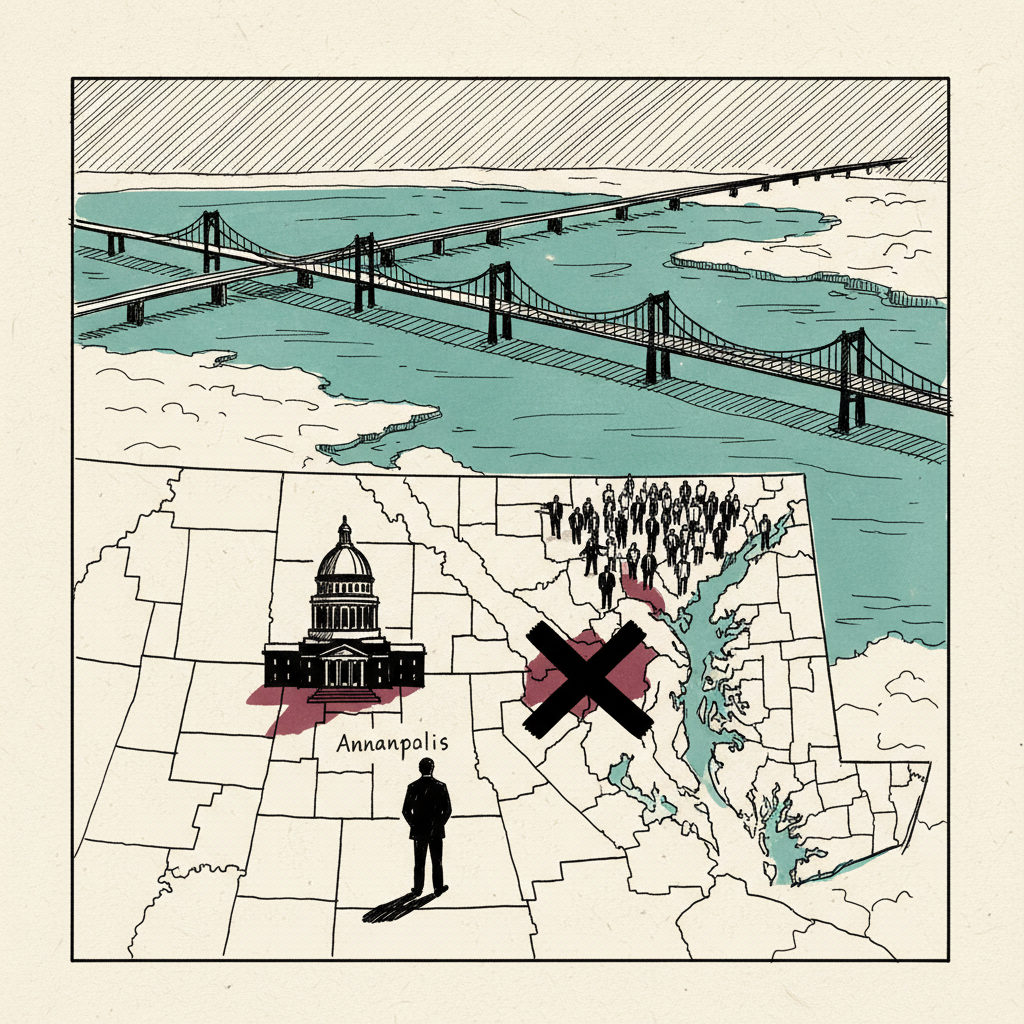
Maryland kept its 7-1 congressional delegation after its Senate president declined to schedule an all-Democratic map on 14 April. The decision ended the state's mid-decade redraw before the November election.
Last refreshed: 22 September 2026 · Appears in 1 active topic
Why did Montgomery County become Maryland's first data-centre moratorium?
Timeline for Maryland
Montgomery County errs on polling places
US Midterms 2026Mentioned in: Supreme Court stays the Missouri TRO
US Midterms 2026Maryland puts Question 3 back on
US Midterms 2026Mentioned in: US and Kuwait meet, agenda unpublished
Iran Conflict 2026Mentioned in: Four committees put $3.39m into three weeks
US Midterms 2026Background
Maryland is a Mid-Atlantic US state bordering the District of Columbia. Its proximity to Washington supports a large federal workforce and ties its politics closely to national government. Its congressional delegation has seven Democrats and one Republican.
The state lies within the PJM Interconnection region, where power supply and large new loads have become a live policy concern. On 18 May, the US Department of Energy gave PJM emergency authority to curtail some data centres during a heat event, underlining the regional grid pressures relevant to Maryland.
Montgomery County is Maryland's leading local test case for data-centre controls. On 22 July, county council committees advanced an 18-month moratorium and a 25 MW zoning CAP, the first such move by a Maryland jurisdiction. The county action gives Maryland a local role in the wider debate over data-centre demand and grid capacity.
Maryland keeps its congressional balance
On 2 February, Maryland's House passed a congressional map designed to elect eight Democrats, by 99 votes to 37. Senate President Bill Ferguson did not bring it to the Senate floor, despite Democratic control of state government.
The legislative session ended on 14 April with the bill still in committee. Maryland therefore retained its seven Democratic and one Republican House seats for November, making its failed redraw an unusually consequential limit on the state's own partisan options.