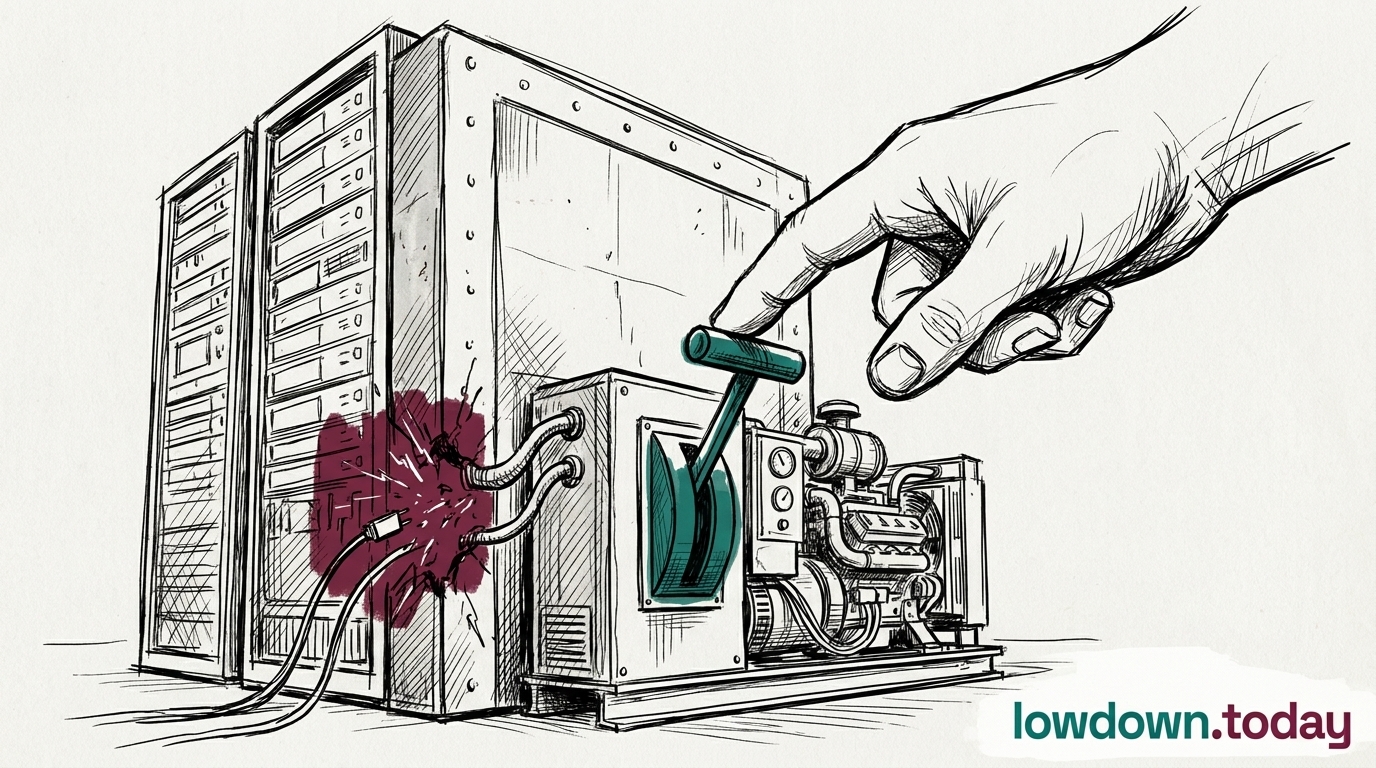
EirGrid and SONI, the grid operators for the Republic of Ireland and Northern Ireland, issued a fault-ride-through (FRT) demand-curtailment procedure to affected data-centre customers on Tuesday 30 June, live from July.1 fault-ride-through is the grid-code requirement that a large load stay connected through a brief voltage dip rather than trip to its own backup generators. Their MPID345 paper set a 900 MW ceiling on how much demand the grid can afford to lose at once, warning that a single fault could otherwise knock more than 1,150 MW of data-centre load offline together.
The physics matches a risk the beat has tracked mostly in America. The US Department of Energy (DOE) used Section 202(c) emergency powers to let PJM, the largest US grid operator, curtail backup-equipped data centres twice in 2026, and Ireland's energy regulator, the CRU, reopened large-load connections in June even as EirGrid warned of shortfalls.
The two systems reached the same class of ceiling from opposite legal directions. Washington must declare a statutory emergency event by event; Dublin has written a standing grid-code rule that runs on its own. Both treat concentrated data-centre load as a single point of failure the grid must be able to shed, and the build-out is what created that risk.



