Skip to content
You can now search across every topic, entity and event.What's new
Data Centres: Boom and Backlash
8SEP

Chevron builds Microsoft a gas plant

4 min read
13:06UTC

Chevron signed a 20-year deal with Microsoft on 22 June to build Project Kilby, a 2.67 GW gas plant in West Texas that feeds one data centre and skips the grid entirely. At roughly $7bn it is the largest dedicated-power deal struck for a data centre this year.

IndustryDeveloping
Key takeaway

The cheapest route to AI power in 2026 is to build a private plant, even at $7bn.

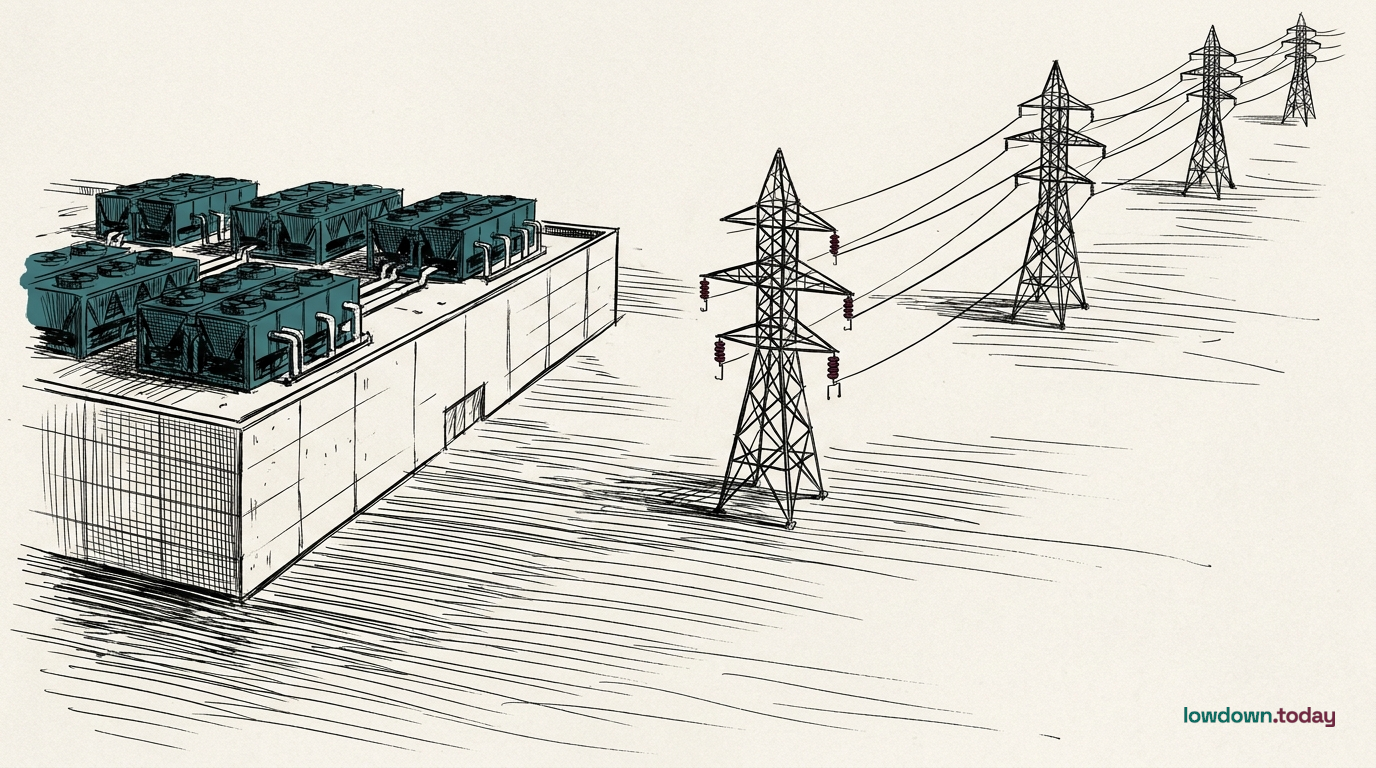
Chevron signed a 20-year power purchase agreement (PPA), a long-term contract to buy electricity at a fixed price, with Microsoft on 22 June to build a 2.67 GW (gigawatt) gas plant beside a West Texas data centre. The roughly $7bn project, branded Project Kilby and run through Chevron's Energy Forge One unit, feeds the data centre directly, behind the meter, with no grid connection, no regional operator, and no curtailment order in the way 1. At 2.67 GW it is the largest dedicated-generation deal struck for a data centre this year, ahead of xAI's 1.2 GW Colossus turbines and Meta's 365 MW Wyoming solar build 2.

Operators are pouring capital into their own generation because every route to grid power slowed at once, and the cheaper escapes are closing as fast as they open. Washington has twice switched off the behind-the-meter route during heat events, when the Department of Energy ordered data centres running their own generation to curtail . Kilby answers that risk by owning the plant outright, but it inherits a different queue: its GE Vernova turbines come from a backlog already booked into 2029 , so first power is not promised before 2028 and the final investment decision (FID) waits until the end of this year.

A 20-year contract on a single-customer plant resembles a project-financed power station more than a corporate clean-energy deal, with the data centre as its sole creditworthy anchor. That structure is why a supermajor will commit roughly $7bn against one offtaker. Energy-intensive industry has done this before: aluminium smelters built their own captive generation through the 20th century whenever grid supply was too slow or too thin. AI compute is repeating the pattern rather than inventing one.

Deep Analysis

In plain English

Microsoft, Google, and Amazon each operate large computing facilities called data centres, which run the servers behind cloud services, email, and online shopping. Those facilities consume vast amounts of electricity, and the normal path is to connect to the public electricity grid, the same network that powers homes and offices. But in the US, getting a new grid connection approved now takes several years, and the federal government has twice this year ordered data centres to switch off their own backup power generators during heatwaves to protect the public grid. So Microsoft and Chevron, the oil company, have agreed to build a private gas-fired power station right next to Microsoft's data centre in West Texas. The electricity goes directly from the gas plant to the data centre building, never touching the public grid. This arrangement is called behind-the-meter generation, because the power plant sits on the customer's side of the electricity meter. At 2.67 GW (gigawatts), Project Kilby would generate roughly as much electricity as a medium-sized city uses, all going to one facility. It costs about $7bn to build and will take until 2028 to produce its first power.

Deep Analysis
Root Causes

Three structural failures make the $7bn co-located plant rational rather than extraordinary.

First, FERC's interconnection queue was built for utility planning cycles of 5 to 10 years, not 18-month hyperscaler deployment calendars. Docket RM26-4-000 has been open since October 2025 and as of 18 June still produced no binding standard, meaning Microsoft's West Texas capacity need cannot be met through the regulated queue in any plausible timeframe.

Second, DOE's Section 202(c) emergency curtailment authority, exercised twice in 2026, has paradoxically accelerated BTM investment. A grid-served data centre now carries curtailment exposure the operator cannot hedge; an operator-owned generator removes that exposure entirely.

Third, GE Vernova's $163bn backlog means turbine access is the binding constraint on BTM builds. Chevron's oil-and-gas procurement relationships give Microsoft access to GE Vernova delivery slots that a hyperscaler placing an open-market order in 2026 would wait three or more years to receive. The Permian Basin location also provides direct pipeline access to Chevron's own gas production, removing fuel-supply risk from the equation.

What could happen next?
  • Precedent

    The 2.67 GW deal sets the scale reference for oil-major BTM power-services contracts; BP, Shell, and ExxonMobil now face an explicit build-or-miss-market decision on dedicated hyperscaler generation.

    Short term · Assessed
  • Risk

    If courts rule in the ID:3834 rehearing that DOE curtailment authority covers operator-owned BTM generation as well as backup generators, Project Kilby's core rationale collapses before first power in 2028.

    Medium term · Suggested
  • Consequence

    Each GW of BTM generation built behind the meter removes load from the public grid, spreading fixed grid costs across fewer customers and raising residential electricity rates in the host region.

    Medium term · Assessed
First Reported In

Update #8 · Data centres build their own power plants

Chevron· 28 Jun 2026
Read original
Different Perspectives
NVIDIA
NVIDIA
NVIDIA told the Securities and Exchange Commission on 26 August it had signed memorandums aiming to mobilise over $500bn for buyers' equipment purchases, then said in the same filing the arrangements may not become definitive. It may also carry limited residual-value risk on the equipment itself.
IREN Limited
IREN Limited
IREN signed $2.4bn of financing on 25 August that only releases cash once its Mackenzie GPU servers are accepted, and only through 31 December 2026. A shipping delay from here now creates a funding problem as well as a revenue one.
Energy Commission (Malaysia)
Malaysia's Energy Commission recorded data centres at 9.3% of national power in one hot week in August, against a 7% year-to-date average, and is projecting 31% of peninsular demand by 2035. It wants roughly 9 GW of new gas-fired capacity by 2032 to cover the gap.
Economic Development Board and Infocomm Media Development Authority
Singapore's EDB and IMDA rationed 200 MW across four operators on 21 August and followed with a tropical liquid-cooling standard six days later, fixing the terms before construction starts. The agencies will decide within 18 to 24 months whether to run a third call.
Legal Resources Centre
The Legal Resources Centre put the water and power draw of two approved Cape Town Equinix sites in public, at roughly 4.4 billion litres and 1.4 to 1.5 billion kWh a year, because the city and the operator would not. It wants a cumulative assessment before any more of the five approvals proceed.
Ministerio de Minas e Energia
Brazil's energy ministry published Redata's five conditions after the Senate passed PL 278/2026 on 1 September, betting a repeatable annual water test enforces cooling design better than a one-off approval. Redata now needs President Lula's signature before any of it takes effect.

