Skip to content
Briefings are running a touch slower this week while we rebuild the foundations.See roadmap
Cuba Dispatch
28MAY

Senate Democrats force Cuba war-powers vote

3 min read
08:42UTC

Kaine, Schiff and Gallego introduced a joint resolution requiring congressional authorisation before any US military operation against Cuba; the Senate vote is expected before Friday 1 May.

PoliticsDeveloping
Key takeaway

Senate Democrats are forcing a roll-call on whether the executive can strike Cuba without authorisation.

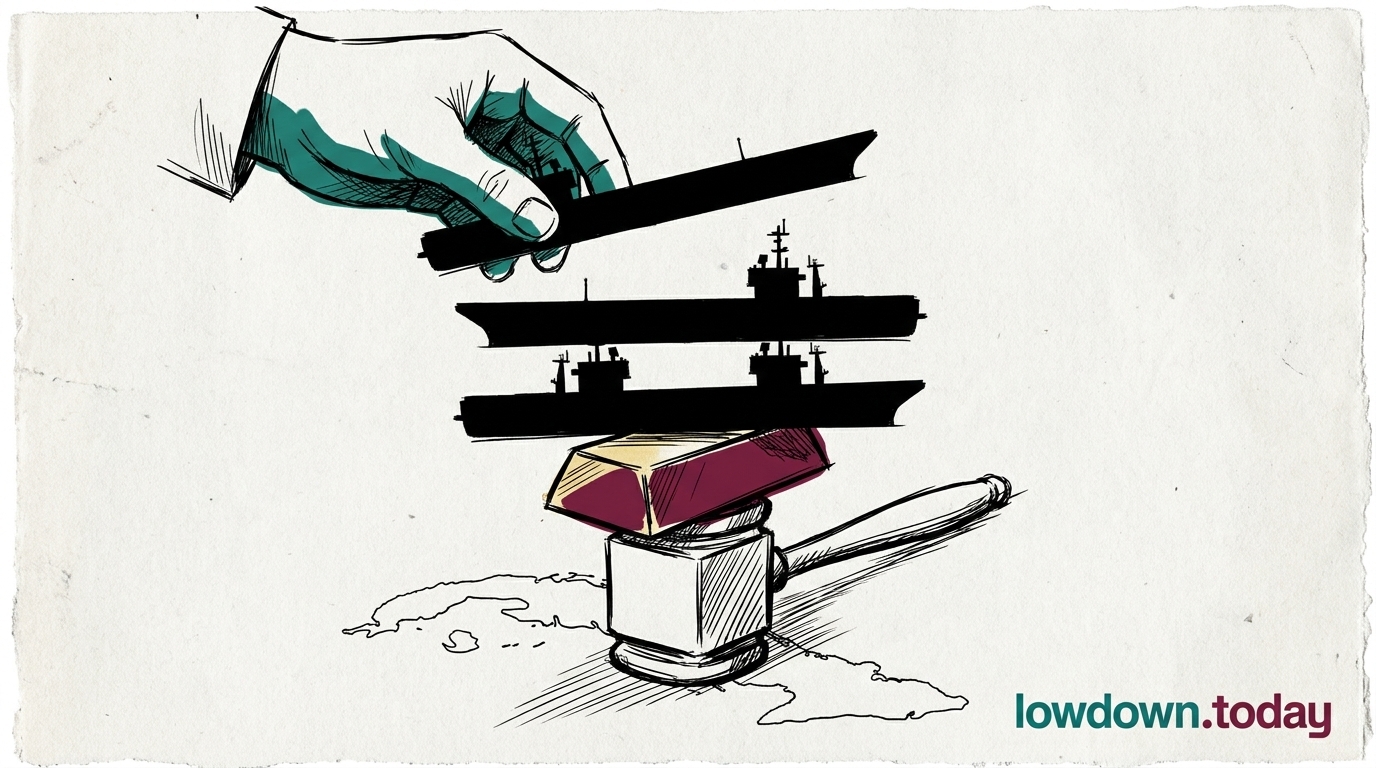
Senators Tim Kaine (Democrat, Virginia), Adam Schiff (Democrat, California) and Ruben Gallego (Democrat, Arizona) introduced a joint Senate resolution requiring congressional authorisation before any US military operation against Cuba. A Senate vote is expected before Friday 1 May 2026. The trigger for the resolution is the Trump administration's repeated public claim that "Cuba is next" after the Venezuela and Iran operations.

Republican majorities in both chambers make passage unlikely. The Democratic sponsors are forcing a roll-call regardless, which would mark the first formal Senate floor test of The Administration's hemisphere military posture in 2026. Members on the record opposing the resolution would be voting to preserve the executive's claimed latitude to strike Cuba without congressional sign-off.

The same executive that signed OFAC General Licence 134B earlier in April, authorising the next Sovcomflot tanker's cargo, is the one the resolution would constrain on the use of force. Treasury authorising oil-delivery transactions against the country the White House has signalled as a strike candidate cuts both ways: the operational sanctions track has eased while the rhetorical posture has not. Senators voting on Kaine-Schiff-Gallego must now choose between those two tracks on the record.

The Florida congressional delegation, which has demanded comprehensive licence revocations since 11 February and has had no Treasury response for 75 days, has issued no public statement on the resolution. Whether House Republicans from Florida vote against any companion measure is the secondary question; the primary one is whether any Senate Republican breaks ranks before 1 May, and on what grounds.

Deep Analysis

In plain English

Three Democratic senators introduced a measure on 25 April requiring Congress to vote before any US military attack on Cuba. They did this because President Trump had publicly said Cuba was his next military target after actions in Venezuela and Iran. A Senate vote was expected before 1 May. Republicans held a Senate majority of 53-47, making the measure almost certain to fail on the vote. Each senator's vote goes into the permanent public record: a senator who votes no is voting to let Trump act against Cuba without congressional authorisation. Kaine, Schiff and Gallego built a paper trail for future accountability rather than a blocking mechanism.

Deep Analysis
Root Causes

The resolution's proximate cause is Trump's repeated 'Cuba is next' language, which followed the Venezuela and Iran operations without a public enumeration of what 'next' would mean operationally. That ambiguity created an institutional opening for Democrats to force a roll-call: the resolution's failure on a party-line vote would confirm that the Republican majority regards Trump's language as legitimate presidential authority.

The same executive issued GL 134B authorising the next Russian tanker into Cuba on 18 April and simultaneously claimed military strike authority over Cuba through the 'Cuba is next' framing. That juxtaposition is the political material the resolution was designed to surface: can the same administration legalise a Russian oil delivery to Cuba and claim authority to bomb Cuba in the same week?

Escalation

The rhetorical track has not eased despite the operational track's diplomatic activity. Trump's 'Cuba is next' framing is unretracted; the resolution is the Senate's formal acknowledgement that the framing is being taken seriously. If the resolution fails on a near-party-line vote before 1 May, the executive's claimed military latitude over Cuba expands within the political record, even without any operational movement.

What could happen next?
  • Precedent

    A Senate floor vote on Cuba military authority is the first formal congressional test of the administration's hemisphere posture in 2026; the roll-call creates a named political record regardless of outcome.

    Immediate · 0.85
  • Risk

    If Republican defections emerge on the roll-call, it signals that Trump's 'Cuba is next' rhetoric does not carry his full caucus, constraining the administration's rhetorical flexibility on further Cuba escalation.

    Short term · 0.55
  • Consequence

    The juxtaposition of GL 134B issuance on 18 April and the Senate war-powers debate on 25 April makes the administration's simultaneous legalisation of Russian oil to Cuba and claim of Cuba-strike authority the explicit political object of the roll-call.

    Short term · 0.78
First Reported In

Update #2 · Two Cuba policies, one fortnight

Reuters via CiberCuba· 27 Apr 2026
Read original
Different Perspectives
Holy See and WOLA engagement-track analysts
Caritas Cuba distributed 82 per cent of a $3M tranche to 8,800 families via the Church channel Rubio proposed at his 9 May Vatican audience. WOLA analysts note that personal sanctions on peso-denominated officeholders carry limited coercive effect; the Church track is the one instrument that reaches ordinary Cubans directly.
Sovcomflot and Russia
Moscow has announced no replacement for the Universal after it diverted on 26 May, and Sovcomflot's failure to activate Russia's National Reinsurance Company cover as a substitute for the expired P&I insurance signals that Russian fuel deliveries to Cuba now depend on OFAC-compatible licensing rather than on an unconditional bilateral commitment.
Prisoners Defenders and OCDH human rights monitors
Prisoners Defenders' April 2026 census of 1,260 political prisoners, its highest on record, documents the caseload rising by ten in a month despite repeated Cuban pardon announcements. Maykel Osorbo's refusal of the State Security exile-or-2030 ultimatum in May kept a high-profile name inside the registry Havana would need cleared before any prisoner-release negotiation proceeds.
MINREX and Cuban government
Cuba's foreign ministry condemned the indictment as 'political coercion' and filed a formal protest met by the US Deputy Secretary of State on 24 May. Diaz-Canel offered dialogue 'on equal terms' but ruled political prisoners off the table, while Cuba's pardon decrees structurally exclude crimes-against-authority charges from every amnesty wave, leaving the 1,260-prisoner count unchanged.
Trump administration and Florida delegation
The administration framed the 18 May designation wave and 20 May indictment as accountability for Cuba's security apparatus; Florida Republicans Gimenez, Diaz-Balart, and Salazar credited constituent pressure for the EO 14404 architecture. Senate Democrats Kaine, Schiff, and Gallego, having lost S.J.Res.124 51-47 on 29 April, called the Nimitz deployment under Operation Southern Spear a constitutional overreach.
OCDH and dissident coalition (Otero Alcántara, Osorbo proxies)
The Madrid-based OCDH coordinated the 13 May Brussels handover after the Cuban Supreme Popular Court rejected Otero Alcántara's early-release appeal in late April. The coalition's pivot to the EU restrictive-measures track follows procedural closure of the early-release vector before the 24 April US deadline lapsed.

