Skip to content
Briefings are running a touch slower this week while we rebuild the foundations.See roadmap
Cuba Dispatch
28MAY

Senate blocks Cuba war-powers check 51-47

3 min read
08:42UTC

The Senate sustained Rick Scott's procedural objection 51-47 on 29 April, keeping Cuba military operations beyond congressional restraint. Two Republicans crossed; one Democrat defected.

PoliticsDeveloping
Key takeaway

The 51-47 vote forecloses congressional restraint on Cuba operations; two Republicans crossed and one Democrat defected.

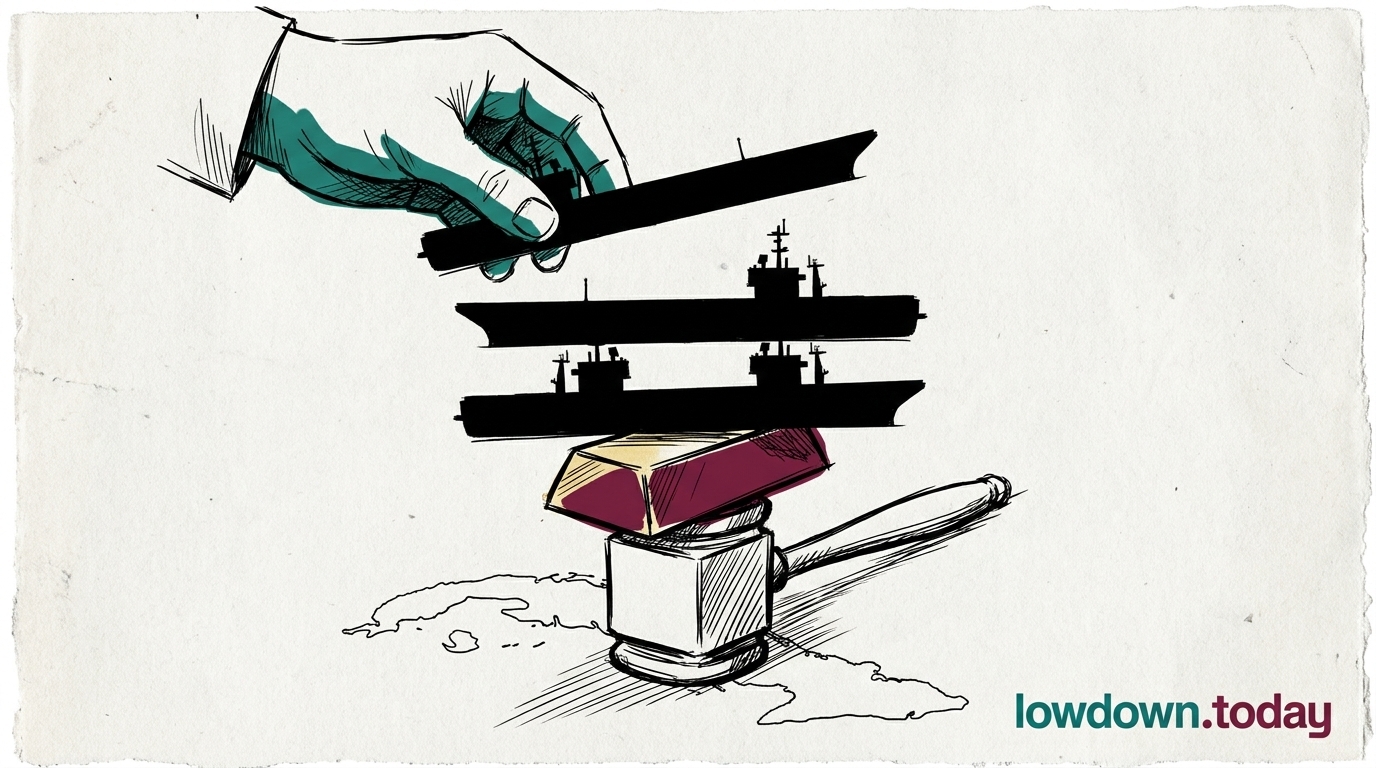
The US Senate voted 51-47 on Wednesday 29 April 2026 to sustain a procedural objection from Senator Rick Scott of Florida, blocking discharge of S.J.Res.124 from the Senate Foreign Relations Committee 1 2. The resolution, introduced on 25 April by Tim Kaine, Adam Schiff and Ruben Gallego , would have required the removal of US armed forces from any unauthorised hostilities against Cuba, with the drafters explicitly defining Coast Guard blockade and quarantine operations in the Florida Straits as hostilities for that purpose. Republicans voted to sustain Scott's argument that no such hostilities exist.

Two Republicans crossed: Susan Collins of Maine and Rand Paul of Kentucky, the moderate-institutionalist and libertarian-restraint poles of the caucus. One Democrat defected the other way: John Fetterman of Pennsylvania voted with Republicans. The arithmetic produces a posture rather than a policy. Republicans did not vote that the underlying Cuba policy is sound; they voted that nothing in the Florida Straits requires Senate authorisation. That technical posture is the part Democrats can attack again later if a more visible Coast Guard interdiction produces an incident the Republican framing cannot absorb.

Bloomberg identifies US naval presence in the Caribbean as a factor deterring sanctioned tankers from declaring Cuban destinations, which is the operational fact the resolution's drafters wrote into S.J.Res.124. The vote means every shipping desk between Hamburg and Caracas now factors continued executive freedom of action into route choices, with no statutory restraint on the horizon. The two Republican crossovers also locate at least two senators willing to constrain executive Cuba prerogative on conscience grounds, a small but identifiable bloc that Kaine, Schiff and Gallego can build on in any renewed motion.

The three Florida House Republicans, Carlos Giménez, Mario Díaz-Balart and María Elvira Salazar, who have publicly questioned the policy direction since the 11 February delegation revocation letter, have not joined Scott on the record. Their silence is itself informative: dissatisfaction with the executive's hand exists inside the Florida Cuban-American delegation, but did not produce a public response on the procedural block.

Deep Analysis

In plain English

The US has a law called the War Powers Resolution that says the president must get Congress to agree within 60 days if US military forces are sent into a conflict. Some Democrats tried to use this law to force a vote requiring the president to pull US forces back from any undeclared conflict with Cuba, specifically the naval ships in the waters between Florida and Cuba. To get the vote to the floor, they needed to free the resolution from a Senate committee. Republicans blocked this by arguing there is no conflict, that the ships are just doing routine operations, not fighting. The vote to block was 51 to 47. Two Republicans (Susan Collins and Rand Paul) sided with Democrats, but one Democrat (John Fetterman) sided with Republicans, giving the blockade just enough votes to succeed.

Deep Analysis
Root Causes

The War Powers Resolution (50 U.S.C. 1541-1548) requires the President to notify Congress within 48 hours of introducing forces into hostilities and to withdraw within 60 days absent congressional authorisation.

Rick Scott's point-of-order rested on a definitional claim: that US naval and Coast Guard operations in the Florida Straits do not constitute 'hostilities' under the WPR because no armed engagement has occurred. Senate rules permit a simple majority to sustain a point of order on a procedural question, meaning 51 votes, not the 60 required for cloture, sufficed to kill the discharge attempt.

The one-vote Democratic defection by John Fetterman had structural consequences beyond Cuba: it established that the Democratic caucus cannot guarantee party-line unity on national-security-framed procedural votes, which will affect whipping strategy on all future WPR applications under this Congress.

What could happen next?
  • Consequence

    The WPR discharge pathway for Cuba operations is foreclosed for this Congress; Democrats would need to flip two more Republicans or recover Fetterman's vote to attempt again.

  • Risk

    The precedent that naval deterrence operations in the Florida Straits do not constitute 'hostilities' under the WPR could be invoked to justify an escalated operational tempo without triggering congressional review.

First Reported In

Update #3 · Family sanctions land as the grid relapses

Al Jazeera· 7 May 2026
Read original
Different Perspectives
Holy See and WOLA engagement-track analysts
Caritas Cuba distributed 82 per cent of a $3M tranche to 8,800 families via the Church channel Rubio proposed at his 9 May Vatican audience. WOLA analysts note that personal sanctions on peso-denominated officeholders carry limited coercive effect; the Church track is the one instrument that reaches ordinary Cubans directly.
Sovcomflot and Russia
Moscow has announced no replacement for the Universal after it diverted on 26 May, and Sovcomflot's failure to activate Russia's National Reinsurance Company cover as a substitute for the expired P&I insurance signals that Russian fuel deliveries to Cuba now depend on OFAC-compatible licensing rather than on an unconditional bilateral commitment.
Prisoners Defenders and OCDH human rights monitors
Prisoners Defenders' April 2026 census of 1,260 political prisoners, its highest on record, documents the caseload rising by ten in a month despite repeated Cuban pardon announcements. Maykel Osorbo's refusal of the State Security exile-or-2030 ultimatum in May kept a high-profile name inside the registry Havana would need cleared before any prisoner-release negotiation proceeds.
MINREX and Cuban government
Cuba's foreign ministry condemned the indictment as 'political coercion' and filed a formal protest met by the US Deputy Secretary of State on 24 May. Diaz-Canel offered dialogue 'on equal terms' but ruled political prisoners off the table, while Cuba's pardon decrees structurally exclude crimes-against-authority charges from every amnesty wave, leaving the 1,260-prisoner count unchanged.
Trump administration and Florida delegation
The administration framed the 18 May designation wave and 20 May indictment as accountability for Cuba's security apparatus; Florida Republicans Gimenez, Diaz-Balart, and Salazar credited constituent pressure for the EO 14404 architecture. Senate Democrats Kaine, Schiff, and Gallego, having lost S.J.Res.124 51-47 on 29 April, called the Nimitz deployment under Operation Southern Spear a constitutional overreach.
OCDH and dissident coalition (Otero Alcántara, Osorbo proxies)
The Madrid-based OCDH coordinated the 13 May Brussels handover after the Cuban Supreme Popular Court rejected Otero Alcántara's early-release appeal in late April. The coalition's pivot to the EU restrictive-measures track follows procedural closure of the early-release vector before the 24 April US deadline lapsed.

