Skip to content
You can now search across every topic, entity and event.What's new
Autonomous Systems: Land & Sea
12AUG

Iran used Ukraine Patriots in 3 days

4 min read
14:17UTC

More Patriot missiles were fired in three days of the Iran war than Ukraine received in three years. Reuters sources warn supply delays are imminent — while Russia launches 60 Iskander ballistic missiles per month against targets Ukraine can no longer fully defend.

TechnologyDeveloping
Key takeaway

Three years of Ukrainian allotment consumed in three Iranian days reveals chronic under-supply relative to actual threat, not merely a temporary shock.

Zelenskyy stated that more Patriot interceptors were used in three days of the Iran war than Ukraine received in three years 1. Reuters sources have warned that delays in Patriot supplies to Ukraine are imminent. The shortfall is not hypothetical — it is arriving.

Lockheed Martin produces roughly 600 PAC-3 interceptors per year. Euromaidan Press calculated that Ukraine already lacked sufficient PAC-3 rounds to intercept the approximately 60 Russian Iskander ballistic missiles launched per month 2 — the Iran conflict is draining a stockpile that was already inadequate. Military Watch Magazine reported US Patriot expenditure of $2.4 billion in five days of Iran operations 3. An estimated 100–150 THAAD interceptors — roughly a quarter of the global inventory — were expended in the first week 4.

The production gap cannot be closed quickly. Lockheed's agreement to quadruple THAAD output from 96 to 400 interceptors per year will take years to deliver at the new rate. PAC-3 production faces similar constraints — semiconductor components, solid rocket motor propellant, and seeker assemblies all carry multi-year lead times. The US defence industrial base was sized for peacetime replenishment, not simultaneous theatre-level air defence operations in the Middle East and Eastern Europe. The 2011 Libya campaign exposed a similar production shortfall when NATO exhausted its precision-guided munition stocks in weeks; the interceptor bind is the same structural problem at a larger scale and higher unit cost.

For Ukraine, the consequence is direct. Russian oil and gas revenues have already fallen 65% year-on-year , and the EU's phased gas import ban beginning 25 April will tighten Moscow's fiscal position further — but revenue pressure takes months to constrain military output. The interceptor shortage operates on a faster clock. Each PAC-3 round allocated to CENTCOM is one fewer available to defend Kharkiv's power stations, Kramatorsk's rail junctions, or the thermal generation capacity that keeps Ukrainian cities heated through March. The Pentagon's allocation of the next production batch — to CENTCOM or to European Command — will reveal which theatre Washington prioritises when it cannot supply both.

Deep Analysis

In plain English

The Patriot system fires interceptor missiles worth $4–6 million each to shoot down incoming ballistic missiles. Ukraine has been receiving these missiles in carefully rationed quantities over three years of war. The Iran conflict burned through more of them in three days than Ukraine received in all that time. This exposes two things simultaneously: how intense the Iran war is, and how severely Ukraine has been undersupplied relative to the actual scale of the Russian missile threat it faces. With deliveries now delayed, the gaps in Ukraine's defensive umbrella protecting cities, power stations, and military infrastructure will widen before they narrow.

Deep Analysis
Synthesis

The three-year versus three-day comparison also reveals an internal policy contradiction: if Iran warranted that burn rate in three days, either Ukraine was chronically under-supplied relative to its actual threat environment, or the Iran war is consuming interceptors at a rate that cannot be sustained economically or politically. The comparison makes the rationing regime's inadequacy undeniable in a way that technical reporting has not previously achieved.

Root Causes

PAC-3 production was calibrated during the 1990s and 2000s for peacetime replacement and limited theatre deployments, not simultaneous multi-theatre warfare. The post-1991 'peace dividend' hollowed US defence manufacturing surge capacity over three decades. Lockheed Martin's Patriot production line cannot be surged without 18–36 months of upstream supply chain investment — particularly in solid rocket motors and guidance seekers manufactured by specialist sub-tier suppliers who face their own capacity ceilings.

What could happen next?
  • Risk

    Ukrainian ballistic missile defences face critical gaps within weeks as Iran operations delay the next PAC-3 production batch shipment.

    Immediate · Reported
  • Consequence

    Russia has direct operational incentive to surge Iskander ballistic missile usage precisely during the window when PAC-3 stocks are lowest, maximising penetration rates.

    Short term · Assessed
  • Meaning

    The three-year versus three-day comparison permanently reframes the Ukraine aid debate — the binding constraint was industrial capacity, not political will.

    Medium term · Assessed
  • Risk

    Simultaneous US commitments to Ukraine, Israel, Gulf states, and Taiwan create interceptor allocation conflicts that no current production plan resolves before 2028.

    Long term · Assessed
First Reported In

Update #3 · Iran war halts talks, drains air defences

Al Jazeera· 9 Mar 2026
Read original
Different Perspectives
Conservative opposition
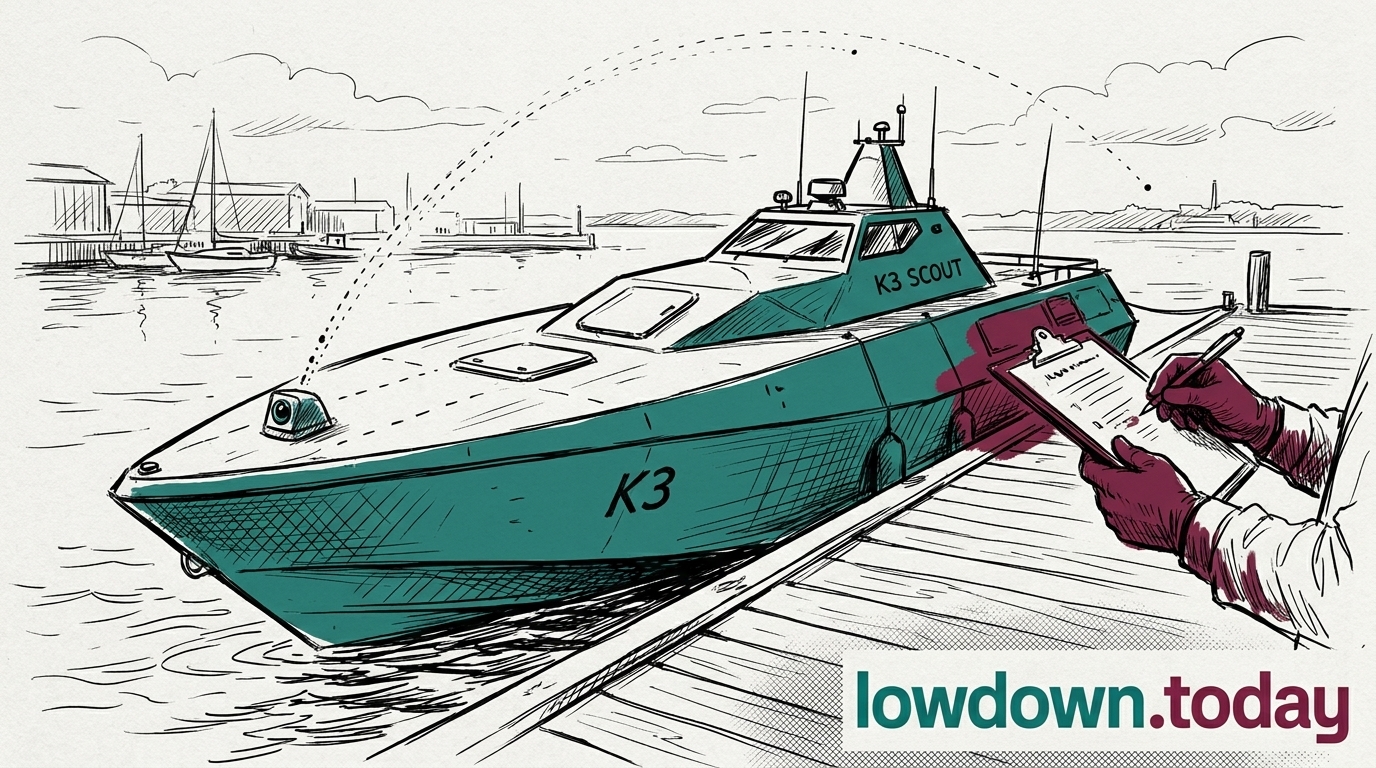
The Conservative opposition called on the Government on 9 August to 'urgently audit' equipment for hidden Chinese components, after the Telegraph's K3 SCOUT report. No named MP has been quoted on the record; the call came at party level, alongside the Ministry of Defence's own 10 August statement that no data had been compromised.
Netherlands Ministry of Defence
The Netherlands Ministry of Defence authorised Dutch Naval Design on 4 August to design 12-metre anti-submarine warfare uncrewed vessels for the Dutch-Belgian frigate programme, and to buy an adapted Compact FLASH dipping sonar from Thales Underwater Systems France. The order commits money and a named supplier while Britain's own certification body remains at the market-engagement stage.
Kraken Technology Group
Kraken Technology Group is a UK maritime-defence company based in Portsmouth that builds the K3 SCOUT, and crossed a $1bn valuation in July on a single-sourced $175m raise. The camera components reached the fleet under a third party's written security assurance, which the Platform Authority, which does not yet exist, was never positioned to check.
Navy Commercial
Navy Commercial
Navy Commercial at Whale Island published two notices on 5 August: 074032-2026, asking industry how to build a Platform Authority to certify uncrewed vessels, and 074351-2026, a GBP10m multi-role USV testbed for the Defence Chief Technology Officer. Responses on the Platform Authority close 19 August, ten days after the cameras were found transmitting to China.
Ministry of Defence
Ministry of Defence
The Ministry of Defence said on 10 August that a routine cyber vulnerability assessment found the camera fault, and a thorough investigation found no evidence that MoD data or systems had been accessed, compromised or transmitted externally. It stripped the cameras of internet connectivity but did not say whether it acted against the supplier.
Thales
Thales
Thales converted its 6 July engaging accord with Exail into a definitive combination agreement on 30-31 July, but the tender offer for Exail's remaining shares now closes by early 2028, later than July's timetable implied. Thales integrates its new undersea prime while still bidding against Kongsberg and DRASS's 2027 target for the AUKUS Pillar II contest.
