Skip to content
You can now search across every topic, entity and event.What's new
Autonomous Systems: Land & Sea
12AUG

Iran got 800 interceptors; Ukraine 700

2 min read
14:17UTC

Eight hundred missiles consumed in three days of the Iran war exceeded everything Ukraine received over the entire winter, exposing a production bottleneck that cannot be resolved in under a year.

TechnologyDeveloping
Key takeaway

US interceptor production cannot sustain two simultaneous high-intensity air defence campaigns.

Zelenskyy told the BBC on 26 March that 800 US-made interceptors were consumed in three days of the Iran war, compared to 700 Ukraine received over its entire winter 1. The United States produces only 60 to 65 Patriot missiles per month.

Replacing the 800 rounds burned in Iran takes 12 to 13 months at current production rates. Zelenskyy's earlier observation that more Patriot interceptors were used in three days of the Iran war than Ukraine received in three years was a rhetorical comparison; the 26 March figures make it arithmetic. The THAAD expenditure of 100 to 150 rounds in the first week compounds the shortfall across a second interceptor class.

Zelenskyy confirmed that deliveries to Ukraine have not stopped. But the trajectory is clear: the $750 million PURL diversion notified the same day signals Washington is prioritising restocking over resupply. France's commitment of eight SAMP/T NG air defence systems becomes a more important stopgap with each week the American production bottleneck persists.

The production constraint is physical, not political. Propellant, seeker heads, and testing capacity all take 18 months to surge. No amount of congressional goodwill changes the number of missiles that leave the factory floor each month.

Deep Analysis

In plain English

Imagine there are only 65 bullets produced each month for a very expensive gun. Ukraine was given 700 over the whole winter. Then, separately, 800 were fired in just three days during the Iran war. Zelenskyy is pointing out the maths: the US cannot supply both wars at once. The gun that protects Ukraine from Russian drones uses the same bullets being spent in the Middle East. Until production speeds up — which takes 12-18 months at minimum — one theatre will go short.

Deep Analysis
Root Causes

The interceptor shortage has two structural roots.

US Patriot missile production was scaled for Cold War deterrence scenarios, not sustained multi-theatre high-intensity conflict. The production bottleneck — propellant chemistry, seeker head manufacturing, and qualification testing — cannot be surged quickly. Raytheon has stated publicly that 18 months is the minimum lead time for a significant production increase.

The Iran war created demand that was structurally unpredictable in Western defence planning. NATO procurement cycles operate on 5-10 year horizons; simultaneous high-intensity air defence campaigns across two separate theatres were not in the baseline scenario for Patriot allocation planning.

First Reported In

Update #8 · Pentagon diverts funds; 948 drones fired

Ukrainska Pravda· 27 Mar 2026
Read original
Different Perspectives
Conservative opposition
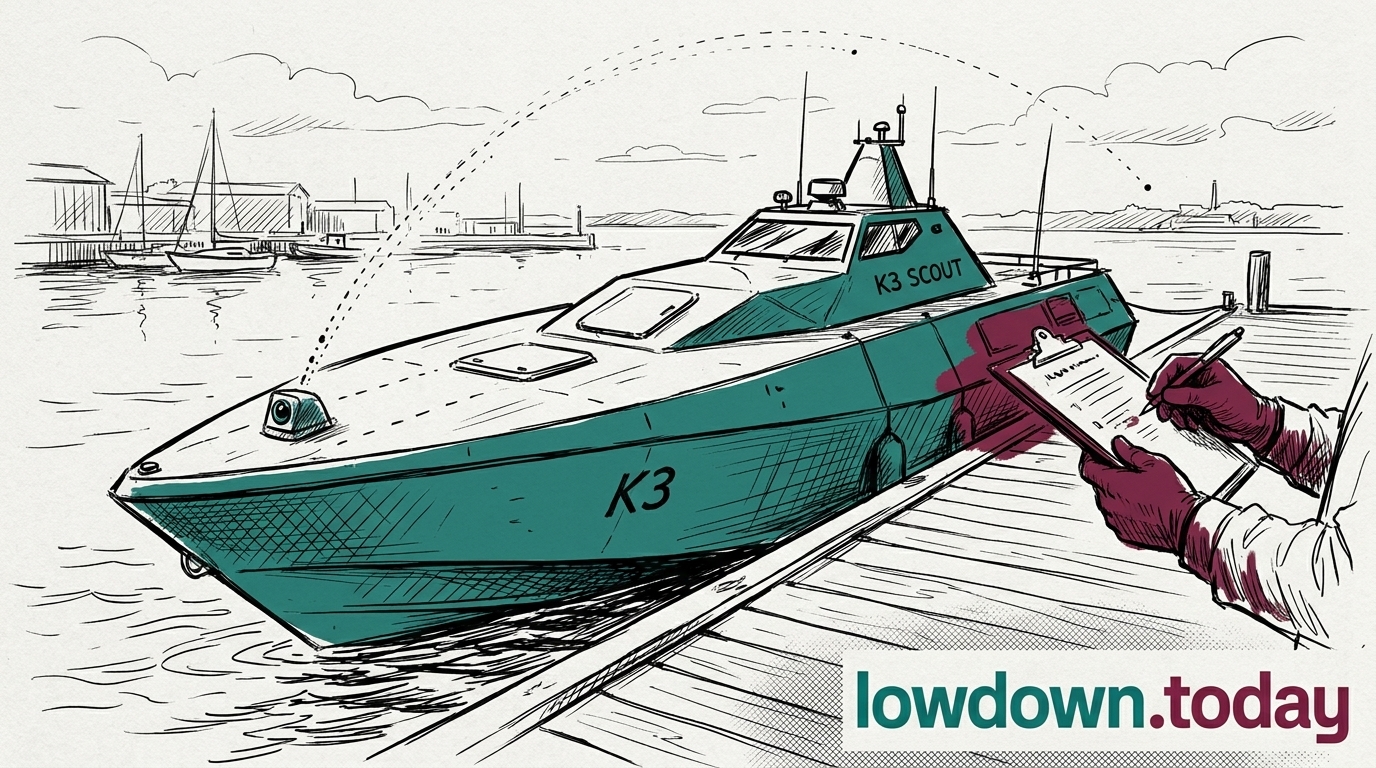
The Conservative opposition called on the Government on 9 August to 'urgently audit' equipment for hidden Chinese components, after the Telegraph's K3 SCOUT report. No named MP has been quoted on the record; the call came at party level, alongside the Ministry of Defence's own 10 August statement that no data had been compromised.
Netherlands Ministry of Defence
The Netherlands Ministry of Defence authorised Dutch Naval Design on 4 August to design 12-metre anti-submarine warfare uncrewed vessels for the Dutch-Belgian frigate programme, and to buy an adapted Compact FLASH dipping sonar from Thales Underwater Systems France. The order commits money and a named supplier while Britain's own certification body remains at the market-engagement stage.
Kraken Technology Group
Kraken Technology Group is a UK maritime-defence company based in Portsmouth that builds the K3 SCOUT, and crossed a $1bn valuation in July on a single-sourced $175m raise. The camera components reached the fleet under a third party's written security assurance, which the Platform Authority, which does not yet exist, was never positioned to check.
Navy Commercial
Navy Commercial
Navy Commercial at Whale Island published two notices on 5 August: 074032-2026, asking industry how to build a Platform Authority to certify uncrewed vessels, and 074351-2026, a GBP10m multi-role USV testbed for the Defence Chief Technology Officer. Responses on the Platform Authority close 19 August, ten days after the cameras were found transmitting to China.
Ministry of Defence
Ministry of Defence
The Ministry of Defence said on 10 August that a routine cyber vulnerability assessment found the camera fault, and a thorough investigation found no evidence that MoD data or systems had been accessed, compromised or transmitted externally. It stripped the cameras of internet connectivity but did not say whether it acted against the supplier.
Thales
Thales
Thales converted its 6 July engaging accord with Exail into a definitive combination agreement on 30-31 July, but the tender offer for Exail's remaining shares now closes by early 2028, later than July's timetable implied. Thales integrates its new undersea prime while still bidding against Kongsberg and DRASS's 2027 target for the AUKUS Pillar II contest.
