Skip to content
You can now search across every topic, entity and event.What's new
Autonomous Systems: Land & Sea
12AUG

Lockheed locks in $4.76bn Patriot run

2 min read
14:17UTC

The Pentagon's four-year Patriot production contract routes 94% of the missile run to foreign buyers before the first round leaves the factory, locking Ukraine's mid-May shortfall in as a structural condition rather than a temporary shortage.

TechnologyDeveloping
Key takeaway

Ukraine's Patriot shortfall is now a four-year structural condition, not a temporary shortage.

On 9 April the US Army awarded Lockheed Martin a $4.76 billion firm-fixed-price contract for PAC-3 MSE (Patriot Advanced Capability-3 Missile Segment Enhancement) interceptor production, with a completion date of 30 June 2030 1. The headline number looks generous, but the delivery calendar does not close Ukraine's mid-May gap.

Ninety-four percent of the run is already committed to FMS (foreign military sales programmes), the inter-government route that gets weapons to allies ahead of the domestic queue. That implies roughly 36 Patriot rounds a year reaching Ukraine under current foreign-sales weighting, against the 60 to 65 Volodymyr Zelenskyy told the BBC Kyiv needs each month. The fast assembly lines are building missiles for Saudi Arabia and the UAE before the Ukrainian allocation is even on the schedule.

Zelenskyy's figure covers ballistic and cruise missiles, not Shaheds. Ukraine's own STING interceptor drone, which destroyed two Shahed-type targets from 500 km on 4 April , covers the Shahed half of the air-defence problem but not the ballistic half. Contract arithmetic and Ukraine's mid-May stockpile deadline do not meet in the same calendar year.

Deep Analysis

In plain English

The US military has signed a long-term deal with defence contractor Lockheed Martin to make Patriot missiles, the type used to shoot down Russian rockets and drones. The problem: 94 out of every 100 missiles made under the deal are already promised to other countries, leaving almost none for Ukraine. Patriot missiles are expensive precision weapons that can intercept ballistic missiles mid-flight. Ukraine needs roughly 60-65 per month just to maintain its current defence. The new contract does not change that shortage.

Deep Analysis
Root Causes

The production ceiling stems from two structural constraints the Iran war made acute. First, the PAC-3 MSE seeker assembly relies on a single-source supplier in Tucson with a 36-month expansion lead time. Second, the US Army mothballed its interceptor surge capacity after 2014 to fund longer-range missile programmes, and no congressional authority for emergency production expansion has been sought.

The 94% FMS pre-commitment is itself a product of the post-2022 rearmament cycle: European NATO members ordered at scale after the full-scale invasion, locking production slots that would otherwise have been available for replenishment.

What could happen next?
  • Consequence

    Ukraine's mid-May interceptor stockpile deadline will not be resolved by this contract; alternative supply routes or emergency presidential authority will be required.

    Immediate · 0.85
  • Risk

    If the 6% domestic allocation is not expanded, the US Army's own air defence reserve will remain below wartime replenishment levels through at least mid-2028.

    Medium term · 0.72
  • Precedent

    The contract establishes that the post-Iran war rearmament cycle will be served by FMS agreements ahead of wartime partner resupply, a reversal of Cold War emergency-transfer doctrine.

    Long term · 0.68
First Reported In

Update #12 · Three narrowings of US support for Kyiv

Defense News· 11 Apr 2026
Read original
Different Perspectives
Conservative opposition
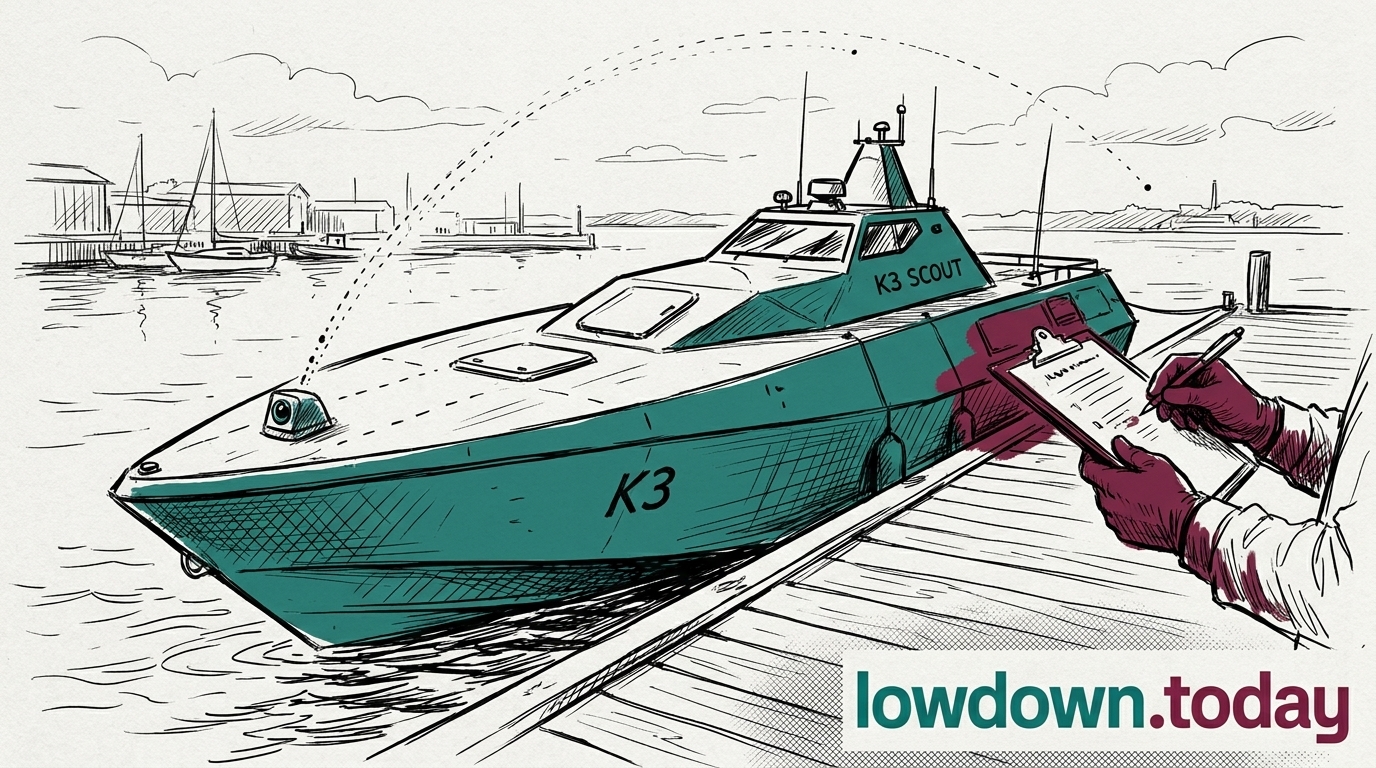
The Conservative opposition called on the Government on 9 August to 'urgently audit' equipment for hidden Chinese components, after the Telegraph's K3 SCOUT report. No named MP has been quoted on the record; the call came at party level, alongside the Ministry of Defence's own 10 August statement that no data had been compromised.
Netherlands Ministry of Defence
The Netherlands Ministry of Defence authorised Dutch Naval Design on 4 August to design 12-metre anti-submarine warfare uncrewed vessels for the Dutch-Belgian frigate programme, and to buy an adapted Compact FLASH dipping sonar from Thales Underwater Systems France. The order commits money and a named supplier while Britain's own certification body remains at the market-engagement stage.
Kraken Technology Group
Kraken Technology Group is a UK maritime-defence company based in Portsmouth that builds the K3 SCOUT, and crossed a $1bn valuation in July on a single-sourced $175m raise. The camera components reached the fleet under a third party's written security assurance, which the Platform Authority, which does not yet exist, was never positioned to check.
Navy Commercial
Navy Commercial
Navy Commercial at Whale Island published two notices on 5 August: 074032-2026, asking industry how to build a Platform Authority to certify uncrewed vessels, and 074351-2026, a GBP10m multi-role USV testbed for the Defence Chief Technology Officer. Responses on the Platform Authority close 19 August, ten days after the cameras were found transmitting to China.
Ministry of Defence
Ministry of Defence
The Ministry of Defence said on 10 August that a routine cyber vulnerability assessment found the camera fault, and a thorough investigation found no evidence that MoD data or systems had been accessed, compromised or transmitted externally. It stripped the cameras of internet connectivity but did not say whether it acted against the supplier.
Thales
Thales
Thales converted its 6 July engaging accord with Exail into a definitive combination agreement on 30-31 July, but the tender offer for Exail's remaining shares now closes by early 2028, later than July's timetable implied. Thales integrates its new undersea prime while still bidding against Kongsberg and DRASS's 2027 target for the AUKUS Pillar II contest.
