STING
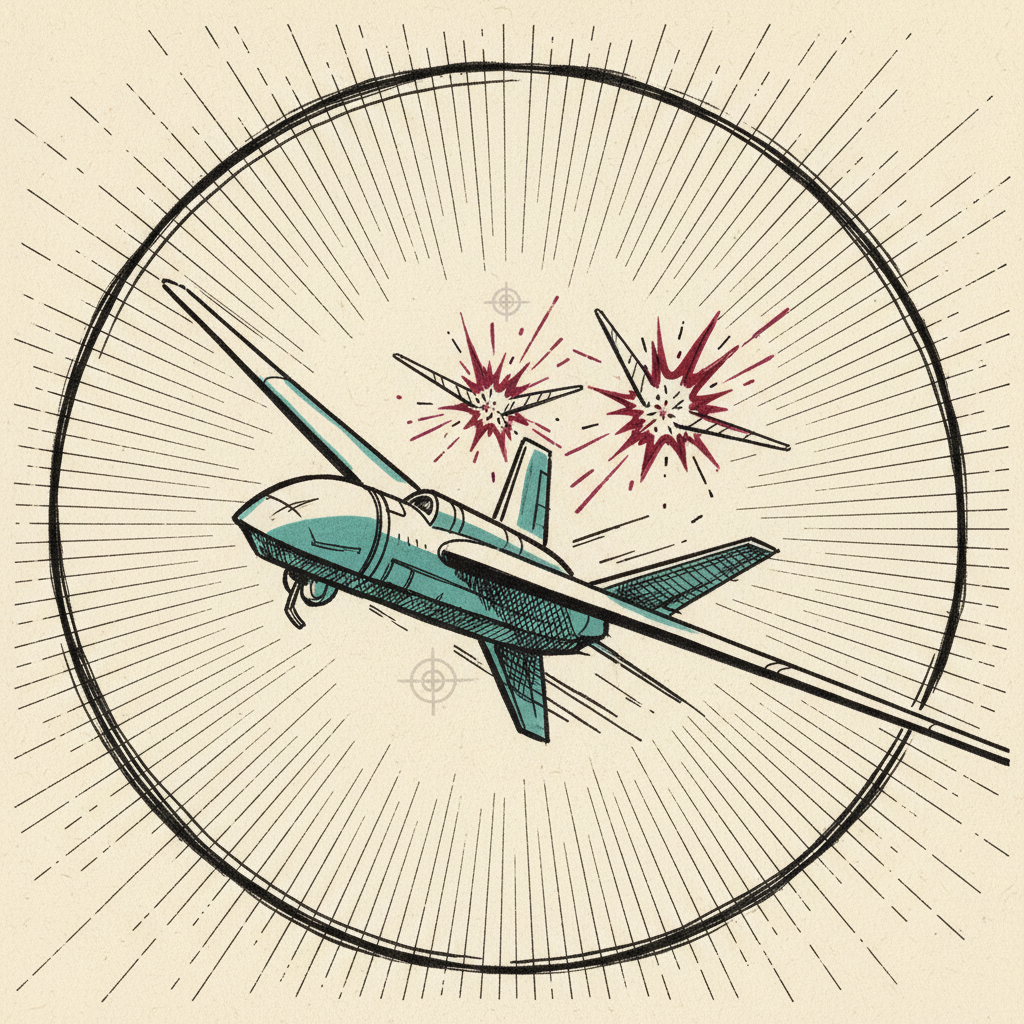
Ukrainian interceptor drone; destroyed two Shahed-type targets at 500 km range on 4 April 2026.
Last refreshed: 11 April 2026
STING intercepts cheap Shaheds; Patriot intercepts ballistic missiles. Ukraine is short of both. Which gap matters more right now?
Timeline for STING
Mentioned in: Germany signs €4bn for Ukraine, routes Raytheon directly
Russia-Ukraine War 2026Mentioned in: Lockheed locks in $4.76bn Patriot run
Russia-Ukraine War 2026Mentioned in: White House freezes all Patriot exports
Russia-Ukraine War 2026Ukraine's STING Drone Intercepts at 500 km for First Time
Russia-Ukraine War 2026Mentioned in: Russia Supplies Iran with Upgraded Drones and Satellite Intelligence
Russia-Ukraine War 2026Background
STING is Ukraine's long-range interceptor drone, developed by Wild Hornets and reported on 4 April 2026 to have destroyed two Shahed-type targets at a range of 500 kilometres, a record for a Ukrainian-developed air defence asset. The breakthrough was cited in the briefing in direct contrast with Ukraine's PAC-3 shortfall: STING covers the Shahed (low-cost drone) threat; Patriot covers ballistic and Cruise Missiles. The two systems address different parts of the same air defence problem.
The 500 km range figure is significant because it places STING's interception envelope well beyond Ukraine's frontlines, allowing it to engage incoming Shaheds before they enter populated airspace rather than in terminal approach. Russia's Shahed-136 and Shahed-131 variants have been used in mass overnight drone swarms against Ukrainian cities since late 2022; STING's range and cost profile are designed to make the economics of intercepting cheap drones less asymmetric than using expensive Patriot or IRIS-T rounds for the same target.
Wild Hornets is a Ukrainian defence startup that has received backing through Ukraine's Brave1 defence tech cluster programme. STING is one of several Ukrainian-developed AI-assisted interceptor drones competing in the same design space as Russia's counter-drone programmes.