Skip to content
You can now search across every topic, entity and event.What's new
Autonomous Systems: Land & Sea
12AUG

Zelenskyy: Patriot situation 'could not be any worse'

3 min read
14:17UTC

One day after signing the Berlin defence package, Kyiv's president told ZDF the ballistic-intercept gap remains unaddressed. The statement resolves an ambiguity the wires had left open.

TechnologyDeveloping
Key takeaway

Paying Raytheon in euros works; the US licence for the class Kyiv actually needs does not.

Volodymyr Zelenskyy, Ukraine's President, told German public broadcaster ZDF (Zweites Deutsches Fernsehen) on 15 April that Ukraine's Patriot situation "could not be any worse." The interview aired one day after the Berlin signing of the Germany-Ukraine defence package covered in event 5.

The apparent contradiction resolves on airframe class. Germany purchased lower-tier interceptors via direct commercial sale to Raytheon; the ballistic-class airframe Ukraine needs against Iskanders and Kinzhals was not on the Berlin contract and remains unavailable under The White House export freeze. Zelenskyy had first flagged the ballistic gap to the BBC in March , citing the interceptor-spend-versus-stock ratio summarised in event 5. The ZDF remark is the first time he has publicly graded that gap as worse now than then.

The statement matters for what it constrains. Wire coverage of the Berlin package had framed its headline euro figure as substantial Ukrainian air defence reinforcement, which is accurate for the airframes Germany actually bought and misleading for the specific threat class Kyiv loses its rounds to. Zelenskyy's intervention directs editorial attention from the dollar figure to the export-freeze gap, and from Berlin's procurement mechanism to Washington's licensing decisions. The policy question he has raised is not whether allies will pay; it is whether Washington releases the interceptor class money cannot currently buy.

Deep Analysis

In plain English

One day after signing a €4 billion military deal with Germany, Ukrainian President Zelenskyy told a German TV network that his country's supply of Patriot air defence missiles "could not be any worse." This is not a contradiction. The deal includes Patriot missiles, but a lower-capability type called GEM-T that can shoot down drones and cruise missiles. What Ukraine needs most urgently is a more powerful type, PAC-3 MSE, that can intercept ballistic missiles falling from near-space. The US has suspended exports of those globally. Zelenskyy's statement was a public signal to European audiences that the large headline number does not close the specific gap he is most worried about.

What could happen next?
  • Consequence

    Zelenskyy's public downgrade of the package the day after signing creates diplomatic tension with Berlin; Merz must publicly reconcile the package's limitations without appearing to have oversold it.

  • Risk

    Continued public pressure on the PAC-3 MSE gap may accelerate White House review of the export suspension, or harden it if the administration interprets the statements as public pressure tactics.

First Reported In

Update #13 · Treasury kills the Russian crude waiver

Ukrainian Cabinet of Ministers· 16 Apr 2026
Read original
Different Perspectives
Conservative opposition
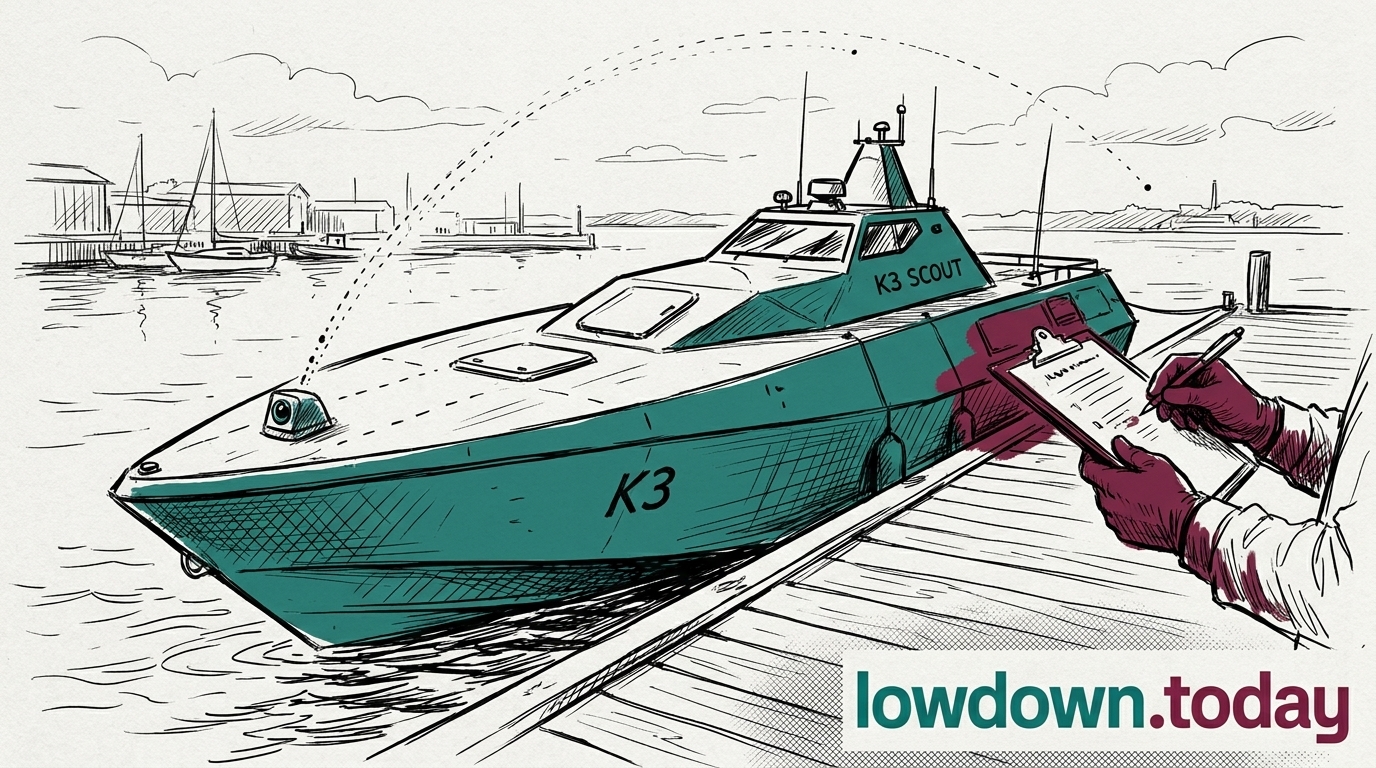
The Conservative opposition called on the Government on 9 August to 'urgently audit' equipment for hidden Chinese components, after the Telegraph's K3 SCOUT report. No named MP has been quoted on the record; the call came at party level, alongside the Ministry of Defence's own 10 August statement that no data had been compromised.
Netherlands Ministry of Defence
The Netherlands Ministry of Defence authorised Dutch Naval Design on 4 August to design 12-metre anti-submarine warfare uncrewed vessels for the Dutch-Belgian frigate programme, and to buy an adapted Compact FLASH dipping sonar from Thales Underwater Systems France. The order commits money and a named supplier while Britain's own certification body remains at the market-engagement stage.
Kraken Technology Group
Kraken Technology Group is a UK maritime-defence company based in Portsmouth that builds the K3 SCOUT, and crossed a $1bn valuation in July on a single-sourced $175m raise. The camera components reached the fleet under a third party's written security assurance, which the Platform Authority, which does not yet exist, was never positioned to check.
Navy Commercial
Navy Commercial
Navy Commercial at Whale Island published two notices on 5 August: 074032-2026, asking industry how to build a Platform Authority to certify uncrewed vessels, and 074351-2026, a GBP10m multi-role USV testbed for the Defence Chief Technology Officer. Responses on the Platform Authority close 19 August, ten days after the cameras were found transmitting to China.
Ministry of Defence
Ministry of Defence
The Ministry of Defence said on 10 August that a routine cyber vulnerability assessment found the camera fault, and a thorough investigation found no evidence that MoD data or systems had been accessed, compromised or transmitted externally. It stripped the cameras of internet connectivity but did not say whether it acted against the supplier.
Thales
Thales
Thales converted its 6 July engaging accord with Exail into a definitive combination agreement on 30-31 July, but the tender offer for Exail's remaining shares now closes by early 2028, later than July's timetable implied. Thales integrates its new undersea prime while still bidding against Kongsberg and DRASS's 2027 target for the AUKUS Pillar II contest.
