Skip to content
You can now search across every topic, entity and event.What's new
Ras Laffan Industrial City
Nation / PlaceQA

Ras Laffan Industrial City

Qatar's LNG export hub; 14 trains, ~17% global LNG capacity; struck by Iran March 2026, force majeure declared.

Last refreshed: 3 July 2026 · Appears in 2 active topics

Key Question

With two trains gone, can Ras Laffan ever supply Europe at pre-war levels?

Timeline for Ras Laffan Industrial City

#259 Jul
#233 Jul

Hosted QatarEnergy trains running below the guided restart pace

European Energy Markets: Hormuz stand-down has not reopened the strait
#2430 Jun

Hosted the two destroyed trains capping recovery near 83%

European Energy Markets: LNG carriers run under a separate cap
#2229 Jun
View full timeline →
Common Questions
What is Ras Laffan Industrial City?
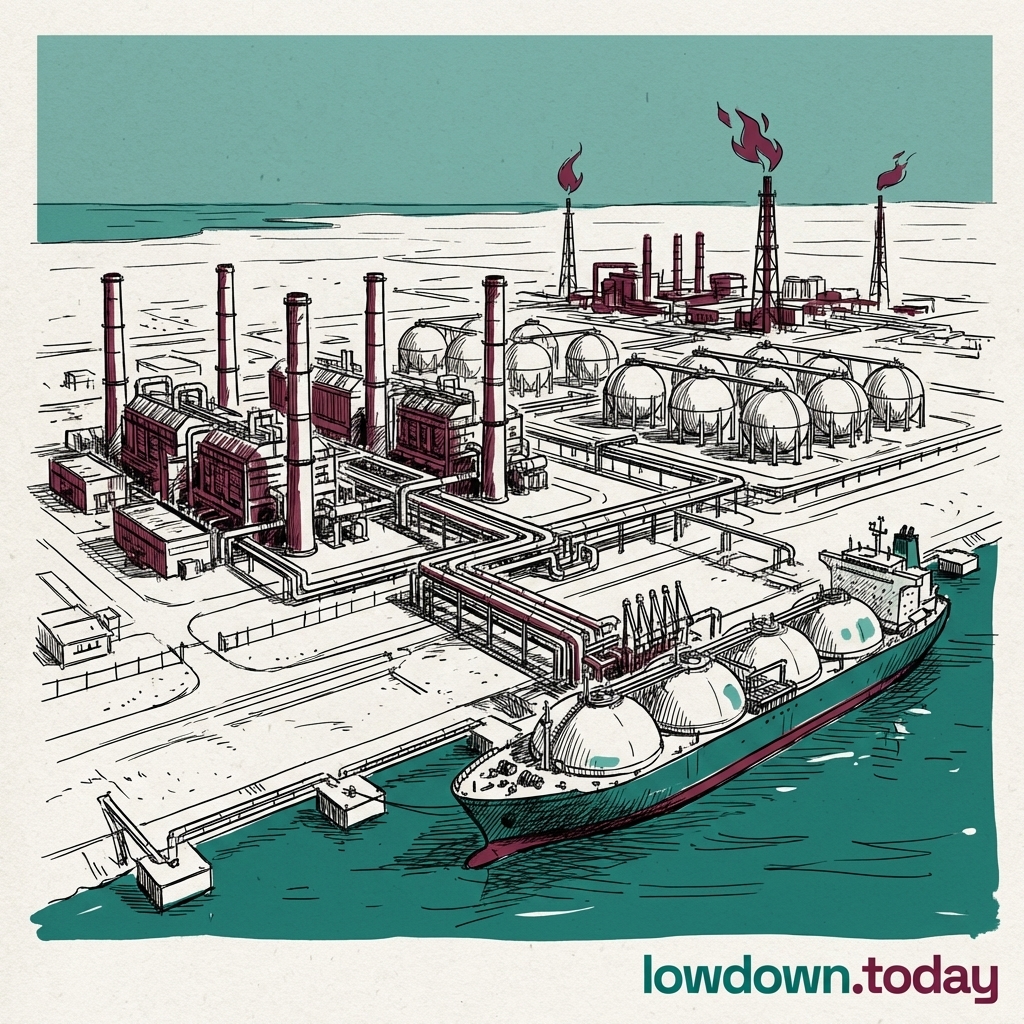
Qatar's primary LNG export hub, built from 1996 to exploit the North Field gas reservoir. Operated by QatarEnergy with 14 liquefaction trains and 77 million tonnes annual export capacity, supplying roughly 17-20% of globally traded LNG.
Was Ras Laffan attacked by Iran?
Yes. Iranian drone strikes in March 2026 forced QatarEnergy to halt all production and declare Force majeure. A subsequent Ballistic missile strike caused extensive damage. The Force majeure remains in force as of April 2026.Source: QatarEnergy
Is Ras Laffan still shut down?
Yes as of 15 April 2026. QatarEnergy's CEO said losses will outlast the war; restart is reported to be months away from the time of the strikes.Source: QatarEnergy

Background

Built from 1996 on Qatar's northeastern coast to exploit the North Field, the world's largest single gas reservoir shared with Iran's South Pars field, Ras Laffan became the operational centre of Qatar's LNG export economy. The facility operates 14 liquefaction trains and exports roughly 77 million tonnes of LNG annually, approximately 17% of global LNG export capacity. Operator QatarEnergy had committed to an expansion to 126 mtpa before the 2026 conflict. Long-term supply contracts link the facility to buyers across Japan, South Korea, China, India, and Europe.

Iranian drone and Ballistic missile strikes hit Ras Laffan in March 2026, forcing QatarEnergy to declare Force majeure on European supply contracts. No Qatari LNG has transited the Strait of Hormuz since 28 February 2026. A separate 1 April IRGC strike on a QatarEnergy fuel oil tanker inside Qatari territorial waters halted downstream urea production, driving global urea prices to $700/tonne.

Ras Laffan's suspension falls alongside the EU's 25 April 2026 short-term contract ban on Russian LNG, removing two major supply sources at once from European import portfolios. The IEA April 2026 Oil Market Report quantified the Hormuz disruption as removing over 300 mcm/day from global supply. Following the June 2026 US-Iran memorandum, QatarEnergy told buyers it can reach 50% of pre-war capacity within one month of SAFE Hormuz passage and 80% within two months; however, the two-train loss permanently caps recovery at roughly 80% of the pre-war rate regardless of Hormuz status. Multi-year reconstruction is required for full restoration. OIES's June 2026 Comment quantified the resulting European LNG shortfall at 2.1 bcm per month through October, projecting EU storage reaching only 70% rather than the mandated 80% by November.

That guided timeline has not held. Four days after the 29 June US-Iran stand-down, QatarEnergy was running at only 35% of Ras Laffan's 77 MTPA nameplate, short of the 50%-within-a-month pace it had guided at reopening, while IMF PortWatch counted just 27-43 daily Hormuz transits against an 84 pre-crisis baseline. Lloyd's List attributes the shortfall to strait logistics rather than diplomacy: naval escort convoys clear only three to four tankers a day on seven to eight warships, a ratio that cannot scale without more vessels in the corridor, meaning Ras Laffan's restart is now capped by escort capacity as much as by its own two destroyed trains.

More questions
Why did European gas prices spike in March 2026?
Iranian strikes on Ras Laffan forced QatarEnergy to halt all LNG production, removing roughly 17-20% of globally traded LNG. European gas prices surged 45-54% as buyers competed for alternative supply.Source: editorial
What is the North Field?
The world's largest single natural gas reservoir, shared between Qatar and Iran. Qatar extracts from it via Ras Laffan; the shared geology has long been a source of Iranian grievance over Qatar's extraction rates.
What is Ras Laffan and why is it important for global LNG?
Ras Laffan Industrial City is Qatar's LNG export hub, operating 14 liquefaction trains with ~77 million tonnes per year of capacity — roughly 17% of global LNG export capacity. It is operated by QatarEnergy and draws gas from the North Field.Source: QatarEnergy / IEA
When did Iran strike Ras Laffan and what was damaged?
Iranian drone and Ballistic missile strikes hit Ras Laffan in March 2026, causing significant LNG output losses. QatarEnergy CEO Saad al-Kaabi confirmed the damage and declared Force majeure on European supply contracts.Source: event
Is Ras Laffan still producing LNG in 2026?
Production is severely disrupted. No Qatari LNG has transited the Strait of Hormuz since 28 February 2026. A restart is reported to be months away. QatarEnergy is routing a small number of cargoes via its Golden Pass LNG stake in Texas.Source: event
What share of Europe's gas supply comes from Ras Laffan?
Before the conflict, EU member states had accelerated QatarEnergy contracts from 2022 to replace Russian pipeline gas. Belgium, Italy, and Poland were among the primary buyers under long-term contracts now subject to Force majeure.Source: European Commission
How many LNG trains at Ras Laffan were destroyed by Iran?
Two of the 14 liquefaction trains at Ras Laffan were destroyed in Iranian strikes in March 2026. QatarEnergy says full recovery will take years, and the two-train loss permanently caps output at roughly 80% of pre-war capacity even after Hormuz reopens.Source: European Energy Markets, Update #19
Can Ras Laffan reach pre-war LNG output after Hormuz reopens?
No. Two production trains were permanently destroyed, capping Ras Laffan at roughly 80% of pre-war output. QatarEnergy can reach 50% of pre-war capacity within one month of SAFE Hormuz passage, and 80% within two months, but full restoration requires multi-year reconstruction.Source: European Energy Markets, Update #19
Source Material
