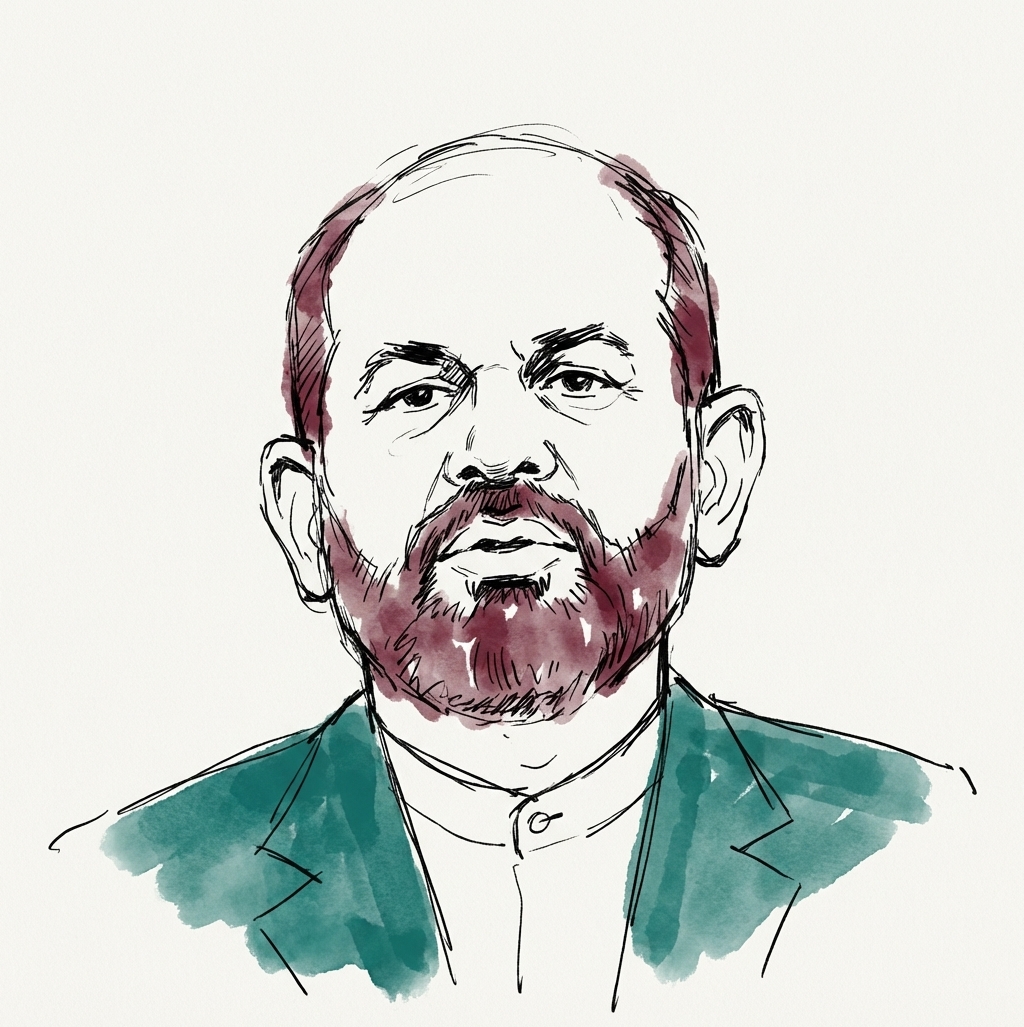
Ahmad Vahidi
IRGC operational chief demanding military spending from any sanctions relief; key obstacle to the MOU.
On 10 August, Ahmad Vahidi’s leadership of the Revolutionary Guard was formalised in one of six military decrees signed by Mojtaba Khamenei.
Last refreshed: 22 September 2026 · Appears in 1 active topic
Vahidi is no longer just blocking talks — he is writing the terms: can Araghchi survive that?
Timeline for Ahmad Vahidi
Mentioned in: An IRGC adviser claims enemy-soil orders
Iran Conflict 2026Received a formal decree for his IRGC command and promotion
Iran Conflict 2026: Khamenei signs six decrees in a single dayConsolidated military and negotiating command amid Mojtaba's absence
Iran Conflict 2026: Iran's new leader wounded, sources sayReported to be taking military and political decisions alongside Mojtaba Khamenei
Iran Conflict 2026: Iran names naval chief with no decreeMentioned in: Khamenei backs deal, in language of leaving
Iran Conflict 2026Background
Ahmad Vahidi is an Iranian military figure whose dossier evidence places him in command of the Islamic Revolutionary Guard Corps during the 2026 war. On 10 August, a decree from Mojtaba Khamenei confirmed his leadership of the Guard.
His importance rests on the Guard’s role in Iranian military and diplomatic decision-making. On 22 April, reporting described Vahidi and his hardline Guard faction as taking operational control of Iran’s military and diplomatic positions, sidelining the foreign ministry.
Vahidi has also publicly linked external economic relief to military rebuilding. On 17 June, he demanded that released Iranian frozen assets fund military spending, placing missiles and drones at the centre of the relief debate.
Vahidi’s command gains formal backing
On 10 August, Mojtaba Khamenei signed six military decrees, including one confirming Vahidi’s leadership of the Revolutionary Guard. The event described the decree as paperwork for a command he had held throughout the war, rather than a change in operational control.
For Vahidi, the order tied his authority to a leadership system reconstituted after Ali Khamenei’s death. On 5 July, reporting said Mojtaba Khamenei had not appeared publicly since injuries sustained in the February strike, making formal military decrees a significant signal of how authority was being presented.
Reference
What is Ahmad Vahidi's connection to the 1994 AMIA bombing?
Who is Ahmad Vahidi and what is his role in Iran?
Who runs Iran if Mojtaba Khamenei cannot appear in public?
What did Ahmad Vahidi say about Iran's frozen assets in June 2026?
Why is Ahmad Vahidi opposed to the Iran peace deal?
Who is Ahmad Vahidi and why does he matter to the Iran nuclear deal?
Has Iran actually agreed to a nuclear deal in June 2026?
Why did Iran suspend the nuclear deal negotiations in June 2026?
What government roles has Ahmad Vahidi held in Iran?
What did Ahmad Vahidi say about Iran ceasefire negotiations?
Why is Iran's president blocked from the supreme leader?
Is Ahmad Vahidi wanted by Interpol?


