Skip to content
Briefings are running a touch slower this week while we rebuild the foundations.See roadmap
Iran Conflict 2026
23APR

Vahidi's IRGC writes the diplomatic track

2 min read
08:02UTC

Major General Ahmad Vahidi and his hardline IRGC faction have seized operational control of Iran's military posture and negotiating delegation, sidelining civilian moderates including Foreign Minister Abbas Araghchi, according to GlobalSecurity.org analysis on 22 April.

ConflictAssessed
Key takeaway

Iran now runs two foreign policies on the same day, and the one with boarding parties has operational priority.

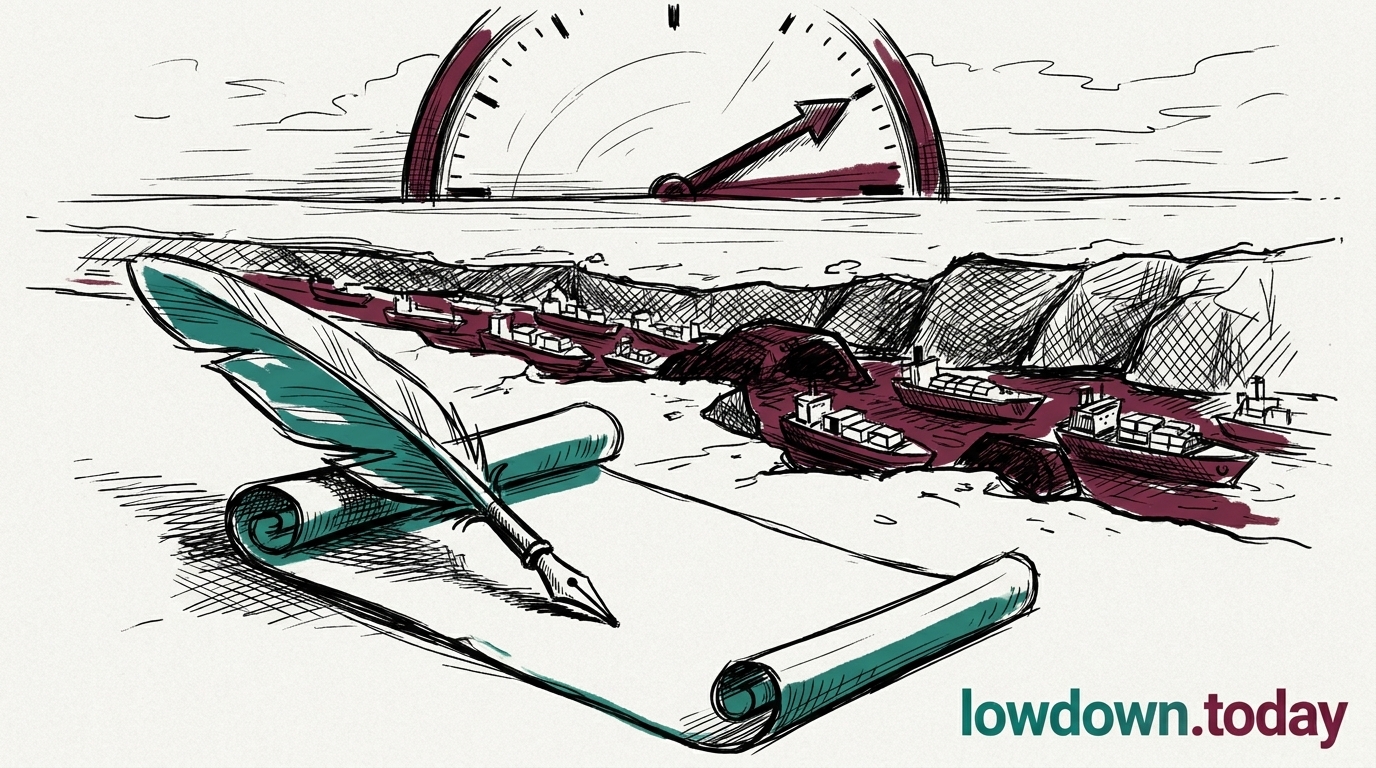
Major General Ahmad Vahidi and his hardline IRGC faction have taken operational control of Iran's military posture and negotiating delegation, GlobalSecurity.org reported on 22 April, sidelining civilian moderates including Foreign Minister Abbas Araghchi 1. The 17-18 April Hormuz open-then-close sequence, when the Foreign Ministry announced a reopening and the corps reversed it inside hours, set the pattern. The 22 April boardings confirmed it.

Vahidi rejected negotiations on Day 53 , telling IRGC deputies the corps opposes any settlement while the US blockade stands. Baqaei declared on 19 April that Iran's enriched uranium was non-transferable ; on Day 54 the corps translated that rhetorical line into boarding parties executed under the four-condition Tabnak order .

The split runs on institutional rails. The Majlis's 221-0 vote on 11 April to suspend IAEA cooperation, delivered through Speaker Mohammad Bagher Ghalibaf's bloc, gave the corps legal cover for what it now executes on the water. Any Araghchi signature at Islamabad, Oslo or Vienna is a starting offer the corps will choose whether to honour.

Deep Analysis

In plain English

Iran has two separate military structures. The regular army follows the elected government's orders. The IRGC, or Islamic Revolutionary Guard Corps, follows the Supreme Leader directly and has accumulated enormous economic and political power since Iran's 1979 revolution. Major General Ahmad Vahidi leads the IRGC's hardline faction. On 22 April his group effectively took control of both Iran's military operations and the diplomatic team that normally negotiates with foreign governments. Vahidi's faction pushed Foreign Minister Araghchi out of the decision-making loop on military and negotiating matters. This matters for any peace deal because the IRGC controls the ships, the ports, and the mines in the Strait of Hormuz. Even if Iran's civilian government signs an agreement, the corps can ignore it. Any deal that doesn't have explicit IRGC buy-in is unlikely to hold.

Deep Analysis
Root Causes

Iran's 1979 constitution created a parallel military structure in the IRGC that answers to the Supreme Leader directly, bypassing the elected government and conventional army chain of command. Over four decades the corps accumulated economic assets worth an estimated $200 billion: port operations, construction, and petrochemical contracts. A deal that reopens Hormuz to neutral shipping ends the corps's monopoly on the authorised transit channel it established via the Tabnak four-condition order.

Araghchi's admission that no surviving facility can enrich uranium at threshold levels surrendered Iran's primary nuclear bargaining chip without IRGC authorisation. The corps treats that concession as illegitimate because Araghchi lacks command authority over the nuclear programme he offered to constrain.

First Reported In

Update #77 · Pentagon: six months to clear Hormuz mines

GlobalSecurity.org· 23 Apr 2026
Read original
Different Perspectives
Israel
Israel
Israeli strikes on Hezbollah positions in Lebanon continued through the weekend, maintaining the secondary front. The IDF has publicly named Mojtaba Khamenei as an assassination target; his courier-governance mode complicates targeting but does not remove him from the order.
Russia
Russia
Putin told a Moscow press conference that Washington, not Tehran or Moscow, killed the Russia-custody uranium arrangement by demanding US-territory-only storage. Neither Tehran nor Washington has corroborated the account, which appeared in second-tier outlets only, consistent with a trial balloon rather than a formal position.
United Kingdom
United Kingdom
HMS Dragon was redeployed from the Eastern Mediterranean to the Middle East on 9 May, the first physical European platform commitment to the Gulf. The Ministry of Defence called it "prudent planning" while publishing no rules of engagement, no tasking order, and no vessel name, committing a named asset to a conflict zone before the political instrument authorising it exists.
United Arab Emirates
UAE air defences intercepted two Iranian drones over its territory on 10 May, a kinetic escalation six days after the Fujairah oil terminal strike that drew no formal protest. The three-state simultaneous operation, not the severity of individual strikes, appears to have crossed the threshold at which the GCC states collectively began responding.
Saudi Arabia
Saudi Arabia
Riyadh issued the first formal Gulf-state protest of the conflict on 10 May, demanding an "immediate halt to blatant attacks on territories and territorial waters of Gulf states", ending 10 weeks of channelling displeasure through OPEC+ quota discussions. The protest forecloses Saudi Arabia's preferred quiet-channel role and reduces the functioning back-channel architecture to Pakistan alone.
Qatar
Qatar
Doha is simultaneously a strike target, the site of the Safesea Neha attack 23 nautical miles offshore, and an active MOU mediator: Qatar's prime minister met Rubio and Vance in Washington the same weekend. Whether Qatar issues its own formal protest or maintains its dual role is the critical escalation indicator for the week of 11 May.