Skip to content
You can now search across every topic, entity and event.What's new
Russia-Ukraine War 2026
1APR

Iran bills the world for Hormuz oil

2 min read
16:30UTC

Esmaeil Baqaei said any future administration of the Strait of Hormuz must include payment for environmental damage to Iran's coastline, which he put in the trillions of dollars.

ConflictDeveloping
Key takeaway

Tehran reframed its Hormuz demand as environmental damages, which no maritime rule blocks.

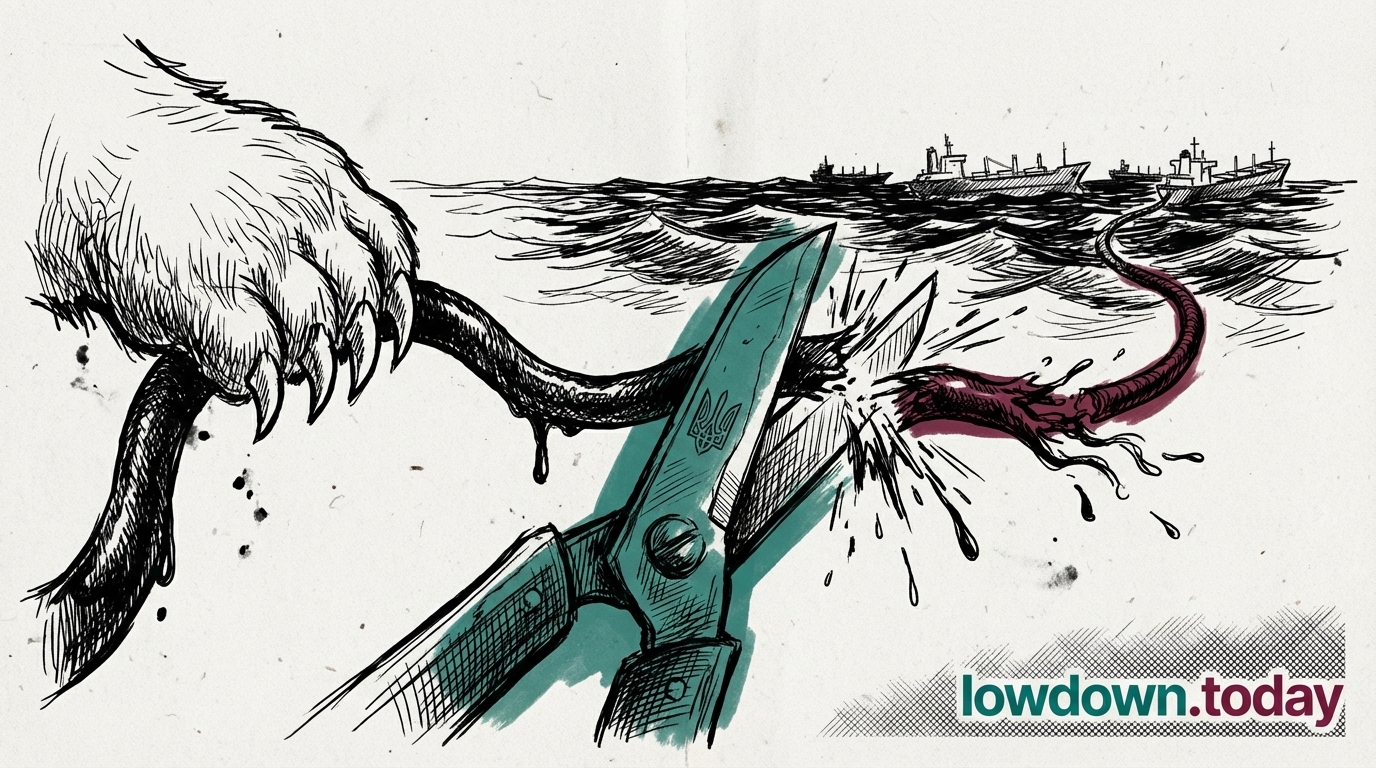
Iran's foreign ministry spokesman Esmaeil Baqaei said on Thursday 13 August that any future administration of the strait of Hormuz must include payment for environmental damage, putting the cumulative harm to Iran's coastal areas in the trillions of dollars 1. Oil had washed onto Qeshm Island, off Iran's southern coast, the day before. "Every party that benefits from commercial shipping through the strait of Hormuz carries both a legal and a moral obligation to remediate the environmental harm inflicted upon The Persian Gulf and the Sea of Oman," he said. He named no ship, no flag and no government.

Three days earlier the same spokesman ruled transit fees out of the Oman talks and named four working areas, one of them environmental protection . That sequence matters because a charge for passage runs straight into the transit-passage right that every maritime state cites against Iran, the objection that has sunk each fee proposal since the spring.

A remediation claim carries no such problem. Framed as damage owed rather than a price paid, it needs no ceasefire, no counterparty signature and no naval success to stay alive, and it can be tabled at any point a waterway arrangement is drafted. The trillions figure is Baqaei's own characterisation, offered without a party to bill or a period to bill for, and it is worth nothing as a valuation. The shape of the claim will outlive the war that produced it.

Deep Analysis

In plain English

Oil washed up on Iran's Qeshm Island in mid-August, and Iran's foreign ministry spokesman, Esmaeil Baqaei, responded by saying any future arrangement over who controls the Strait of Hormuz must include payment for environmental damage running into trillions of dollars. He did not say who should pay. Separately, the oil causing the pollution has been traced to a tanker called the Caroline Bezengi, which was carrying Russian crude and is under international sanctions for helping Russia dodge them. Iran has not publicly named Russia or that tanker's owners as responsible, even though the evidence points there, likely because Russia has been supplying Iran through the war and Tehran has reasons not to embarrass an ally in public.

Deep Analysis
Root Causes

Iran's reluctance to name a payer sits against a wartime dependency it cannot easily set aside: Russia's Caspian shipping corridor into Bandar Anzali has supplied Iran throughout the conflict, a route Israel and Ukraine have each struck this year.

That dependency gives Tehran a live strategic reason not to publicly blame a Sovcomflot-linked vessel for polluting its own coastline.

What could happen next?
  • Consequence

    Framing environmental compensation as a precondition for any future Hormuz administration arrangement adds a new, uncosted demand layered onto Iran's existing six political conditions (ID:5645) for reopening the strait.

  • Meaning

    Naming no payer lets Iran raise the political cost of any Hormuz settlement without committing to a legal claim against any specific state or company, including its own wartime supplier.

First Reported In

Update #170 · The ships Iran does not control are leaving Hormuz

Press TV· 14 Aug 2026
Read original
Different Perspectives
Belarus
Belarus
Minsk announced completion of its own 37th Separate Airborne Assault Brigade near Gomel, under plans dating to August 2025 rather than a response to any single frontline event this window, keeping its hedge of hosting the war without formally joining Russia's mobilisation drive.
European Union / Operation IRINI states
Italy, Greece and Poland boarded the sanctioned tanker Toa Payoh off Pantelleria under a standing EU mandate rather than a national decision, extending enforcement from the Channel and Baltic and the Black Sea and Azov into the Mediterranean. Italian Defence Minister Guido Crosetto praised the crew; the captain's refusal to produce documentation left detention unconfirmed.
Poland and the NATO eastern flank
Warsaw's Coordination Team said explicitly its forces tracked the 30 July missile incursion and were ready to shoot it down, then flew air cover for an EU tanker interdiction three days later. Poland is simultaneously the war's nearest spillover victim and a contributor to enforcing sanctions against the state causing that spillover.
Ukraine (government, defence establishment and civilians)
Kyiv runs its manpower crisis through acting Defence Minister Yevhen Khmara, whose formal appointment waits for parliament's 18 August return, and a fortnight-old Commander-in-Chief, Mykhailo Drapatyi. Reported attacks on enlistment officers rose from 5 cases in 2022 to 341 in 2025, reaching Odesa's Territorial Recruitment Centre staff directly on 2 August.
Kremlin and Russian domestic economic voices
Moscow has not addressed July's advance-rate collapse or Sberbank's OFZ warning; Novak's diary ran to OPEC+ quota diplomacy with no diesel item logged since 15 July. Economist Nikolai Korzhenevsky calls the Central Bank's RUB 2.3tn in bank lending effectively deficit monetisation, a framing Sberbank's Skvortsov, with his own institutional interest, has not disputed.
IAEA (Rafael Grossi)
IAEA inspectors logged Zaporizhzhia's 22nd loss of off-site power, ten of them in the last three months, after a thunderstorm knocked out the plant's sole surviving backup line. Grossi reads the accelerating frequency, not any single outage, as the safety signal now that the plant's redundancy is exhausted.
