Skip to content
Briefings are running a touch slower this week while we rebuild the foundations.See roadmap
Russia-Ukraine War 2026
1APR

F/A-18 disables tankers via smokestack on 8 May

4 min read
16:30UTC

A US Navy F/A-18 from USS George H.W. Bush put 500-pound laser-guided warheads down the chimneys of M/T Sea Star III and M/T Sevda on 8 May. CENTCOM's blockade redirection count climbed to 57.

ConflictDeveloping
Key takeaway

An aerial doctrine that disables tankers without sinking them, the same weekend Trump called it 'a love tap'.

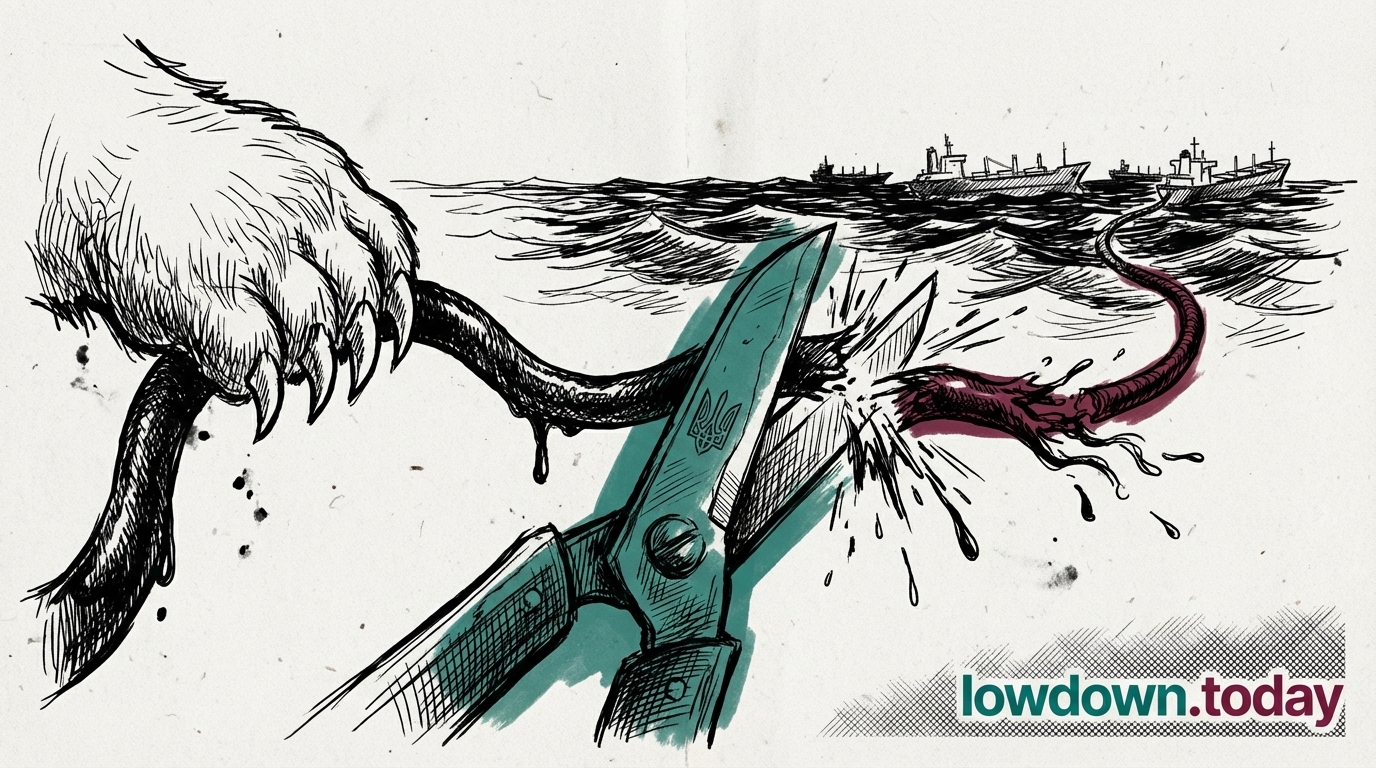
An F/A-18 Super Hornet launched from the USS George H.W. Bush (CVN 77) disabled two Iranian-flagged tankers, M/T Sea Star III and M/T Sevda, on 8 May by firing precision munitions through their smokestacks 1. US Central Command (CENTCOM), the Pentagon command responsible for the Strait of Hormuz blockade, confirmed both vessels were attempting to reach Iranian ports in violation of standing redirection orders. The ordnance, likely 500-pound laser-guided warheads, was dropped down the chimney rather than into hull or magazine, disabling the propulsion and electrics without rupturing the cargo or killing the crew.

This was the third blockade enforcement action in a fortnight and the first to use aerial precision-disabling rather than naval gun fire. CENTCOM's commercial-vessel redirection count has now climbed from 48 on 3 May to 52 on 7 May to 57 on 8 May, five fresh redirections in two days. Four Iranian-flagged vessels have been physically disabled across the campaign so far 2. The technique maps onto a long-standing US Navy preference for proportional kinetic response: the 1988 Praying Mantis engagements aimed to neutralise Iranian platforms without sinking civilian shipping in the same waters. The 2026 variant uses laser-guided ordnance for what 1988 did with five-inch gun fire.

The Khatam al-Anbiya Central Headquarters, the IRGC overarching joint operational command, claimed "significant damage" to US destroyers from the 7-8 May missile, drone and small-boat salvos near Bandar Abbas . CENTCOM confirmed zero hull damage and zero US casualties 3. Tasnim, the IRGC-linked agency, cited an unnamed senior source claiming three US destroyers fled to the Gulf of Oman. Both accounts cannot be true; both are real official statements in an information war running behind the kinetic one.

Donald Trump described the same exchange to ABC News as "just a love tap" on the same weekend his pilots were dropping laser-guided ordnance down two tanker chimneys. The verbal de-escalation track and the kinetic enforcement track are no longer running on the same calendar. The new precision-disabling doctrine creates an evidentiary record (vessel still afloat, intact cargo, surviving crew) that enables prosecution under the Hormuz blockade legal architecture, where sinking would have foreclosed it. CENTCOM has not yet published the rules of engagement under which an aircraft may put precision munitions into a non-combatant tanker.

Deep Analysis

In plain English

A US Navy jet from the aircraft carrier USS George H.W. Bush flew over two Iranian oil tankers on 8 May and dropped precision bombs through their smokestacks, the metal exhaust chimneys on top of the ships. This disabled both ships' engines and electricity without blowing holes in the hull or igniting the cargo. This was not a random attack. The US has been enforcing a naval blockade, turning back ships trying to deliver oil to Iran. These two tankers were attempting to bypass the blockade to reach Iranian ports. The method of disabling through the smokestack, rather than firing at the hull, was chosen specifically to incapacitate the vessel without sinking it or killing the crew, so the ships can be towed away and the action defended as proportionate under international law. Despite this, President Trump described the same strikes to ABC News as 'just a love tap', while the actual bombs used weighed 500 pounds. The gap between his public description and what his military actually did illustrates how differently the verbal and military tracks of this war are being run.

Deep Analysis
Root Causes

The US Navy's preference for disabling rather than sinking reflects a structural constraint specific to the Strait of Hormuz geography.

The strait is 33 km wide at its narrowest navigable point; a sunk VLCC (Very Large Crude Carrier) at the choke would produce a navigational obstruction with a draught exceeding 20 metres, potentially closing the channel entirely for weeks. **CENTCOM** planners are operating with an implicit constraint that the blockade must remain selectively permeable: enough enforcement to coerce, not enough structural damage to make the strait itself unnavigable. Disabling-not-sinking preserves the option space.

The F/A-18 strike on M/T Sea Star III and M/T Sevda on 8 May is the third enforcement action and the first aerial one, driven by the absence of a surface-boarding alternative that could safely approach vessels in an active IRGC-fire environment. The switch to aerial precision was not a doctrinal preference but a tactical necessity produced by the IRGC's small-boat swarm tactics near Bandar Abbas.

What could happen next?
  • Precedent

    The smokestack precision-disabling technique, applied without published RoE, sets a doctrinal precedent other naval powers may cite to justify similar disabling strikes on third-party shipping in contested chokepoints.

    Medium term · 0.8
  • Risk

    Without published RoE, an aircraft crew error or escalation in a future engagement has no established legal boundary; the first fatality on a disabled tanker would collapse the proportionality defence CENTCOM is currently relying on.

    Short term · 0.82
  • Consequence

    The 57-vessel CENTCOM redirection count creates an evidentiary record that will be presented to the International Tribunal for the Law of the Sea once Iran or a flag state files; each disabled vessel is a discrete legal case.

    Long term · 0.7
First Reported In

Update #92 · An MOU asking Iran to surrender what nobody can count

Arms Control Association· 9 May 2026
Read original
Different Perspectives
North Korea / DPRK
North Korea / DPRK
ISW confirmed the first mounting of DPRK Type-75 MLRS on Russian autonomous UGVs near Kharkiv on 7 June, the latest step in a supply axis that escalated from shells in 2023 to troops in 2024. Pyongyang gains live battlefield data on its ordnance and on Russia's uncrewed-systems programme.
IAEA / Rafael Grossi
Grossi confirmed Chornobyl structural damage with nuclear material metres away and could not attribute the ZNPP 15-hour blackout during the agreed repair window. Six ceasefires brokered and broken at ZNPP, compounded by Rosatom's May attack on IAEA neutrality, have eroded his ability to enforce the windows he negotiates.
Emmanuel Macron / France
Macron co-signed the E3 framework whose line-of-contact baseline marks Europe's first formal acceptance that 1991 borders are not the opening position. France's role carries weight because Macron had previously proposed a European force for Ukraine, and the framework's multinational force point is the vehicle for that.
Keir Starmer / E3
Keir Starmer / E3
Starmer, Macron and Merz met Zelenskyy on 7 June and backed a five-point framework taking the line of contact as the talks baseline, conceding roughly one fifth of Ukraine in exchange for a multinational force and frozen assets. With US mediation ended, the NATO Ankara summit on 7-8 July is the next test.
Vladimir Putin / Kremlin
Putin used SPIEF to reject Zelenskyy's summit letter, citing 'elements of rudeness', and repeated the pre-agreed treaty precondition that has frozen every diplomatic round since May. The SPIEF platform's message of investor confidence was punctured by naval fires visible from St Petersburg, which Moscow declined to dispute in scale.
Ukraine / Unmanned Systems Forces
Commander Brovdi confirmed USF units tracked and set fire to Boikyi at Kronstadt, while Code 9.2 struck the Chonhar Bridge the following day. Ukraine is sequencing strikes for rear-area interdiction and political timing rather than ground gains, trading the Baltic Fleet's home base for the logistics squeeze Russia cannot absorb without rationing its own occupied territory.
