Skip to content
Briefings are running a touch slower this week while we rebuild the foundations.See roadmap
Iran Conflict 2026
8MAY

IRGC fires on US destroyers in Hormuz

4 min read
11:07UTC

Iran's Revolutionary Guards launched missiles, drones and small boats at US guided-missile destroyers near Bandar Abbas at 22:10 on 7 May, the first confirmed kinetic engagement with the US Navy since Trump paused Project Freedom on 5 May.

ConflictDeveloping
Key takeaway

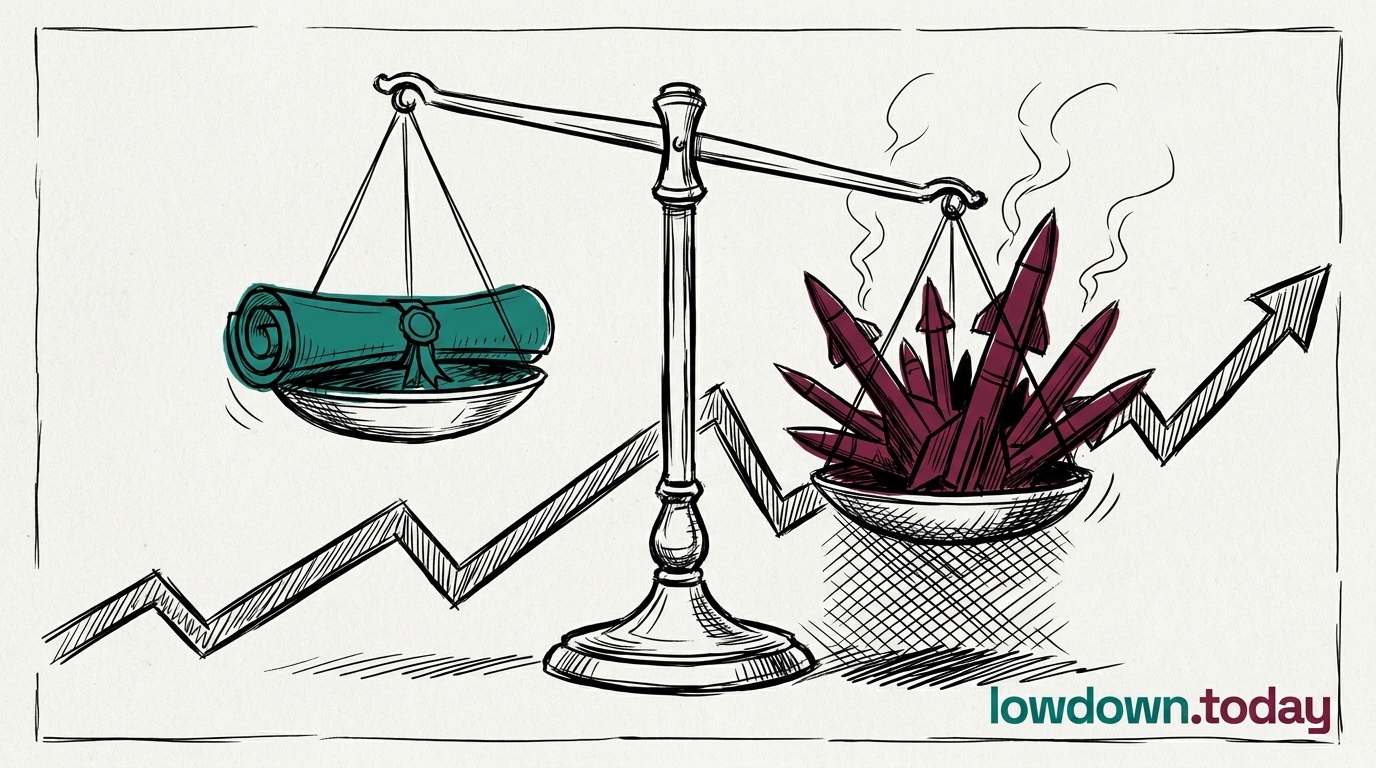
Iran's military and diplomatic tracks fired and read peace terms at the same hour, and markets priced the missiles.

Explosions were reported near Bandar Abbas at 22:10 local on 7 May, and Iran said it was "exchanging fire with the enemy near the strait" by 22:27. The Islamic Revolutionary Guard Corps (IRGC) targeted US guided-missile destroyers with "multiple missiles, drones and small boats", United States Central Command (CENTCOM) said in a press release quoted by wires after its own site returned a 403 error 1. US forces responded in self-defence; no destroyer damage or US casualties were reported in initial accounts. Iran paused Strait of Hormuz transits as a consequence.

The engagement matters because it is the first confirmed missile-drone-boat attack on US Navy vessels since Donald Trump paused Project Freedom on 5 May , the CENTCOM Hormuz escort operation built around exactly this scenario . Iran framed the exchange as a US ceasefire breach against two ships. Washington framed it as self-defence against Iranian attack. The United States said separately that Iran attacked a Chinese vessel near the strait at 03:11 on 8 May; Beijing has not confirmed and no independent corroboration has emerged 2. That second claim, if Beijing confirms, reframes the bilateral entering the 14-15 May summit.

Brent Crude climbed to roughly $101.20 on 8 May, up $1.80 (+1.81%) from the $99.40 settle on 7 May, the first triple-digit close since the MOU-induced dip 3. The market priced the missiles, not the diplomatic paper still circulating in Tehran.

The operational point is that the IRGC retains the small-boat fleet to mount this kind of swarm: Iran's Navy claimed 60% small-boat survival after the early Project Freedom strikes , and the 7-8 May exchange used the surviving platforms exactly as that figure forecast. The IRGC's command, budget and economic conglomerate run through Ali Khamenei's office under Article 110 of Iran's constitution, not through President Masoud Pezeshkian's civilian cabinet. Abbas Araghchi's Foreign Ministry was reading a US peace text at the same hour the IRGC was firing on the destroyers Project Freedom had stationed to escort traffic the text would reopen. That is not coordination failure; it is constitutional architecture.

The night of 7-8 May resets the political clock around the 9 May reply deadline. Any CENTCOM casualty count or confirmed destroyer damage before that deadline transforms the US domestic position from "war is over" to active combat. Brent's rebound on the kinetic event, not on the paper, suggests markets will price the next missile faster than they price the next signature.


Deep Analysis

In plain English

Iran's Revolutionary Guards (a separate military force that answers to the Supreme Leader, not to Iran's elected government) fired missiles, drones and speedboats at US Navy destroyers near the Strait of Hormuz on 7-8 May. The US said its ships fired back in self-defence and no American vessel was hit. The timing was extraordinary: at the same hour, Iran's foreign ministry was reading a US peace proposal in Tehran. The two sides have different chains of command, so the diplomats and the soldiers do not have to agree.

Deep Analysis
Root Causes

The IRGC operates under Article 110 of Iran's constitution, which places it in direct subordination to the Supreme Leader, outside the civilian cabinet's chain of command. The Foreign Ministry was reviewing a US peace text at the hour the IRGC was firing. Iran's system allows simultaneous diplomatic exploration and kinetic action without the one invalidating the other, because both report to different principals under the same constitutional authority.

The US negotiating framework, routed through Pakistan rather than any official US-Iran channel, has no interlocutor with authority over the IRGC. Every US paper delivered to Araghchi's ministry reaches the civilian government that does not control the force doing the shooting.

What could happen next?
  • Risk

    Any US casualty or confirmed hull damage before 9 May transforms Trump's domestic position from 'war is over' to active combat, removing the political space for MOU acceptance.

    Immediate · 0.85
  • Consequence

    The IRGC has demonstrated it retained tri-modal attack capability after Project Freedom's first week, which resets intelligence assessments of how much force degradation the escort operation actually achieved.

    Short term · 0.75
  • Precedent

    The 7-8 May attack is the first confirmed missile-drone-boat attack on US Navy vessels since Project Freedom launched; if it passes without US retaliation, it establishes a threshold the IRGC will treat as repeatable.

    Medium term · 0.7
First Reported In

Update #91 · MOU in Tehran, missiles in the strait

CENTCOM· 8 May 2026
Read original
Different Perspectives
Israel
Israel
Israeli strikes on Hezbollah positions in Lebanon continued through the weekend, maintaining the secondary front. The IDF has publicly named Mojtaba Khamenei as an assassination target; his courier-governance mode complicates targeting but does not remove him from the order.
Russia
Russia
Putin told a Moscow press conference that Washington, not Tehran or Moscow, killed the Russia-custody uranium arrangement by demanding US-territory-only storage. Neither Tehran nor Washington has corroborated the account, which appeared in second-tier outlets only, consistent with a trial balloon rather than a formal position.
United Kingdom
United Kingdom
HMS Dragon was redeployed from the Eastern Mediterranean to the Middle East on 9 May, the first physical European platform commitment to the Gulf. The Ministry of Defence called it "prudent planning" while publishing no rules of engagement, no tasking order, and no vessel name, committing a named asset to a conflict zone before the political instrument authorising it exists.
United Arab Emirates
UAE air defences intercepted two Iranian drones over its territory on 10 May, a kinetic escalation six days after the Fujairah oil terminal strike that drew no formal protest. The three-state simultaneous operation, not the severity of individual strikes, appears to have crossed the threshold at which the GCC states collectively began responding.
Saudi Arabia
Saudi Arabia
Riyadh issued the first formal Gulf-state protest of the conflict on 10 May, demanding an "immediate halt to blatant attacks on territories and territorial waters of Gulf states", ending 10 weeks of channelling displeasure through OPEC+ quota discussions. The protest forecloses Saudi Arabia's preferred quiet-channel role and reduces the functioning back-channel architecture to Pakistan alone.
Qatar
Qatar
Doha is simultaneously a strike target, the site of the Safesea Neha attack 23 nautical miles offshore, and an active MOU mediator: Qatar's prime minister met Rubio and Vance in Washington the same weekend. Whether Qatar issues its own formal protest or maintains its dual role is the critical escalation indicator for the week of 11 May.



