Skip to content
Briefings are running a touch slower this week while we rebuild the foundations.See roadmap
Russia-Ukraine War 2026
1APR

CENTCOM blockade widens past Hormuz strait

4 min read
16:30UTC

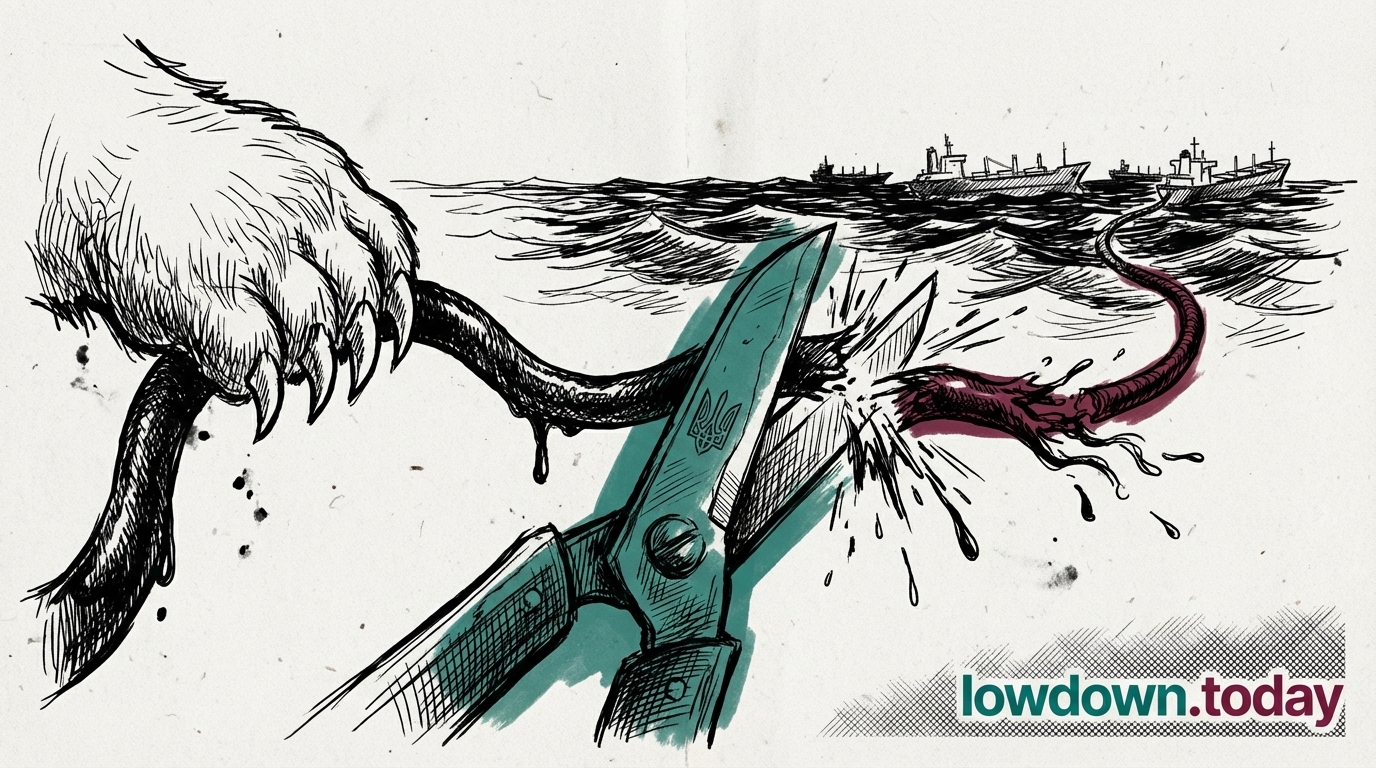
CENTCOM redirected five tankers between Friday 25 and Monday 27 April, taking the cumulative count from 33 to 38; the LPG tanker SEVAN was seized in the Arabian Sea, the first interdiction outside the strait itself.

ConflictDeveloping
Key takeaway

The blockade is no longer a strait operation; it is an Arabian Sea campaign with the SEVAN as the precedent.

CENTCOM announced on Monday 27 April that US forces have now turned around or returned to port 38 vessels under the blockade 1. The cumulative count was 33 at Friday's close on 25 April , the second day held flat; the five interdictions logged between Friday 25 and Monday 27 April mark the fastest two-day escalation since the campaign began on 13 April. CENTCOM is the United States Central Command, the combatant command responsible for naval operations in the Gulf and Arabian Sea.

The 37th vessel, the LPG tanker SEVAN (IMO 9177806), was taken on Saturday 25 April in the Arabian Sea, not the strait 2. The seizure took US enforcement out of the Strait of Hormuz for the first time since the 13 April blockade began. Windward's maritime intelligence reporting placed the SEVAN well east of the chokepoint; ships routing wide of the 33-kilometre strait now no longer escape it. The state-linked Tasnim agency carried the IRGC (Islamic Revolutionary Guard Corps) line on 27 April: "Controlling the strait of Hormuz and maintaining the shadow of its deterrent effects over America is the definitive strategy of Islamic Iran."

The geographic widening matters because the legal architecture being drafted at Northwood by 30 European and Asian planners assumes a strait operation under UNCLOS transit-passage doctrine. The SEVAN seizure puts US enforcement outside that frame. Oman's territorial waters cover the strait's southern flank only; everything beyond is high seas, where the question of which flag-state's law applies becomes thornier. The IRGC's 24 April end-of-self-restraint declaration and the carrier concentration of three groups in theatre sit on either side of the same widening perimeter.

Deep Analysis

In plain English

The US Navy has been stopping ships from reaching or leaving Iranian ports since 13 April. Up to now, that enforcement happened inside the Strait of Hormuz, the 33-kilometre passage between Iran and Oman that almost all Gulf oil must pass through. On 25 April, the US seized a tanker called the Sevan in the open Arabian Sea, well east of the strait itself. Ships had started routing around the strait to avoid the blockade. The Sevan seizure means that workaround no longer works: the blockade now applies wherever the US Navy chooses to enforce it. In practical terms, there is now no confirmed safe ocean route from the Gulf that avoids US interception.

Deep Analysis
Root Causes

The Arabian Sea extension has a specific operational cause. Ships routing wide of Hormuz to avoid interdiction were transiting via routes outside CENTCOM's declared enforcement geometry. The SEVAN's seizure closes that evasion. The structural driver is the mismatch between a destination-based written order and a geography-based blockade: destination-based orders must expand geographically to remain effective as operators find routing workarounds.

The five-vessel jump in 48 hours also reflects the IRGC's 24 April end-of-self-restraint declaration. With the IRGC signalling escalatory intent, CENTCOM accelerated its enforcement tempo, producing the fastest two-day interception pace of the blockade. Iranian escalation rhetoric followed by US enforcement acceleration has driven every major count jump since 13 April.

What could happen next?
  • Risk

    A flag state whose vessel is seized in international waters may invoke UNCLOS Article 110 provisions, which CENTCOM's open-ocean seizure arguably does not satisfy, triggering an international tribunal complaint that could delegitimise the wider blockade.

    Short term · 0.65
  • Consequence

    Lloyd's of London war-risk premiums for Arabian Sea routing will reprice upward following the SEVAN precedent, raising shipping costs for all Asian crude importers regardless of their Hormuz routing decisions.

    Immediate · 0.88
  • Precedent

    CENTCOM's destination-based written order has been operationalised as a geographic perimeter extending to the open Arabian Sea, a precedent that will be cited in any post-war renegotiation of maritime blockade law.

    Long term · 0.8
First Reported In

Update #81 · Iran writes Phase 3; Trump posts Phase 1

Windward· 27 Apr 2026
Read original
Different Perspectives
North Korea / DPRK
North Korea / DPRK
ISW confirmed the first mounting of DPRK Type-75 MLRS on Russian autonomous UGVs near Kharkiv on 7 June, the latest step in a supply axis that escalated from shells in 2023 to troops in 2024. Pyongyang gains live battlefield data on its ordnance and on Russia's uncrewed-systems programme.
IAEA / Rafael Grossi
Grossi confirmed Chornobyl structural damage with nuclear material metres away and could not attribute the ZNPP 15-hour blackout during the agreed repair window. Six ceasefires brokered and broken at ZNPP, compounded by Rosatom's May attack on IAEA neutrality, have eroded his ability to enforce the windows he negotiates.
Emmanuel Macron / France
Macron co-signed the E3 framework whose line-of-contact baseline marks Europe's first formal acceptance that 1991 borders are not the opening position. France's role carries weight because Macron had previously proposed a European force for Ukraine, and the framework's multinational force point is the vehicle for that.
Keir Starmer / E3
Keir Starmer / E3
Starmer, Macron and Merz met Zelenskyy on 7 June and backed a five-point framework taking the line of contact as the talks baseline, conceding roughly one fifth of Ukraine in exchange for a multinational force and frozen assets. With US mediation ended, the NATO Ankara summit on 7-8 July is the next test.
Vladimir Putin / Kremlin
Putin used SPIEF to reject Zelenskyy's summit letter, citing 'elements of rudeness', and repeated the pre-agreed treaty precondition that has frozen every diplomatic round since May. The SPIEF platform's message of investor confidence was punctured by naval fires visible from St Petersburg, which Moscow declined to dispute in scale.
Ukraine / Unmanned Systems Forces
Commander Brovdi confirmed USF units tracked and set fire to Boikyi at Kronstadt, while Code 9.2 struck the Chonhar Bridge the following day. Ukraine is sequencing strikes for rear-area interdiction and political timing rather than ground gains, trading the Baltic Fleet's home base for the logistics squeeze Russia cannot absorb without rationing its own occupied territory.
