Skip to content
Welcome, thoughtbot's Giant Robots listeners!Start here
Russia-Ukraine War 2026
19JUL

EU targets shadow fleet operators

4 min read
13:35UTC

With 1,337 ships in Russia's shadow fleet, Brussels abandons vessel-by-vessel seizures for a systemic assault on the shipowners, brokers, and registries that keep the fleet running.

ConflictDeveloping
Key takeaway

Targeting brokers, registries, and insurers could collapse shadow fleet viability — but only if China's enabling role is simultaneously addressed.

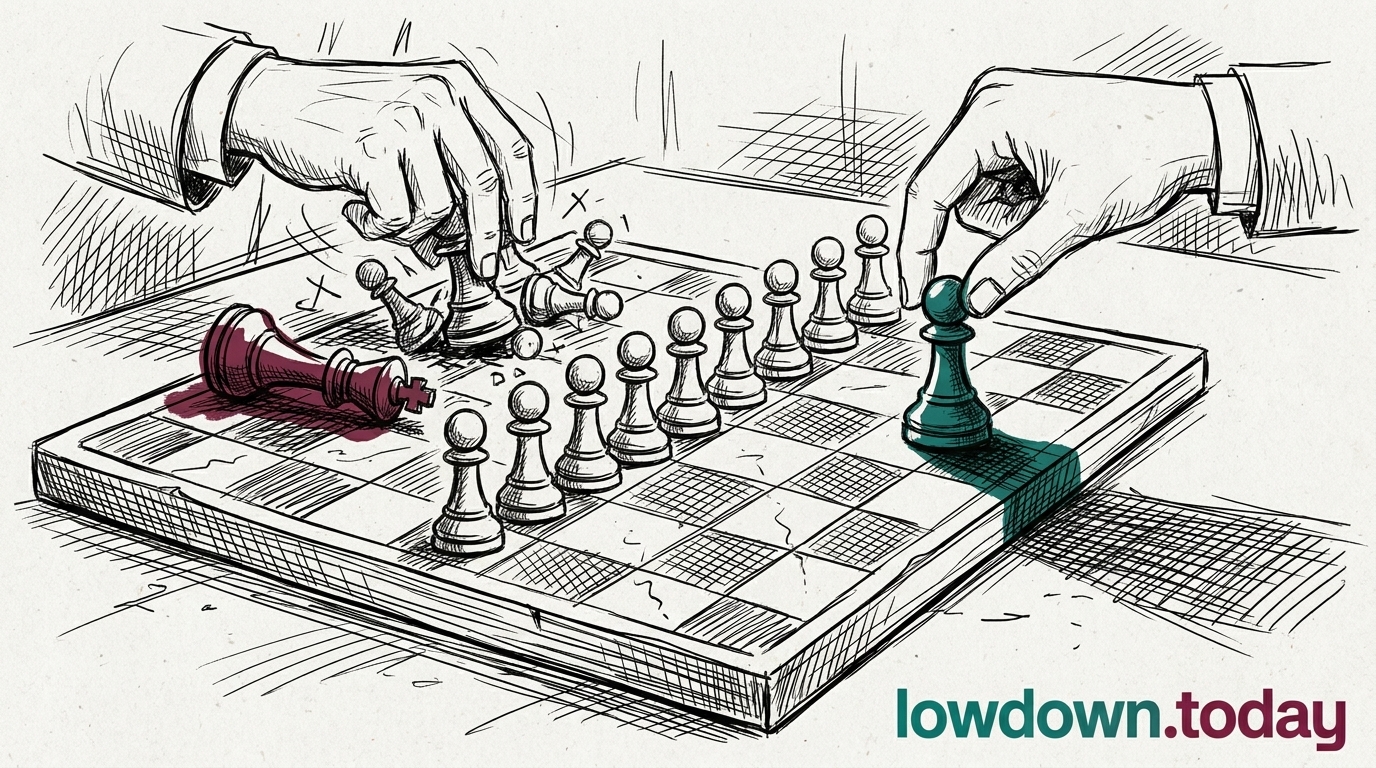
EU High Representative Kaja Kallas declared on 18 March that the EU will target shadow fleet operators — shipowners, brokers, and registries — rather than continuing to pursue individual vessels. Russia's shadow fleet numbers 1,337 vessels. At the current pace of three seizures in three weeks, vessel-by-vessel enforcement would take decades to clear it. Kallas's announcement reframes the objective: instead of catching ships, dismantle the commercial infrastructure that dispatches them.

The logic is upstream enforcement. A shadow fleet voyage requires a willing shipowner, a broker to arrange the cargo, a registry to provide a flag, and — until recently — an insurer to cover the hull. Sanctioning the companies and individuals who perform these functions could ground multiple vessels per action, rather than one boarding per coast guard operation. The EU's approach mirrors counter-narcotics strategy, where targeting logistics networks has historically proved more disruptive than seizing individual shipments.

Russia has already moved to blunt this strategy. Maritime intelligence firm Windward reported that Sovcomflot has reflagged 56% of its fleet to Russia's own ship registry⁠1, placing those vessels beyond the jurisdictional reach of European flag-state enforcement. Ships sailing under the Russian flag, with Russian insurance and Russian classification society oversight, are functionally immune to the legal instruments European courts applied in the Ethera, Caffa, and Sea Owl I cases. The reflagging accelerated after Western classification societies and insurers withdrew coverage — each enforcement success pushing more of the fleet into a self-contained Russian maritime ecosystem.

The EU's escalation runs in the opposite direction to American policy. Washington disbanded its sanctions-evasion task force on 5 February and issued waivers on 124 million barrels of Russian oil on 12 March. European states are criminalising shadow fleet operations while the United States eases the commercial pressure that made those operations necessary. With the EU's ban on short-term Russian LNG contracts taking effect on 25 April, the operator-level targeting may face immediate strain — particularly from member states like Slovakia and Hungary, which have already leveraged energy dependence as political tools against EU consensus.

Deep Analysis

In plain English

Russia's shadow fleet does not operate alone. It depends on a commercial chain: brokers who arrange shipments, small-nation registries that grant legal flags, and insurers who cover ships against damage and liability. Previously the EU seized individual vessels. Kallas's declaration means the EU intends to sanction the companies and individuals running this infrastructure — not just the ships. This is analogous to targeting a smuggling ring's accountants and logistics firms rather than confiscating individual shipments.

Deep Analysis
Synthesis

Sovcomflot's mass reflagging has already partially neutralised the registry lever Kallas is threatening. The operative enforcement frontier is therefore maritime insurance — dominated by Lloyd's of London and the International Group of P&I Clubs, both UK/EU-regulated. Co-ordinated EU–UK denial of P&I coverage to shadow fleet operators would collapse commercial viability across the entire fleet. This is the Iran 2012 model applied to Russia — and its success depends entirely on post-Brexit UK regulatory alignment with EU sanctions architecture.

Root Causes

The shadow fleet's structural resilience stems from a gap in the international maritime legal order: UNCLOS grants flag states primary enforcement jurisdiction. Russia has reflagged 56% of Sovcomflot's fleet to its own registry, making itself the flag state of record and foreclosing registry-level enforcement. This compresses the available enforcement frontier to maritime insurance — regulated primarily in EU and UK jurisdictions — as the most accessible remaining chokepoint.

Escalation

Kallas's declaration signals a doctrinal shift from in rem (property) to in personam (institutional) enforcement — requiring new EU legislative instruments, because existing sanctions regulations were designed around vessel and entity designation, not diffuse operator networks. Executing this shift may require secondary EU legislation and treaty-level enforcement co-operation with non-EU jurisdictions hosting shadow fleet registries.

What could happen next?
  • Risk

    China and Russia scaling alternative insurance capacity could neutralise EU P&I enforcement before it produces material disruption to Russian crude export volumes.

    Short term · Assessed
  • Precedent

    Operator-level maritime sanctions enforcement establishes that enabling commercial infrastructure — not just designated assets — carries legal liability under EU law.

    Long term · Assessed
  • Consequence

    Compliance costs for legitimate shipping serving ambiguous-origin cargoes will rise as the industry adapts to expanded operator liability frameworks.

    Medium term · Suggested
  • Opportunity

    EU development aid conditionality applied to flags-of-convenience registries could disrupt shadow fleet legal infrastructure without requiring new maritime treaty negotiations.

    Short term · Suggested
First Reported In

Update #6 · Ukraine sends negotiators as front reverses

Kyiv Independent· 20 Mar 2026
Read original →
Causes and effects
This Event
EU targets shadow fleet operators
The EU's shift from seizing individual ships to targeting the corporate infrastructure behind them — owners, brokers, registries — is the first enforcement approach designed to match the scale of a 1,337-vessel fleet, but Russia's mass reflagging to its own registry may already place the majority beyond European jurisdictional reach.
Different Perspectives
Bulgarian government
Bulgaria's Prime Minister, Rumen Radev, said the sinking of HS Dignity "benefits the Russian Federation" while saying Bulgaria lacked solid evidence to accuse anyone, and Defence Minister Dimitar Stoyanov asked NATO for air defence on 16 October. The request comes from a government that stopped state military aid to Ukraine in June.
Radoslaw Sikorski
Radoslaw Sikorski
Poland's foreign minister challenged Elon Musk on X after SpaceX capped Ukraine's Starshield terminals on 14 October. Poland pays about $50m a year for Ukraine's Starlink subscriptions, so Warsaw speaks as the paying customer as well as the ally.
Andy Burnham
Andy Burnham
Burnham fast-tracked £10m of a £45m air-defence missile delivery when Zelenskyy visited London on 14 October, and his ministers are lobbying allies to ban maritime services for Russian liquefied natural gas. The measure targets insurers and shipowners, many of them in London, rather than the gas itself.
Ministry of External Affairs (India)
India's foreign ministry said after the 16 September House vote that New Delhi would take all necessary measures to protect its trade.
European Council
European Council
EU leaders on 15-16 October rejected a US idea to hand Washington the roughly €200bn of frozen Russian assets held in Europe, and Kaja Kallas said the decision belongs to Europeans. The same summit put off a decision on financing Ukraine, saying leaders "will revert to the issue in a timely manner".
Donald Trump
Donald Trump
Trump signed the 16 October order that sets the Graham Act's duties and waives them under section 115(a), with a certification sent to Congress. He says the United States has not stopped sharing intelligence with Ukraine, and on 11 October he said both sides had agreed to halt attacks on energy infrastructure.

Written with AI from Lowdown's published reporting. Not individually reviewed by an editor. Editorial standards.
