Caffa
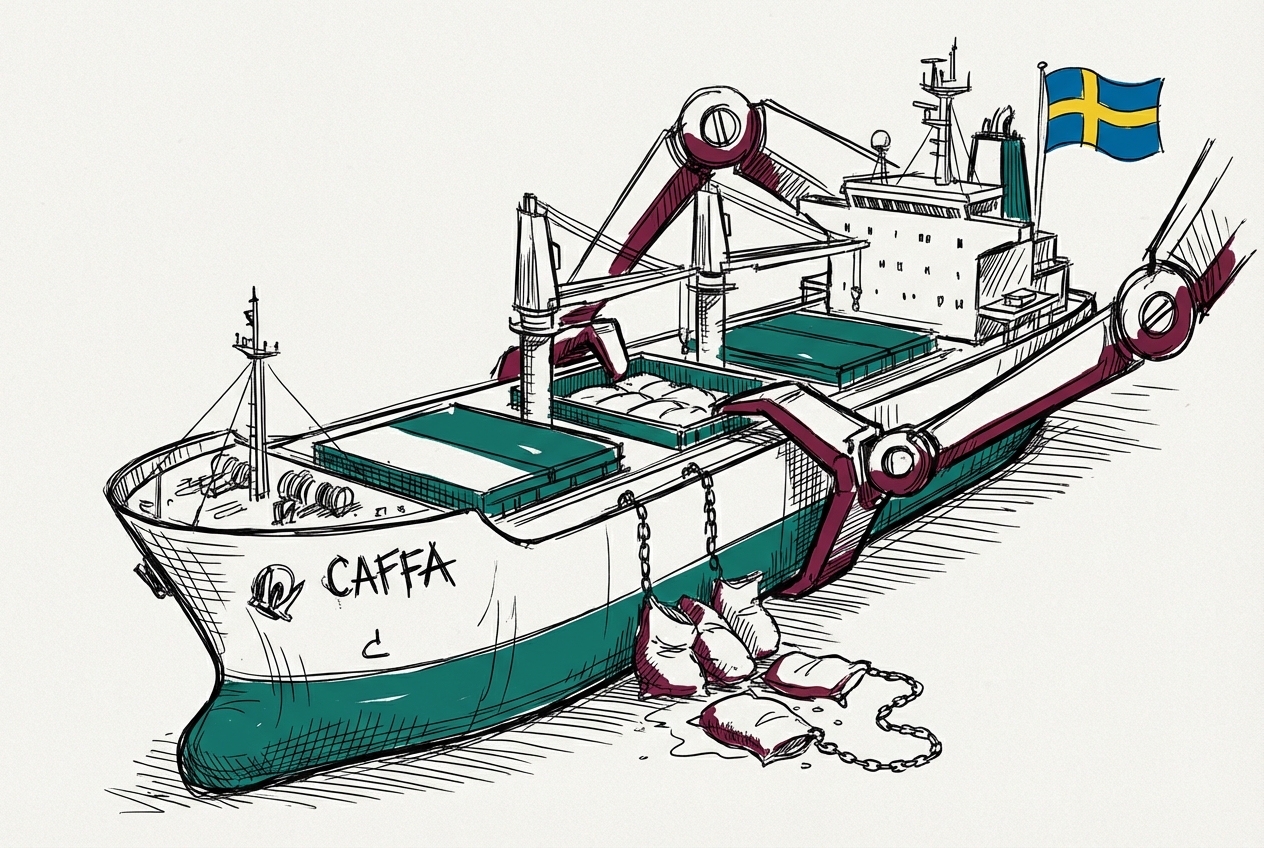
Bulk cargo ship seized by Sweden for allegedly transporting looted Ukrainian grain.
Last refreshed: 30 March 2026 · Appears in 1 active topic
Can a seized grain ship become evidence of a war crime in European courts?
Timeline for Caffa
Mentioned in: Royal Navy to board sanctioned tankers
Russia-Ukraine War 2026Mentioned in: EU targets shadow fleet operators
Russia-Ukraine War 2026Boarded by Sweden off Trelleborg as a suspected shadow-fleet vessel
Russia-Ukraine War 2026: Sweden detains Sea Owl I captainSeized vessel linked to alleged grain theft
Russia-Ukraine War 2026: Sweden seizes grain-theft ship CaffaBackground
Caffa is a bulk cargo vessel whose name echoes the medieval Genoese trading colony on Crimea's eastern coast, now Feodosiya. It was intercepted as one of a broader wave of Baltic-state actions targeting vessels suspected of moving sanctioned Russian commodities. A week after the Caffa seizure, Swedish authorities boarded the tanker Sea Owl I near the same port under similar suspicions.
Sweden seized the Caffa on 6 March 2026 near Trelleborg, alleging it had transported grain taken without consent from occupied Sevastopol. The ship is at the centre of an emerging legal effort to treat Russian grain exports from Ukrainian-controlled territories as war crime proceeds.
The EU and its allies have begun expanding enforcement from individual vessels to the shipowners, brokers, and registries behind the shadow fleet. Ukraine lists over 1,300 ships in the fleet; the Caffa case tests whether European courts will treat seized vessels as evidence of pillage under international humanitarian law rather than mere sanctions breaches.
What is the Caffa ship?
Why did Sweden seize the Caffa?
What is the difference between the Caffa and Sea Owl I seizures?
Is the Caffa part of the Russian shadow fleet?


