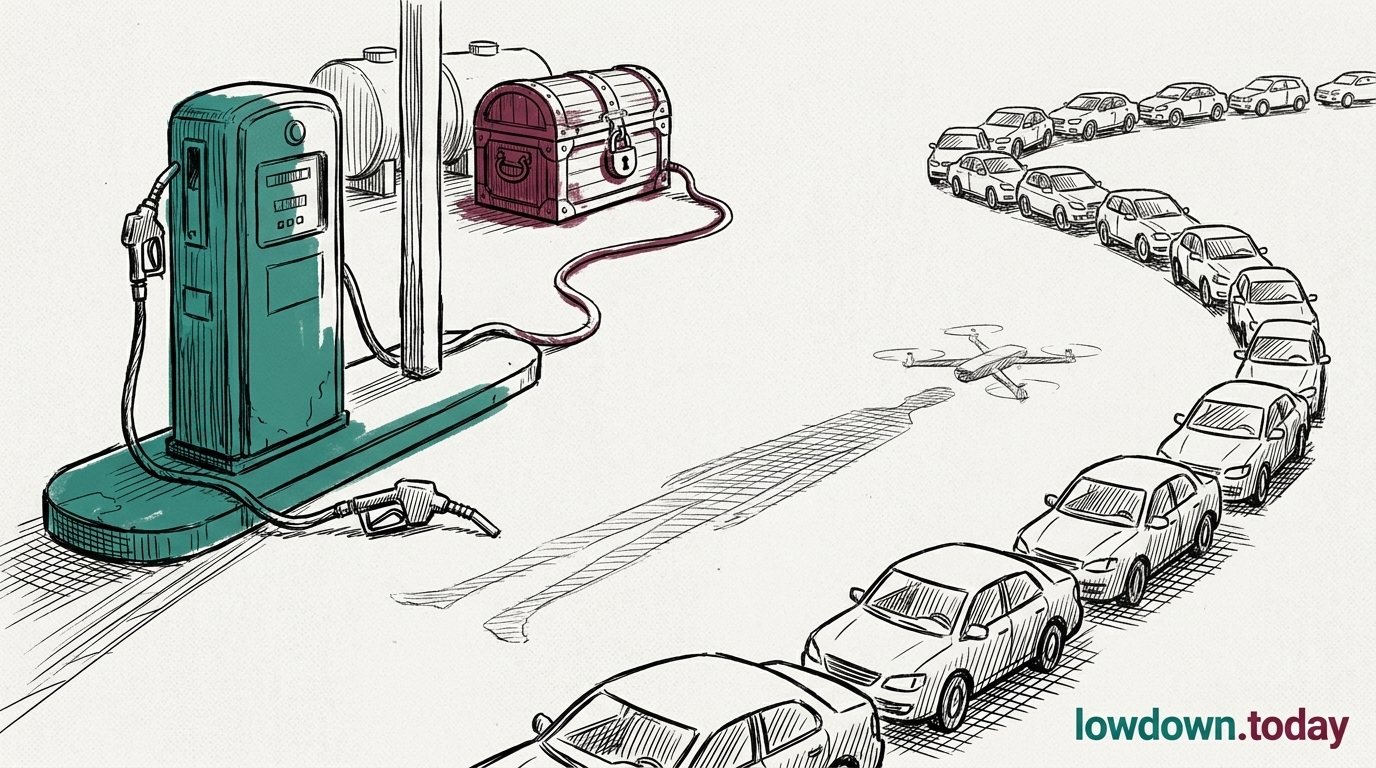
Tanker transits through the Strait of Hormuz collapsed to about two on 9 July, from a near-pre-war rhythm of 35 to 51 a day earlier in the month.1 Three vessels were struck overnight as they ran outbound: the liquefied natural gas (LNG) carrier Al Rekayyat, already reported, and the crude tankers Wedyan and Cyprus Prosperity, which earlier coverage never named.2 The 7 July strike was therefore a wider, multi-vessel attack than first recorded.
The Joint Maritime Information Center (JMIC), which advises commercial shipping, holds its Hormuz advisory at "severe", its highest tier. War-risk insurance now runs at 2 to 6 per cent of hull value, below a wartime peak near 10 per cent, but London brokers report fewer quote requests, not more.3 Owners are abandoning the strait rather than paying to cross it: the cost is no longer a premium on a crossing but a route nobody will take.
Oil fell anyway. Brent went from $78.67 on 8 July to $76.97 on 9 July and about $75.80 on 10 July, handing back roughly a quarter of the strike gain.4 Physical shipping data reads as crisis; the price reads as contained.
Article 5 of the ceasefire memorandum, over who controls Hormuz, is the sticking point stalling the Witkoff-Kushner Doha channel: Iran wants sole managerial authority, the US wants unrestricted transit.5 With that channel frozen, Mohammad Bagher Ghalibaf, Iran's parliament speaker, says Iran and Oman have reached a separate Hormuz-management agreement based on the same memorandum, routing the strait's governance through Muscat rather than Washington.6 That deal advances a bilateral Hormuz track Tehran and Muscat have been in continuous consultations over since May rather than opening a fresh one, and Ghalibaf had already declared the memorandum violated days earlier. The International Institute for Strategic Studies (IISS) assesses that no military option can reopen the strait for either side, only negotiation.7





