Skip to content
You can now search across every topic, entity and event.What's new
Russia-Ukraine War 2026
16JUN

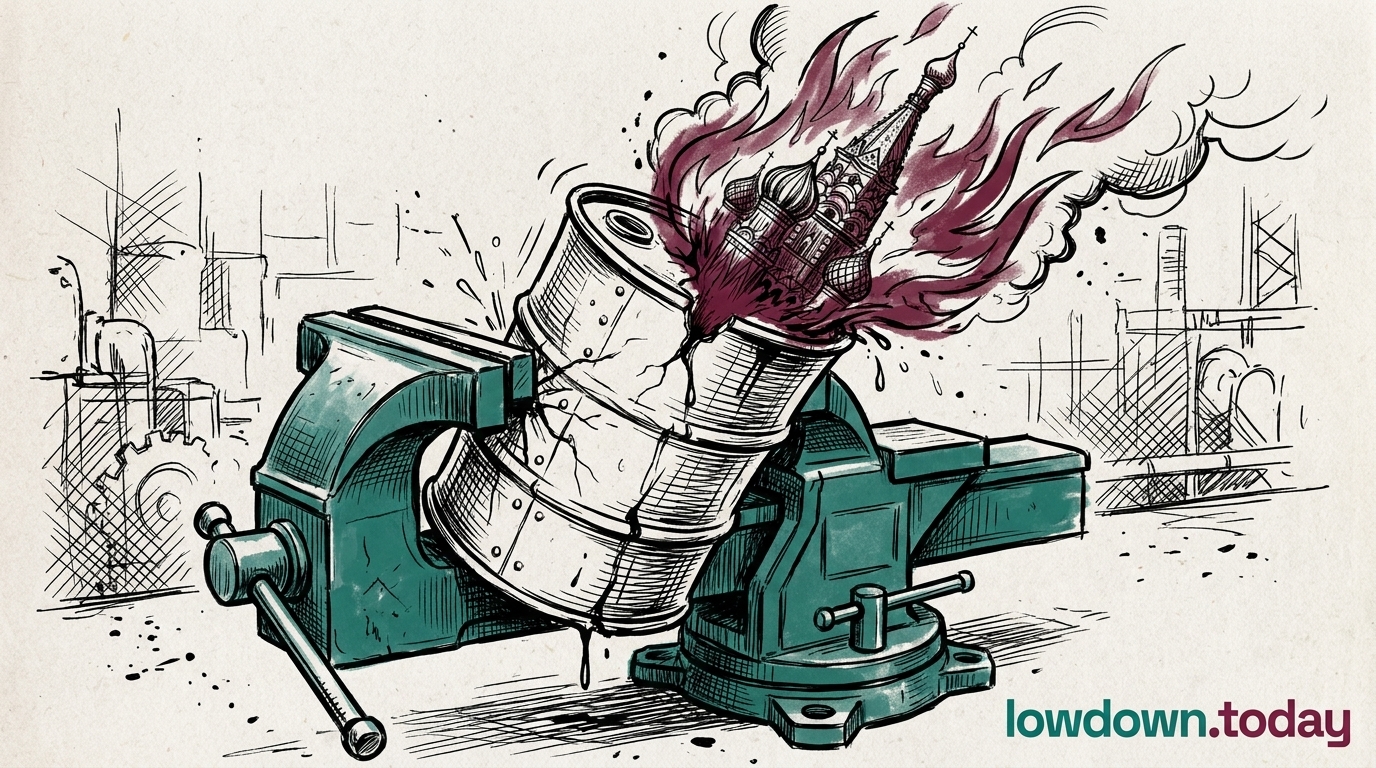
Sanctions vice tightens on Russian crude

4 min read
10:25UTC

OFAC confirmed on 18 June it would issue no GL 134D successor for Russian crude vessel cover, the EU listed 24 shadow-fleet operators, and Urals spiked to $66.58 against a frozen $44.10 cap.

ConflictDeveloping
Key takeaway

Cap freeze, vessel-services lapse and EU listings now squeeze Russian crude from price and insurance at once.

OFAC, the US Treasury's sanctions bureau, confirmed in its 18 June actions that it would issue no GL 134D successor to the vessel-services umbrella that lapsed clean on 17 June , settling a commodity-class split as deliberate policy 1. The lapsed licence, General License 134C, was the legal cover letting Western insurers, crews and class societies service Russian-origin crude tankers. OFAC renewed gas and civil-nuclear cover under GL 55F on 11 June while leaving crude vessel services to die. Western P&I clubs, the insurers that underwrite tanker liability, lost their legal basis to service Russian crude when GL 134C lapsed.

The EU Council, representing member-state governments, adopted a mini-package on 15 June listing 34 individuals and 47 entities, of which 24 target Russian crude and product shipment and shadow-fleet operators 2. It runs parallel to the 21st-package shadow-fleet listings flagged on 26 May . Neither blocks the shadow fleet directly. Both raise the compliance burden on the third-country operators that carry the volume, the Indian non-life insurers and Turkish intermediaries that step in where Western cover withdraws.

Urals, Russia's main export crude, printed $55.49 a barrel on 18 June and spiked 8.81% to $66.58 on 19 June 3, leaving Russia earning $11 to $22 a barrel above the frozen $44.10 G7 cap on any barrel that still uses Western services. The European Commission's move to freeze that cap to January 2027, blocking a 15 July auto-lift toward roughly $75 , now reinforces the lapse rather than sitting beside it. A 27 June deadline on the Lukoil-ISAB sale licence tightens the same clock. The war context behind the enforcement belongs to Russia-Ukraine-war-2026; the trade here is the gap between a $44.10 cap and a $66.58 print, and the placement cost it forces onto every compliant barrel.


Deep Analysis

In plain English

Three different sets of rules hit Russian oil exports at the same time. First, a US exemption that allowed Western insurance companies to cover Russian oil tankers quietly expired on 17 June with no renewal. Second, Europe froze the maximum price Russia is allowed to earn per barrel at $44.10, blocking an automatic rise scheduled for July. Third, the European Union added 24 shipping companies that help Russia move oil around sanctions to a blacklist. Each of these alone would be significant. Landing within 48 hours of each other creates a compounding problem for Russian oil. Russia's response has been to build a "shadow fleet" of tankers using non-Western insurers. The question sanctions lawyers are watching is whether enough of that fleet has been successfully cut off from Western finance and insurance for these new rules to bite.

Deep Analysis
Root Causes

Three structural conditions allowed three enforcement instruments to converge on Russian crude simultaneously in June 2026.

First, the commodity-class architecture in US sanctions has been deliberately constructed since 2022 to distinguish energy types: gas and civil nuclear services (GL 55F, GL 115D) are preserved for Japan and European strategic reasons, while crude vessel services are progressively tightened. GL 134C's lapse is the terminal step of a sequence telegraphed by Secretary Rubio on 5 June and foreshadowed by the GL 134A-134B-134C bridge structure, each narrower than the last.

Second, the EU price cap's frozen $44.10/bbl ceiling sits $11-22/bbl below current Urals prices ($55-66/bbl). The European Commission's move to freeze the cap to January 2027 blocks the 15 July auto-lift that would have raised the ceiling toward approximately $75/bbl.

That freeze makes the cap materially binding at the moment Western vessel services are simultaneously withdrawn: any barrel still using Western P&I can now only legally transact at $44.10, which is $11-22 below the current market price of $55-66/bbl.

Third, the EU mini-package's 24 shadow-fleet entity designations (adopted 15 June) raise the compliance burden for third-country intermediaries precisely as they face increased demand from Russian crude operators losing Western service access. The GL 134C lapse on 17 June and the EU mini-package on 15 June landed within 48 hours.

OFAC's vessel-services withdrawal and the European Commission's cap freeze at $44.10 (which blocks the 15 July auto-lift toward approximately $75) now apply simultaneously to the same Russian crude volumes for the first time in the price-cap programme's history.

What could happen next?
  • Consequence

    Third-country operators (Indian non-life insurers, Turkish ship managers) now face increased secondary-sanctions risk if they service Russian-origin crude tankers, adding a cost premium the shadow fleet will price into Russian crude discounts over the next 60-90 days.

    Short term · Assessed
  • Risk

    If the EU 21st package's maritime-services ban is adopted before the 15 July cap formula review, it would extend the coverage from OFAC's vessel-services umbrella to EU-connected shipping services, closing the main gap in the current architecture and materially reducing shadow fleet capacity.

    Immediate · Suggested
  • Precedent

    OFAC's clean expiry of GL 134C without a successor sets a precedent that rolling bridge licences in the GL 134 series are not automatic renewals but deliberate policy instruments, changing the compliance planning assumption for all third-country operators who relied on predictable US rollover behaviour.

    Long term · Assessed
First Reported In

Update #10 · Hormuz opened on paper, freight said no

OFAC· 22 Jun 2026
Read original
Causes and effects
This Event
Sanctions vice tightens on Russian crude
For the first time the price cap, the vessel-services lapse and the EU listings reinforce one another, squeezing Russian crude revenue from both the price and the insurance side at once.
Different Perspectives
Belgium
Belgium
Belgium blocked outright confiscation of the roughly EUR 210bn in frozen Russian assets held at Euroclear in December 2025, because Euroclear would carry the legal liability. Ukraine has since proposed moving custody to the EU instead.
European Commission
European Commission
The Commission said on 2 September that Ukraine has drawn EUR 3.2bn against an EUR 8.35bn annual target, and that a revenue-mobilisation law stuck in the Rada is one of twelve conditions for the next EUR 3.7bn payment.
Steve Witkoff and Jared Kushner
The US envoys met Putin in Moscow on 5 September and Zelenskyy in Kyiv on 6 September without an announced result from more than three hours of talks. Their mediation continues with no public outcome to show for this round.
Robert Brovdi
Robert Brovdi
Brovdi said on 12 September that his Unmanned Systems Forces struck 285 Russian tankers in ten weeks. His own monthly breakdown sums to 79, and he has given no account of the remaining 206.
Sergei Lavrov
Sergei Lavrov
Lavrov said on 12 September that Russia is ready to negotiate but will not suspend military operations while it does. He treats talking and fighting as compatible policies, ruling out a ceasefire as a precondition for further talks.
Belarus
Belarus
Minsk announced completion of its own 37th Separate Airborne Assault Brigade near Gomel, under plans dating to August 2025 rather than a response to any single frontline event this window, keeping its hedge of hosting the war without formally joining Russia's mobilisation drive.


