Skip to content
You can now search across every topic, entity and event.What's new
Russia-Ukraine War 2026
16JUN

Urals slips below Russia's budget line

3 min read
10:25UTC

Urals traded near $50 a barrel on 24-25 June, roughly nine dollars below the $59 mark Russia's federal budget is built on, with no new OFAC designation to enforce it.

ConflictDeveloping
Key takeaway

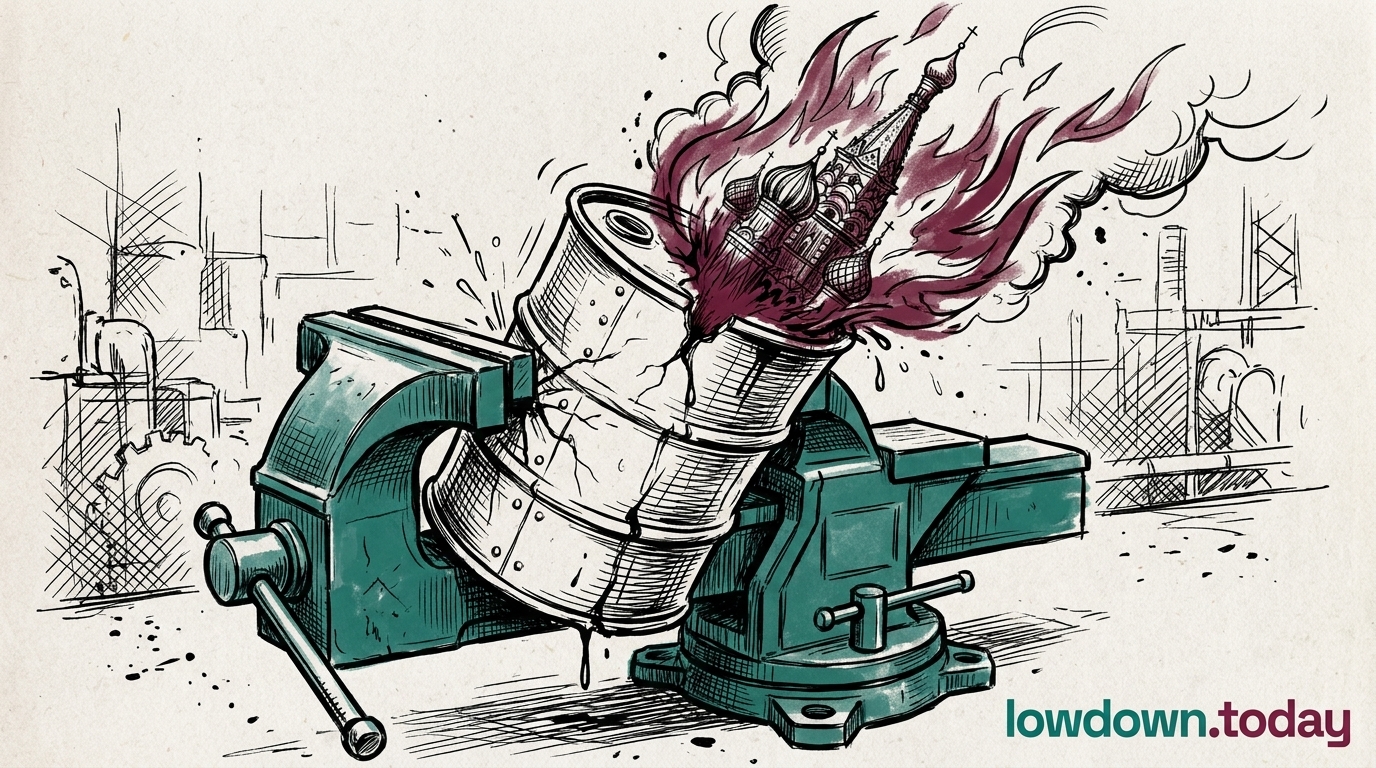
Urals below Russia's $59 budget benchmark squeezes Kremlin revenue without a single new sanctions designation.

Urals, Russia's main export crude, traded near $50 a barrel on 24-25 June, widening the Brent-Urals discount to about $22 1. That holds Russian crude roughly six dollars above the EU's frozen $44.10 price cap, but around nine dollars below the $59 benchmark the Russian federal budget is built on. A week ago Urals sat 8.81% above that cap ; the floor has dropped clean through Moscow's fiscal line.

Below $59, every barrel Russia ships funds less of the budget it was meant to cover. No OFAC designation of a P&I club, a shadow-fleet operator or a single vessel landed in the 22-26 June window, so the price discount, not enforcement, is carrying the squeeze. The EU cap binds on paper at $44.10; the market has already taken Urals under the line that matters to Kremlin spending.


Deep Analysis

In plain English

Russia's federal government depends heavily on oil and gas export revenues, which flow in through a complex system of taxes and duties linked to the Urals crude price. When Russia set its 2026 federal budget in late 2025, it assumed Urals crude would average around $59 per barrel for the year. Urals is Russia's main export crude grade, priced at a discount to the international Brent benchmark because Western sanctions make it harder to sell and insure. Over the past week, Urals fell to around $50 a barrel. That $9-per-barrel gap against the budget assumption means Russia collects significantly less tax revenue from every barrel it exports. The EU and G7 also imposed a separate "price cap" on Russian crude at $44.10 per barrel, designed to limit revenues further while still allowing Russian oil to reach global markets. At $50, Urals is still above that cap, so Western shipping and insurance can technically service these barrels. However, the market discount is now delivering more fiscal damage to Russia's 2026 budget than the cap mechanism itself. No new OFAC designations of Russian tankers or operators arrived this week, meaning the price pressure comes from market forces, not enforcement action.

First Reported In

Update #11 · Crude longs flushed flat into a loaded week

Caliber.Az· 26 Jun 2026
Read original
Different Perspectives
Belgium
Belgium
Belgium blocked outright confiscation of the roughly EUR 210bn in frozen Russian assets held at Euroclear in December 2025, because Euroclear would carry the legal liability. Ukraine has since proposed moving custody to the EU instead.
European Commission
European Commission
The Commission said on 2 September that Ukraine has drawn EUR 3.2bn against an EUR 8.35bn annual target, and that a revenue-mobilisation law stuck in the Rada is one of twelve conditions for the next EUR 3.7bn payment.
Steve Witkoff and Jared Kushner
The US envoys met Putin in Moscow on 5 September and Zelenskyy in Kyiv on 6 September without an announced result from more than three hours of talks. Their mediation continues with no public outcome to show for this round.
Robert Brovdi
Robert Brovdi
Brovdi said on 12 September that his Unmanned Systems Forces struck 285 Russian tankers in ten weeks. His own monthly breakdown sums to 79, and he has given no account of the remaining 206.
Sergei Lavrov
Sergei Lavrov
Lavrov said on 12 September that Russia is ready to negotiate but will not suspend military operations while it does. He treats talking and fighting as compatible policies, ruling out a ceasefire as a precondition for further talks.
Belarus
Belarus
Minsk announced completion of its own 37th Separate Airborne Assault Brigade near Gomel, under plans dating to August 2025 rather than a response to any single frontline event this window, keeping its hedge of hosting the war without formally joining Russia's mobilisation drive.


