Skip to content
You can now search across every topic, entity and event.What's new
Russia-Ukraine War 2026
16JUN

Reshetnikov tells Meduza Russia's reserves exhausted

4 min read
10:25UTC

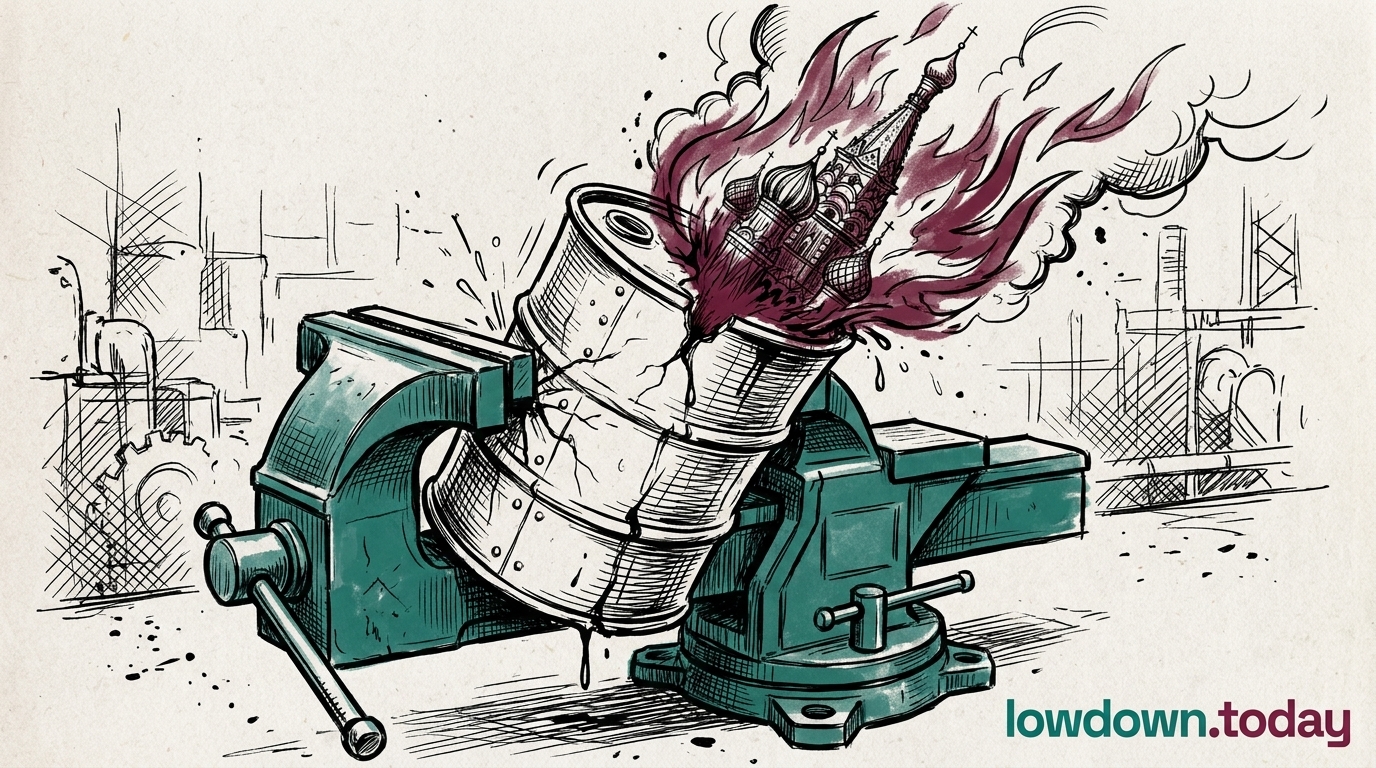
Russia's Economic Development Minister Maxim Reshetnikov told Meduza on 17 April that Moscow's internal reserves are "largely exhausted". The portfolio supposed to produce growth is explaining its absence.

ConflictDeveloping
Key takeaway

Putin called it seasonal; his Development Minister called it structural in the same fortnight.

Russian Economic Development Minister Maxim Reshetnikov told Meduza on Friday 17 April that Moscow's internal reserves are "largely exhausted, and the macroeconomic situation is genuinely significantly more difficult" 1. Businesses had earlier absorbed the shock, he said, "by drawing on internal reserves"; that capacity has run down. Reshetnikov's portfolio runs investment climate and industrial policy. His remit is supposed to produce growth, not explain its absence.

The admission lands two days after Vladimir Putin had publicly demanded government and Central Bank "explain why macroeconomic indicators had fallen short of expectations", blaming "seasonal factors" at a Kremlin meeting on Wednesday 15 April 2. A serving minister calling the constraint structural while his President calls it seasonal is the disagreement Kremlin messaging usually closes within days. Meduza, a Russian-language exile outlet based in Riga, was the only publication Reshetnikov spoke to on the record.

Fortune reported on 18 April that the federal budget deficit reached 3.45 trillion roubles, roughly $42 billion, in January and February alone, already near the full-year target of 3.79 trillion 3. First-quarter oil tax revenue halved year-on-year. Value-added tax rose from 20% to 22% in January. The National Wealth Fund had lost $4.8 billion over the two months preceding the interview ; Reshetnikov's "largely exhausted" is the structural diagnosis of which that drawdown was the quantified symptom. The historical pattern to watch is 1990, when Gosbank governor Viktor Gerashchenko publicly broke with the Politburo line on rouble structural crisis; ministerial contradictions on macro conditions have tended to precede, not lag, hard policy shifts. That precedent is not a prediction, it is a reference point for how quickly the gap between Putin and Reshetnikov's framing closes.


Deep Analysis

In plain English

Russia's Economic Development Minister: one of Putin's own cabinet: told an independent Russian outlet called Meduza that Russia's financial reserves are 'largely exhausted'. This is significant because it is an admission from inside the government, not from Western analysts. Russia spent enormous sums building up savings from oil revenues over two decades; those savings have been used to fund the war. At the same time, the government admitted its plan for the budget was already off-track by April: it had already spent nearly as much as it planned to borrow for the entire year, in just the first two months. Putin publicly blamed 'seasonal factors'; his own minister said the situation was 'genuinely significantly more difficult'.

Deep Analysis
Root Causes

Three compounding structural pressures produced the reserve depletion. Military spending consuming 38-40% of the federal budget crowds out investment that would sustain future revenue. High interest rates (16%) to contain war-driven inflation simultaneously discourage the private sector investment that generates the tax base.

And Q1 oil tax revenue halved year-on-year not primarily because of Ukrainian strikes but because Russia's budget assumption was $59 per barrel while actual Urals averaged $61-65, far below the Iran-war spike that briefly touched $123 per barrel in early April: the April revenue windfall had not yet materialised when Q1 accounts closed.

The VAT increase from 20% to 22% in January 2026 was an admission that oil-linked revenues could no longer carry the budget; it shifted the burden to domestic consumption, compressing household demand in an economy already running structural manpower deficits at the front.

What could happen next?
  • Risk

    If Iran-war oil prices normalise and Urals falls back toward $50-55 per barrel, Russia's Q1 fiscal trajectory implies insolvency of liquid reserves within 12 months, potentially forcing either a ceasefire negotiation or a domestic bond crisis.

  • Consequence

    The Putin-Reshetnikov public contradiction: 'seasonal factors' versus 'largely exhausted': signals fracturing coherence in the Kremlin's economic narrative, which historically precedes policy pivots under Soviet and Russian autocratic systems.

First Reported In

Update #14 · Kyiv's Druzhba gambit unlocks €90bn loan

Meduza· 24 Apr 2026
Read original
Different Perspectives
Turkey
Turkey
Ankara hosts the NATO summit on 7-8 July, the next Western diplomatic convergence that Russia may target with a mass barrage based on the documented pattern of timing strikes to allied events; Turkey's role as the indispensable logistical intermediary between Kyiv and Moscow gives it standing to broker any ceasefire repair at Zaporizhzhia.
IAEA
IAEA
The IAEA's sixth brokered repair ceasefire at ZNPP collapsed within days of enabling initial work on the 750 kV Dniprovska line, leaving Europe's largest nuclear plant on a single 330 kV backup with 19 total blackouts recorded since the Russian occupation began.
European Union
European Union
The EU delayed the €9.1bn first tranche of its €90bn Ukraine loan on unmet technical conditions, while disbursing a separate €2.8bn Facility payment on 8 June; the G7 sanctions-to-talks linkage now runs parallel to EU enforcement.
United Kingdom
United Kingdom
Britain conducted its first maritime interdiction of the Russian shadow fleet, with Royal Marines seizing the Smyrtos in the English Channel on 14 June, and simultaneously announced a £210m Urenco uranium deal to break Ukraine's dependence on Russian nuclear fuel.
United States
United States
Trump called both Putin and Zelenskyy separately on 14 June, pledged to re-engage on Ukraine now the Iran deal is done, and the G7 tied future Russia sanctions to peace-talk progress, giving Washington leverage over both parties' negotiating posture.
Ukraine
Ukraine
Zelenskyy attended the G7 at Evian and proposed a direct Putin summit while 140,000 households in Kyiv lost power and the Lavra's Dormition Cathedral burned; Metropolitan Epiphanius called it an attack "against history, against Christianity." Kyiv's immediate priority is closing the PAC-3 export gap that left 19 of 34 Iskander-M ballistic missiles unintercepted.


