Skip to content
You can now search across every topic, entity and event.What's new
Russia-Ukraine War 2026
16JUN

1,000-Drone Barrage Kills Indian Refinery Worker

3 min read
10:25UTC

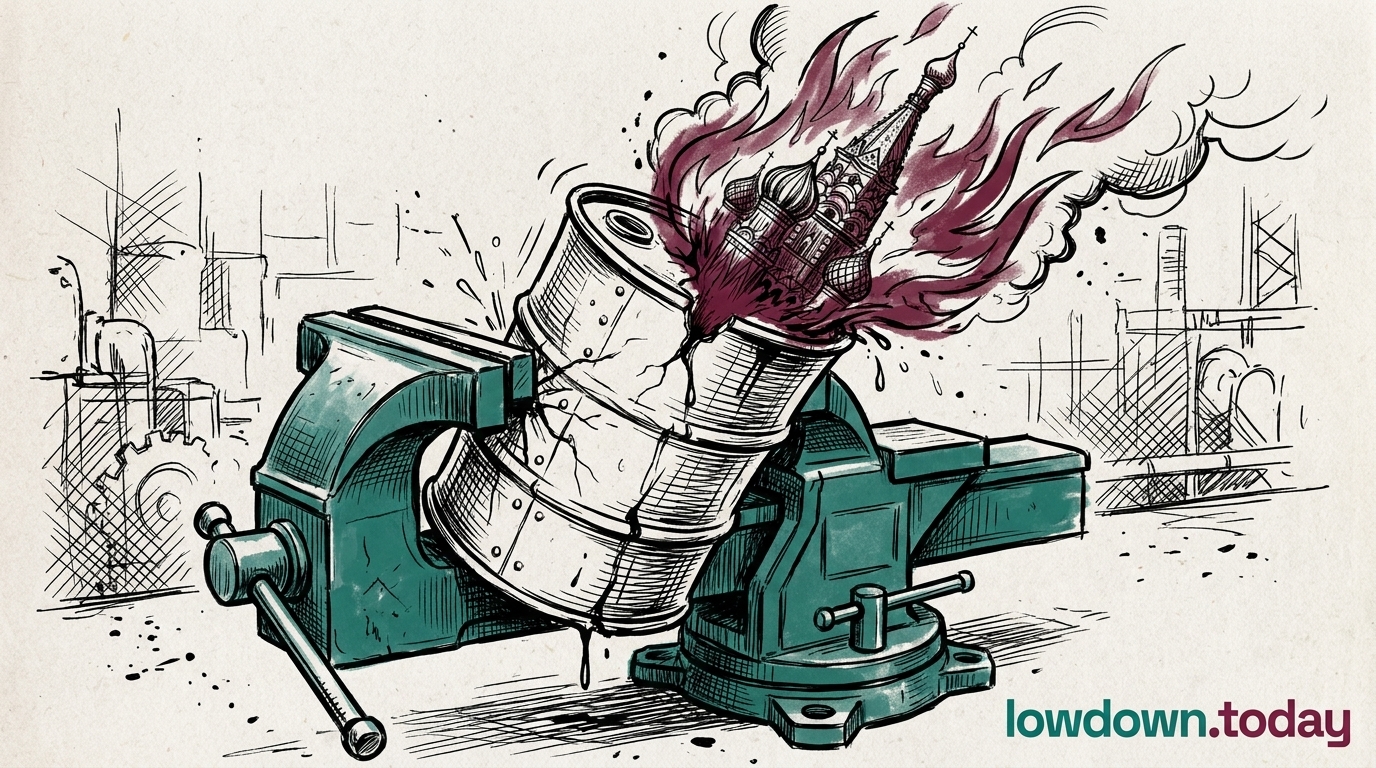
Ukraine launched more than a thousand drones at Russian targets on Sunday 17 May, the largest single-day Ukrainian barrage of the war, killing four people in the Moscow region including an Indian worker at a refinery construction site.

ConflictDeveloping
Key takeaway

An Indian dead at a Russian energy site puts the drone war on Delhi's diplomatic file.

Ukraine launched more than 1,000 drones at Russian targets on Sunday 17 May 2026, the largest single-day Ukrainian barrage of the war 1. Russian regional authorities reported four dead and twelve wounded across the Moscow region. An Indian national working at an oil-refinery construction site was among the dead; three other Indian workers were hospitalised 2. The Indian Embassy in Moscow confirmed the casualty the following day.

The daily volume sits well above the saturation tempo ISW had recorded through April . One reading is that Kyiv is now flying enough airframes per night to exceed the engagement capacity of Russian air-defence batteries positioned to cover Moscow, the central refinery belt and the Black Sea ports simultaneously. The same fleet that lit up the Syzran fires on 20-21 May is hitting the capital district on the days in between.

India sits awkwardly on the casualty list. Delhi has been one of the largest takers of Russian crude under the discounted-shipping arrangement that Treasury has been managing through the rolling general-licence series; an Indian dead and three Indians hospitalised at a Russian energy site puts the diplomatic file on Delhi's desk. The embassy confirmation makes it impossible for the Kremlin to treat the death as a domestic news item.

Germany's €4 billion Guidance Enhanced Missile-Tactical (GEM-T) Patriot package signed in Berlin on 14 April buys Ukraine the lower-tier airframe that engages aircraft, cruise missiles and drones. The Patriot Advanced Capability-3 Missile Segment Enhancement (PAC-3 MSE), the ballistic-class interceptor that Russian missiles actually target, remains frozen behind Washington's global export suspension. Until that pipe reopens, every drone night that ends with civilian casualties on Russian soil also lands as evidence that Ukraine's offensive throughput is outpacing its defensive supply.


Deep Analysis

In plain English

On Sunday 17 May, Ukraine sent more than 1,000 drones at Russia in a single day. That is the largest number Ukraine has ever launched in one day. Four people were killed near Moscow, including an Indian construction worker at a refinery site. The Indian death matters beyond the immediate tragedy. India has been buying discounted Russian oil throughout the war; now an Indian citizen has been killed at a Russian energy facility by a Ukrainian drone. That puts Delhi in an uncomfortable position diplomatically. Russia's air defences cannot intercept every drone when this many are launched at once, so some break through to their targets. The sheer number is itself a message to Moscow and to Western governments deciding whether to keep supplying Ukraine.

What could happen next?
  • Consequence

    The Indian casualty creates a diplomatic pressure point on Delhi's Russian-crude purchasing, which is the largest single offset to Western sanctions on Russian oil revenues.

  • Risk

    If Ukraine cannot sustain 1,000-drone nights, Russia's air-defence planners will calibrate engagement protocols to the demonstrated ceiling, reducing the saturation effect of future mass barrages.

First Reported In

Update #17 · Istanbul talks, refineries dark, deficit overruns

IAEA· 22 May 2026
Read original
Causes and effects
This Event
1,000-Drone Barrage Kills Indian Refinery Worker
The single-day volume reset what 'mass barrage' means in this war, and a foreign-national fatality at a Russian energy site introduces a third-country pressure point Moscow has avoided so far.
Different Perspectives
Turkey
Turkey
Ankara hosts the NATO summit on 7-8 July, the next Western diplomatic convergence that Russia may target with a mass barrage based on the documented pattern of timing strikes to allied events; Turkey's role as the indispensable logistical intermediary between Kyiv and Moscow gives it standing to broker any ceasefire repair at Zaporizhzhia.
IAEA
IAEA
The IAEA's sixth brokered repair ceasefire at ZNPP collapsed within days of enabling initial work on the 750 kV Dniprovska line, leaving Europe's largest nuclear plant on a single 330 kV backup with 19 total blackouts recorded since the Russian occupation began.
European Union
European Union
The EU delayed the €9.1bn first tranche of its €90bn Ukraine loan on unmet technical conditions, while disbursing a separate €2.8bn Facility payment on 8 June; the G7 sanctions-to-talks linkage now runs parallel to EU enforcement.
United Kingdom
United Kingdom
Britain conducted its first maritime interdiction of the Russian shadow fleet, with Royal Marines seizing the Smyrtos in the English Channel on 14 June, and simultaneously announced a £210m Urenco uranium deal to break Ukraine's dependence on Russian nuclear fuel.
United States
United States
Trump called both Putin and Zelenskyy separately on 14 June, pledged to re-engage on Ukraine now the Iran deal is done, and the G7 tied future Russia sanctions to peace-talk progress, giving Washington leverage over both parties' negotiating posture.
Ukraine
Ukraine
Zelenskyy attended the G7 at Evian and proposed a direct Putin summit while 140,000 households in Kyiv lost power and the Lavra's Dormition Cathedral burned; Metropolitan Epiphanius called it an attack "against history, against Christianity." Kyiv's immediate priority is closing the PAC-3 export gap that left 19 of 34 Iskander-M ballistic missiles unintercepted.


