Skip to content
Briefings are running a touch slower this week while we rebuild the foundations.See roadmap
Russia-Ukraine War 2026
9JUN

North Korean rockets on Russian robots

2 min read
11:54UTC

ISW reported on 7 June the first sighting of North Korean Type-75 rocket artillery mounted on Russian unmanned ground vehicles in the Kharkiv direction.

ConflictDeveloping
Key takeaway

Russia mounted North Korean Type-75 rockets on crewless robots near Kharkiv, a first for DPRK artillery.

The Institute for the Study of War (ISW), a Washington think tank, reported on 7 June the first sighting of North Korean Type-75 107mm MLRS (multiple-launch rocket systems) mounted on Russian UGVs (Unmanned Ground Vehicles) in the Kharkiv direction 1. It is the first combat integration of DPRK (Democratic People's Republic of Korea) rocket artillery onto an autonomous platform.

The Type-75 is a North Korean copy of China's Type-63 launcher. The NRTK Kurier and Impulse robot vehicles add electric-drive aiming so the rockets can be laid remotely, putting a crewless launcher closer to Ukrainian positions than a manned vehicle would risk.

The sighting marks a new stage in the Pyongyang-Moscow supply line. North Korea has already sent Russia manpower and munitions, and Ukraine struck back at that pipeline directly in May, killing 65 drone cadets at a training facility . Mounting DPRK rockets on autonomous platforms turns a manpower contribution into a remote-fire capability that needs fewer of the troops Ukraine has been targeting.

Deep Analysis

In plain English

A UGV (unmanned ground vehicle) is a crewless, remotely controlled robot that can carry weapons. Russia has been testing these on the battlefield, because a robot can advance under fire where a soldier would die. The Type-75 is a North Korean rocket launcher, similar to a truck-mounted multi-barrel rocket system, but derived from a 1960s Chinese design. Putting North Korean rockets onto a Russian robot means a remote operator can fire a barrage of rockets without exposing any crew. ISW, a Washington-based think tank that tracks the war daily, confirmed the first sighting of this combination near Kharkiv on 7 June. The significance is the integration: two separate military supply chains, one from Pyongyang and one from Russian robotics firms, have been combined into a single weapons system.

Deep Analysis
Root Causes

North Korea began supplying Russia with artillery shells in late 2022 and escalated to troop deployments in late 2024 . The Type-75 MLRS transfer is the next step in a deepening DPRK-Russia defence supply relationship that exchanges Russian technology and economic relief for North Korean munitions and manpower.

Russia's UGV development accelerated after its infantry-assault attrition rates became untenable in 2024; the Kurier and Impulse platforms are part of a broader effort to substitute machines for soldiers in breach-and-clear roles.

Escalation

The Type-75 UGV combination is an escalation in the Russia-DPRK arms axis rather than on the Ukraine front line directly. If it proves effective, it creates a template for mounting other DPRK weapons on Russian platforms, deepening the two countries' military integration in ways that will concern Seoul and Tokyo.

What could happen next?
  • Consequence

    Ukraine's electronic-warfare units near Kharkiv must now counter remote-fire rocket platforms in addition to infantry-operated ones, expanding the countermeasure burden.

  • Precedent

    First combat integration of DPRK rocket artillery on autonomous ground platforms creates a template Russia can replicate with other North Korean weapons systems.

First Reported In

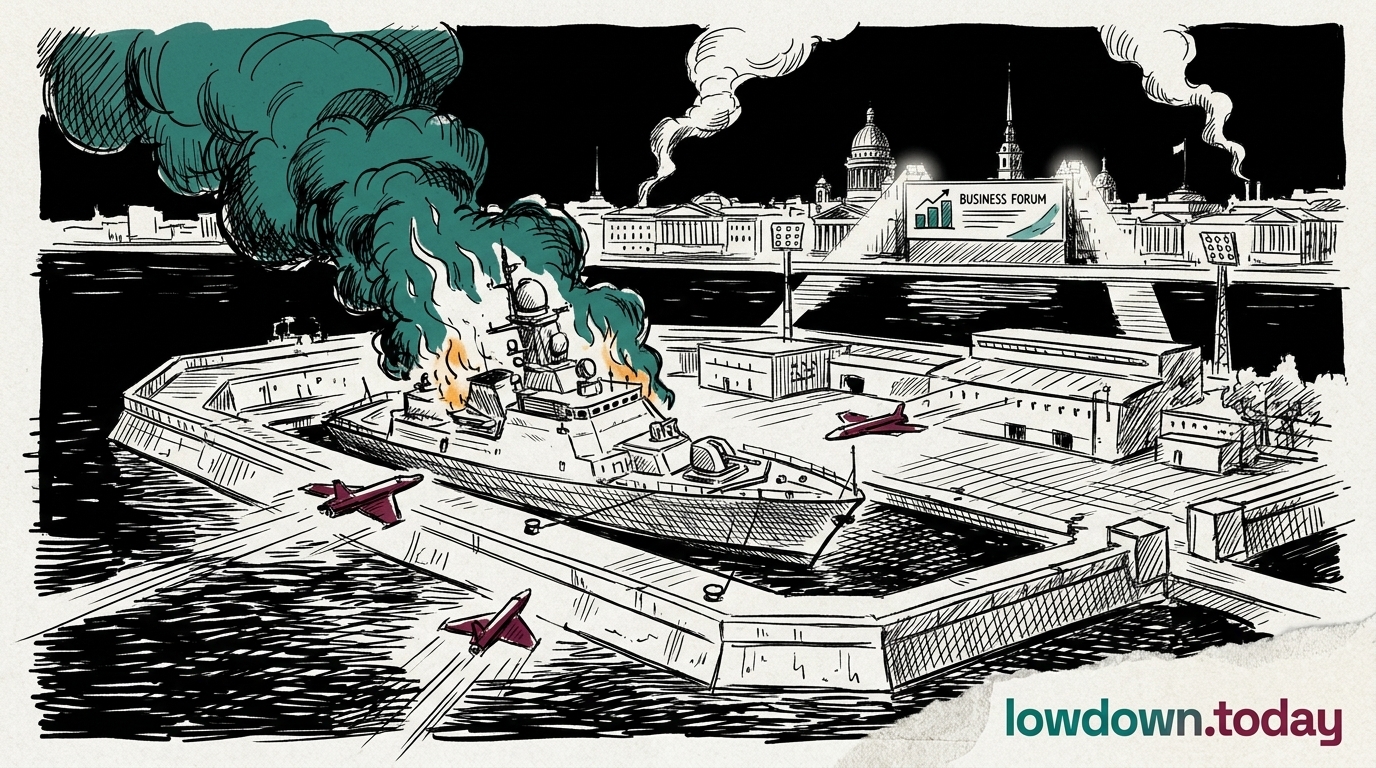
Update #19 · Ukraine burns the Baltic Fleet at Kronstadt

Institute for the Study of War· 9 Jun 2026
Read original
Causes and effects
This Event
North Korean rockets on Russian robots
It is the first combat integration of DPRK rocket artillery onto an autonomous platform, letting a crewless launcher edge toward Ukrainian lines without risking a crew.
Different Perspectives
North Korea / DPRK
North Korea / DPRK
ISW confirmed the first mounting of DPRK Type-75 MLRS on Russian autonomous UGVs near Kharkiv on 7 June, the latest step in a supply axis that escalated from shells in 2023 to troops in 2024. Pyongyang gains live battlefield data on its ordnance and on Russia's uncrewed-systems programme.
IAEA / Rafael Grossi
Grossi confirmed Chornobyl structural damage with nuclear material metres away and could not attribute the ZNPP 15-hour blackout during the agreed repair window. Six ceasefires brokered and broken at ZNPP, compounded by Rosatom's May attack on IAEA neutrality, have eroded his ability to enforce the windows he negotiates.
Emmanuel Macron / France
Macron co-signed the E3 framework whose line-of-contact baseline marks Europe's first formal acceptance that 1991 borders are not the opening position. France's role carries weight because Macron had previously proposed a European force for Ukraine, and the framework's multinational force point is the vehicle for that.
Keir Starmer / E3
Keir Starmer / E3
Starmer, Macron and Merz met Zelenskyy on 7 June and backed a five-point framework taking the line of contact as the talks baseline, conceding roughly one fifth of Ukraine in exchange for a multinational force and frozen assets. With US mediation ended, the NATO Ankara summit on 7-8 July is the next test.
Vladimir Putin / Kremlin
Putin used SPIEF to reject Zelenskyy's summit letter, citing 'elements of rudeness', and repeated the pre-agreed treaty precondition that has frozen every diplomatic round since May. The SPIEF platform's message of investor confidence was punctured by naval fires visible from St Petersburg, which Moscow declined to dispute in scale.
Ukraine / Unmanned Systems Forces
Commander Brovdi confirmed USF units tracked and set fire to Boikyi at Kronstadt, while Code 9.2 struck the Chonhar Bridge the following day. Ukraine is sequencing strikes for rear-area interdiction and political timing rather than ground gains, trading the Baltic Fleet's home base for the logistics squeeze Russia cannot absorb without rationing its own occupied territory.