NRTK Kurier
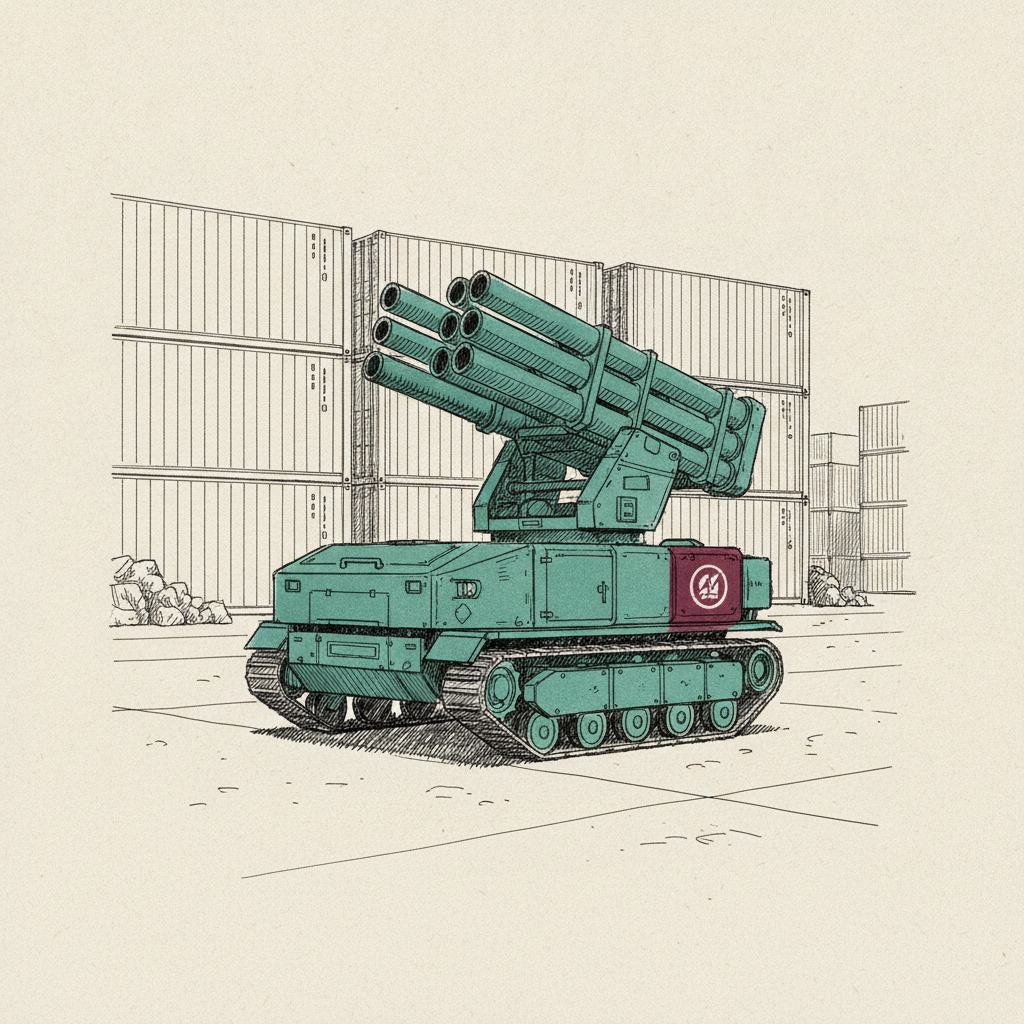
Russian electric-drive unmanned ground vehicle; used to mount North Korean Type-75 MLRS for remote rocket artillery operation.
Last refreshed: 9 June 2026 · Appears in 1 active topic
How does Russia aim rockets from a crewless vehicle on a drone-saturated frontline?
Timeline for NRTK Kurier
North Korean rockets on Russian robots
Russia-Ukraine War 2026Background
The NRTK Kurier is a Russian-developed electric-drive unmanned ground vehicle with remote weapons-aiming capability. Its electric propulsion offers a low acoustic and thermal signature. It is produced alongside the similar NRTK Impulse platform.
On 7 June 2026, ISW confirmed the Kurier carrying North Korean Type-75 107mm MLRS in the Kharkiv direction — the first autonomous platform confirmed delivering DPRK rocket artillery in combat. The deployment reflects Russia's strategy of reducing crew exposure on frontlines saturated with first-person-view drones.
What is the NRTK Kurier unmanned vehicle used for in Ukraine?
How does the NRTK Kurier fire its weapons without a crew?
What is the difference between the NRTK Kurier and the NRTK Impulse?


Written with AI from Lowdown's published reporting. Not individually reviewed by an editor. Updated 9 June 2026. Editorial standards.