Skip to content
Briefings are running a touch slower this week while we rebuild the foundations.See roadmap
Russia-Ukraine War 2026
9JUN

Russia barrage collapses a Dnipro block

2 min read
11:54UTC

Russia fired 656 drones and 73 missiles at Ukraine overnight into 2 June, killing 22 people and collapsing a four-storey apartment block in Dnipro.

ConflictDeveloping
Key takeaway

Russia's 656-drone, 73-missile barrage killed 22 and capped a record 8,150 long-range drones in May.

Overnight into 2 June, Russia fired 656 drones and 73 missiles at Ukraine, the largest combined barrage of this window. Twenty-two people were killed and around 130 wounded; a four-storey apartment block collapsed in Dnipro, burying residents 1.

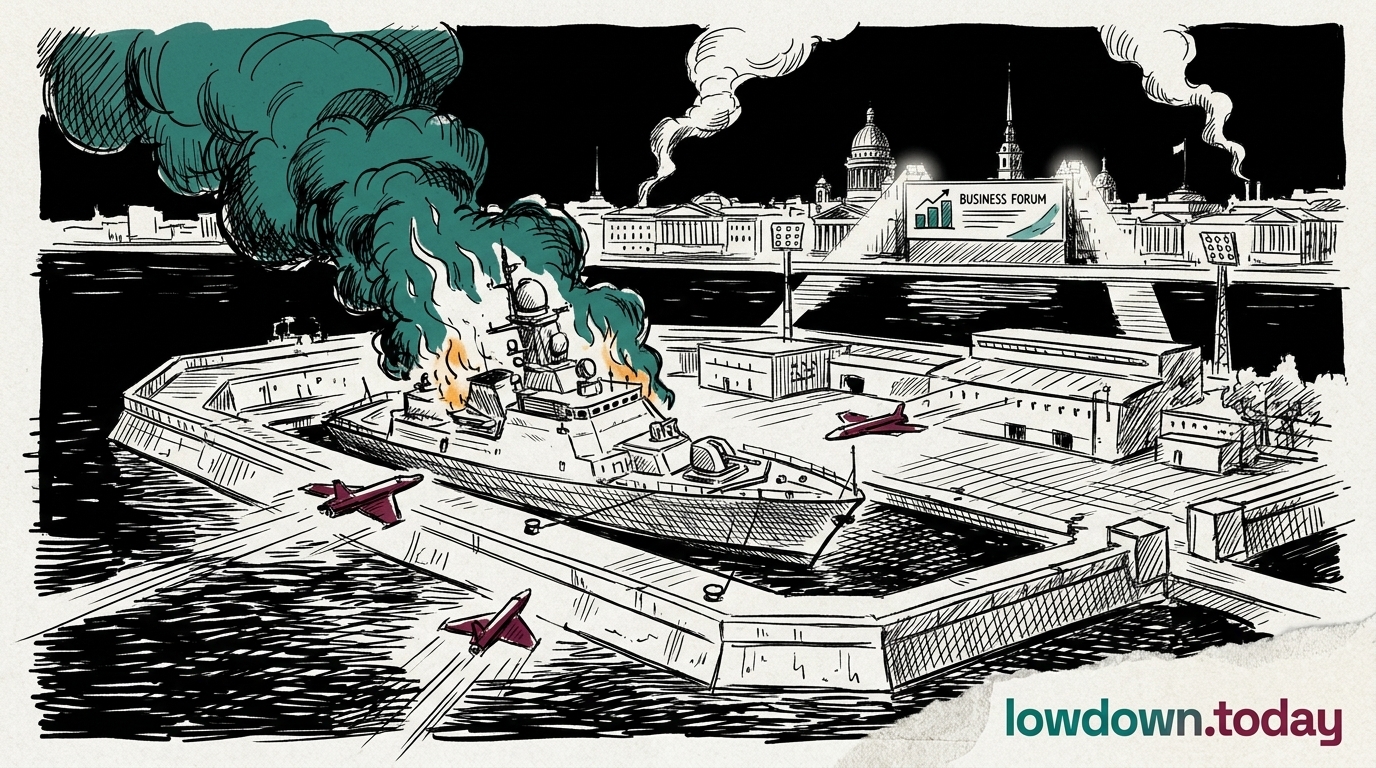
The scale fits the escalating deep-strike exchange now running in both directions. Russia launched a record 8,150 long-range drones across May 2, while Ukraine struck back across the border night after night, most visibly at the Baltic Fleet base at Kronstadt days later. Volodymyr Zelenskyy said Ukraine's air defences could not stop a meaningful share of the incoming weapons, the same interceptor shortfall he has flagged since the spring .

The shortfall is specific rather than general. Ukraine intercepts cheap Shahed-type drones at a high rate, but the ballistic and cruise component that gets through is what flattens a block in Dnipro, and that is the class Western export freezes have left Kyiv shortest on.

Deep Analysis

In plain English

Russia fires large swarms of cheap Iranian-design drones (called Shaheds) plus cruise and ballistic missiles at Ukrainian cities overnight. The combined 2 June wave of 656 drones and 73 missiles is the largest of this recent window, and the May 2026 total of 8,150 long-range drones is the highest single month of the war. When so many weapons arrive at once, Ukraine's air-defence systems can only shoot down some of them. The rest get through. In Dnipro, a missile or drone hit an apartment block squarely enough to collapse four floors, burying residents inside. Zelenskyy's public admission that defences cannot stop a meaningful share is unusual candour designed to press Western allies for more interceptors.

Deep Analysis
Root Causes

Russia's Alabuga special economic zone in Tatarstan began serial Geran-2 production in 2023, reaching an estimated 300-plus units per month by late 2024 and scaling further in 2025. The 8,150 May figure implies roughly 260 drones per day, achievable only through both domestic production and continuing Iranian supply.

Ukraine's GEM-T and older PAC-2 interceptors were designed for lower-volume, higher-quality threats; they cannot economically defeat drone swarms at these rates, which is the structural driver behind Zelenskyy's appeal.

What could happen next?
  • Risk

    Ukraine's civilian infrastructure absorbs damage at a rate its repair capacity cannot match if the 8,000-plus monthly drone tempo is sustained.

  • Opportunity

    Zelenskyy's public air-defence shortfall admission creates political cover for Western allies to expedite interceptor transfers without the usual diplomatic hedging.

First Reported In

Update #19 · Ukraine burns the Baltic Fleet at Kronstadt

CBS News· 9 Jun 2026
Read original
Causes and effects
This Event
Russia barrage collapses a Dnipro block
It was the largest combined barrage of this window and capped a record 8,150 long-range drones Russia launched across May, against air defences Zelenskyy says cannot stop enough of them.
Different Perspectives
North Korea / DPRK
North Korea / DPRK
ISW confirmed the first mounting of DPRK Type-75 MLRS on Russian autonomous UGVs near Kharkiv on 7 June, the latest step in a supply axis that escalated from shells in 2023 to troops in 2024. Pyongyang gains live battlefield data on its ordnance and on Russia's uncrewed-systems programme.
IAEA / Rafael Grossi
Grossi confirmed Chornobyl structural damage with nuclear material metres away and could not attribute the ZNPP 15-hour blackout during the agreed repair window. Six ceasefires brokered and broken at ZNPP, compounded by Rosatom's May attack on IAEA neutrality, have eroded his ability to enforce the windows he negotiates.
Emmanuel Macron / France
Macron co-signed the E3 framework whose line-of-contact baseline marks Europe's first formal acceptance that 1991 borders are not the opening position. France's role carries weight because Macron had previously proposed a European force for Ukraine, and the framework's multinational force point is the vehicle for that.
Keir Starmer / E3
Keir Starmer / E3
Starmer, Macron and Merz met Zelenskyy on 7 June and backed a five-point framework taking the line of contact as the talks baseline, conceding roughly one fifth of Ukraine in exchange for a multinational force and frozen assets. With US mediation ended, the NATO Ankara summit on 7-8 July is the next test.
Vladimir Putin / Kremlin
Putin used SPIEF to reject Zelenskyy's summit letter, citing 'elements of rudeness', and repeated the pre-agreed treaty precondition that has frozen every diplomatic round since May. The SPIEF platform's message of investor confidence was punctured by naval fires visible from St Petersburg, which Moscow declined to dispute in scale.
Ukraine / Unmanned Systems Forces
Commander Brovdi confirmed USF units tracked and set fire to Boikyi at Kronstadt, while Code 9.2 struck the Chonhar Bridge the following day. Ukraine is sequencing strikes for rear-area interdiction and political timing rather than ground gains, trading the Baltic Fleet's home base for the logistics squeeze Russia cannot absorb without rationing its own occupied territory.