Skip to content
Briefings are running a touch slower this week while we rebuild the foundations.See roadmap
Russia-Ukraine War 2026
1JUN

Syzran Hit, Quarter of Refining Halted

4 min read
10:39UTC

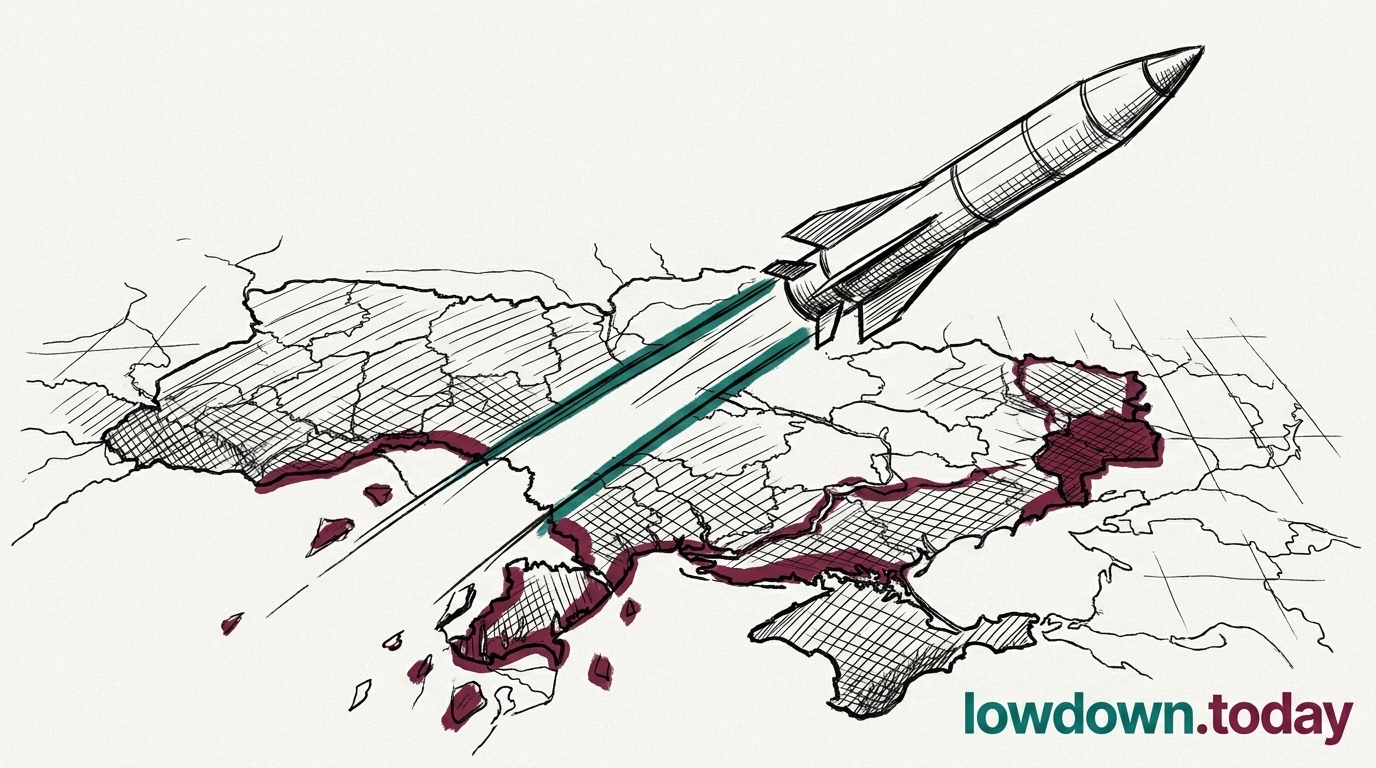
Ukrainian drones struck the Syzran refinery overnight Wednesday 20 to Thursday 21 May, more than 800 km from the front, the latest in a wave Reuters reported has halted around a quarter of Russia's refining capacity.

ConflictDeveloping
Key takeaway

Kyiv has switched from revenue targeting to military-fuel targeting, changing how the refinery campaign should be measured.

Ukrainian drones struck the Syzran refinery in Samara Oblast overnight Wednesday 20 to Thursday 21 May 2026, more than 800 km from the front, killing two people and starting fires the Samara governor confirmed 1. Ukraine's General Staff said the plant supplies the Russian Air Force and military units across central and southern Russia.

Reuters reported on Wednesday 20 May that Ukrainian strikes have now halted or reduced operations at nearly every major refinery in central Russia: Kirishi, the Moscow refinery, Ryazan, Yaroslavl, Syzran and Kstovo / Lukoil-Nizhegorodnefteorgsintez 2. Combined nameplate capacity affected runs to 83 million tonnes a year, around 25 per cent of Russian refining. Reuters puts the gasoline output hit at 30 per cent and diesel at 25 per cent. In practice that means tighter fuel rations for Russian civilian vehicles, longer waits for diesel-dependent rail logistics, and constrained sortie generation for the Russian Air Force units the Syzran feed supplies.

The strike pattern of the 20-21 May cluster departs from earlier targeting. Earlier in the war Ukraine's strike map ran on revenue logic: Baltic terminals, export choke-points, headline barrels. David Axe at the Center for European Policy Analysis (CEPA), citing Royal United Services Institute (RUSI) research, assessed in April that Ukraine's 130 strikes in 2025 delivered roughly 0.46 per cent of annual Russian oil revenue . Carnegie's Sergey Vakulenko has argued cumulative damage remains insufficient to change the war's outcome.

The military-logistics framing answers that critique without resolving it. By aiming at fuel that goes directly into Russian aviation and ground units, Kyiv shifts the measurement away from export-revenue percentage and onto sortie rates and supply convoys, where the campaign has stayed at saturation tempo since spring . The visible operational damage to fuel supply is real, on a balance sheet whose top line is still mostly intact.

Deep Analysis

In plain English

Ukraine has been using long-range drones to hit oil refineries deep inside Russia. The plant at Syzran, more than 800 kilometres from the front line, was hit overnight on 20-21 May; the Samara regional governor confirmed two dead and fires across the site. Ukraine has now damaged or shut down roughly a quarter of Russia's refining capacity in central Russia. That means less fuel for Russian vehicles, trains and, crucially, military aircraft. Russia has banned gasoline exports until the end of July because it does not have enough spare fuel to sell abroad. This matters because earlier drone strikes were aimed at export terminals, trying to cut Russia's oil income. The new strikes go after fuel that goes directly into Russian military operations.

Deep Analysis
Root Causes

Ukraine's shift from Baltic export terminals to central refineries reflects a targeting logic imposed by the war's economics. Baltic terminal strikes (late March/early April) cost Moscow roughly $1 billion in a week but the Iran war then pushed Urals prices to record highs, erasing the revenue gain. Military-fuel targeting bypasses the price-offset problem entirely: no crude price surge compensates for a fighter jet that cannot be refuelled.

Range compounds the targeting logic. The 800+ km to Syzran sits at the outer edge of Ukraine's longer-range one-way drone reach. Each successive strike at this range tests Russian air-defence coverage depths built for shorter-range threats; the Syzran fires indicate the coverage has not been extended to match the drone campaign's range expansion since 2024.

What could happen next?
  • Consequence

    Russian Air Force sortie generation in central and southern districts faces fuel-specification variability as the Syzran feed is replaced by longer-haul supply from Siberian refineries, introducing logistical friction over the next 30 days.

    Short term · Reported
  • Risk

    If Russia cannot restore central refinery throughput before the end of July, the gasoline export ban becomes de facto permanent for the summer, cutting the hard-currency revenue stream the Finance Ministry had relied on to partially offset the Q1 deficit overshoot.

    Medium term · Reported
  • Precedent

    Ukraine's confirmed shift to military-fuel targeting establishes a new campaign doctrine that will be studied by NATO member militaries assessing Ukraine's deep-strike effectiveness as they consider future weapons transfers.

    Medium term · Assessed
First Reported In

Update #17 · Istanbul talks, refineries dark, deficit overruns

Reuters / Militarnyi· 22 May 2026
Read original
Different Perspectives
China
China
Beijing has not publicly commented on the dual Oreshnik launch. China's declared position of urging restraint and dialogue sits awkwardly alongside its continued economic ties with Russia; the weapons escalation tests whether Beijing's neutrality framing can survive a European IRBM normalisation event.
IAEA
IAEA
Director General Grossi condemned the ZNPP reactor-6 turbine building strike and stated "there should be no attack of any kind from or against the plant." The agency confirmed normal radiation levels but has not resolved attribution; Rosatom CEO Likachev warned the region is "one step closer to an incident."
Turkey
Turkey
Ankara hosted Istanbul Round 2 at Ciragan Palace on 2 June and secured a 1,200-for-1,200 prisoner exchange, consolidating Turkey as the war's sole diplomatic venue after Rubio confirmed US mediation has ended. Erdogan's leverage over both parties grows with each round.
European Union
European Union
EU Ambassador Mathernova answered Lavrov's evacuation demand with "We stay in Kyiv. We stay with Ukraine." The Verkhovna Rada approved the EUR 90bn EU loan on 28 May; the EUR 9.1bn first tranche, the EU's first explicit defence-procurement financing, arrives mid-June.
United States
United States
Rubio declared US mediation stagnated on 22 May and confirmed no talks were occurring, then received Lavrov's evacuation demand three days later without ordering embassy drawdown. Washington's leverage now runs through the GL 134C sanctions cliff on 17 June rather than any active diplomatic channel.
Ukraine
Ukraine
Zelenskyy called Russia's 2-3 day ceasefire counter-offer at Istanbul Round 2 "shortsighted" and submitted a full peace memorandum covering EU membership, international guarantees, phased sanctions relief and frozen-asset reparations. Kyiv's position is that a partial ceasefire freeze aids Russian reconstitution; only an all-domain 30-day pause is acceptable.
