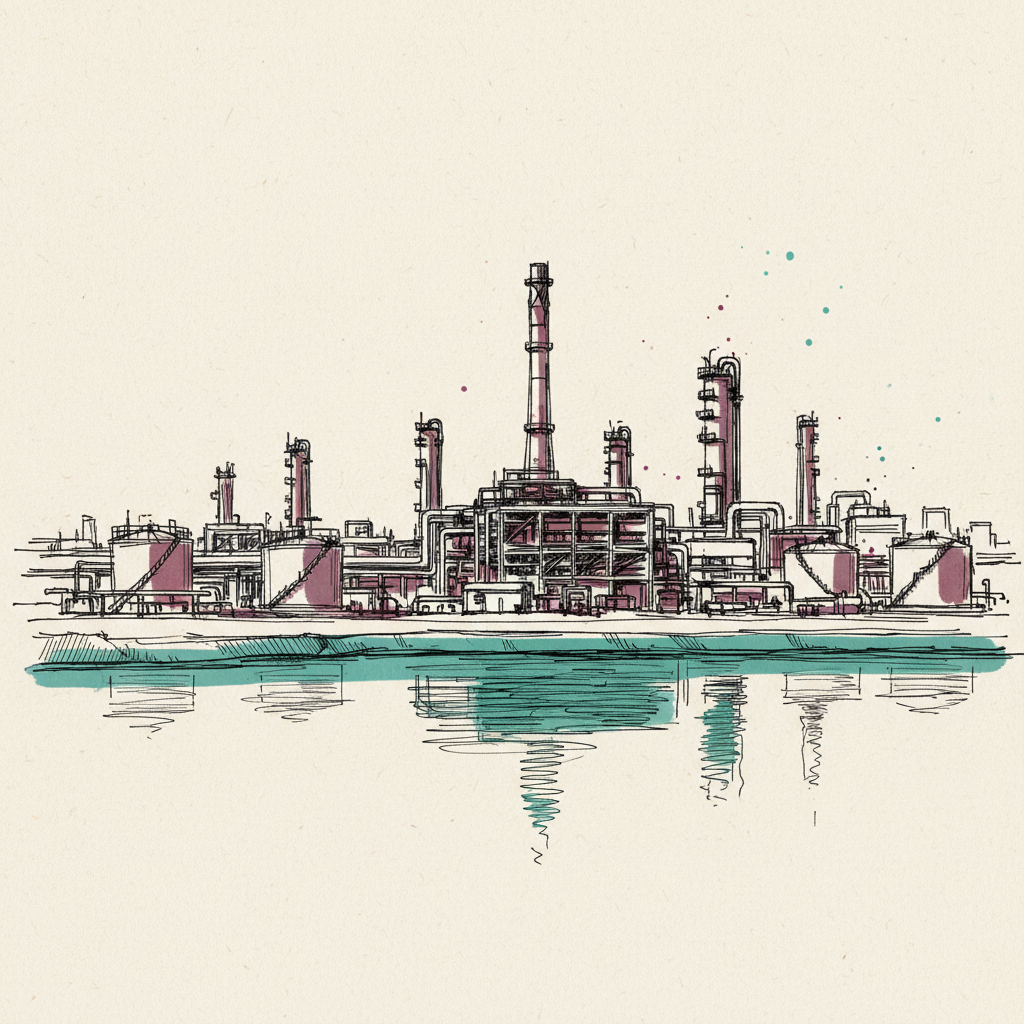
Kstovo refinery
Lukoil-operated refinery in Nizhny Novgorod Oblast; one of Russia's largest, repeatedly struck by Ukrainian drones in 2026.
Last refreshed: 22 September 2026 · Appears in 1 active topic
How badly has Ukraine's drone campaign damaged Russia's fuel supply in 2026?
Timeline for Kstovo refinery
Mentioned in: Syzran Hit, Quarter of Refining Halted
Russia-Ukraine War 2026Background
The Kstovo refinery, formally operated as Lukoil-Nizhegorodnefteorgsintez, is one of Russia's largest petroleum refineries, located in the city of Kstovo in Nizhny Novgorod Oblast approximately 400 km east of Moscow. It processes an estimated 17-18 million tonnes of crude oil per year. Its Volga River location enables barge transport of both crude inputs and refined outputs, reducing dependence on pipeline flows from western Siberia.
By May 2026, Reuters reported that Ukrainian drone strikes had halted or reduced operations at nearly all major central Russian refineries, including Kirishi, Ryazan, Yaroslavl, Syzran, and Kstovo, cutting approximately 25% of Russia's total refining capacity, with gasoline output down 30% and diesel down 25%. The cumulative damage accelerated through June 2026: Moscow's Kapotnya refinery was shut on 18 June, and by 23 June at least 15 Russian regions had imposed petrol sales restrictions, with queues spreading from occupied Crimea into Russia proper including Irkutsk, Novosibirsk, and Voronezh. Deputy PM Alexander Novak told Putin the fuel situation was 'challenging but under control.'
Carnegie analyst Sergey Vakulenko highlighted that cumulative strike damage across Russia's refining network forces operational adaptations that structurally compress margins and accelerate equipment degradation, with consequences persisting well beyond any individual strike event. Lukoil, Kstovo's parent, has faced intensifying sanctions pressure since 2022, and the refinery's production disruptions compound the fiscal damage visible in Russia's Q1 2026 budget deficit figures.
What is the Kstovo refinery and has it been hit by Ukraine?
How far is the Kstovo refinery from the Ukrainian border?
How much Russian refining capacity has been knocked out by Ukrainian drones?
Has Ukraine been attacking Russian oil refineries?
Is there a fuel shortage in Russia in 2026?
How far from the front line can Ukrainian drones strike Russian refineries?

