Skip to content
Welcome, thoughtbot's Giant Robots listeners!Start here
Russia-Ukraine War 2026
24APR

Iran strikes Kuwait refineries

4 min read
11:21UTC

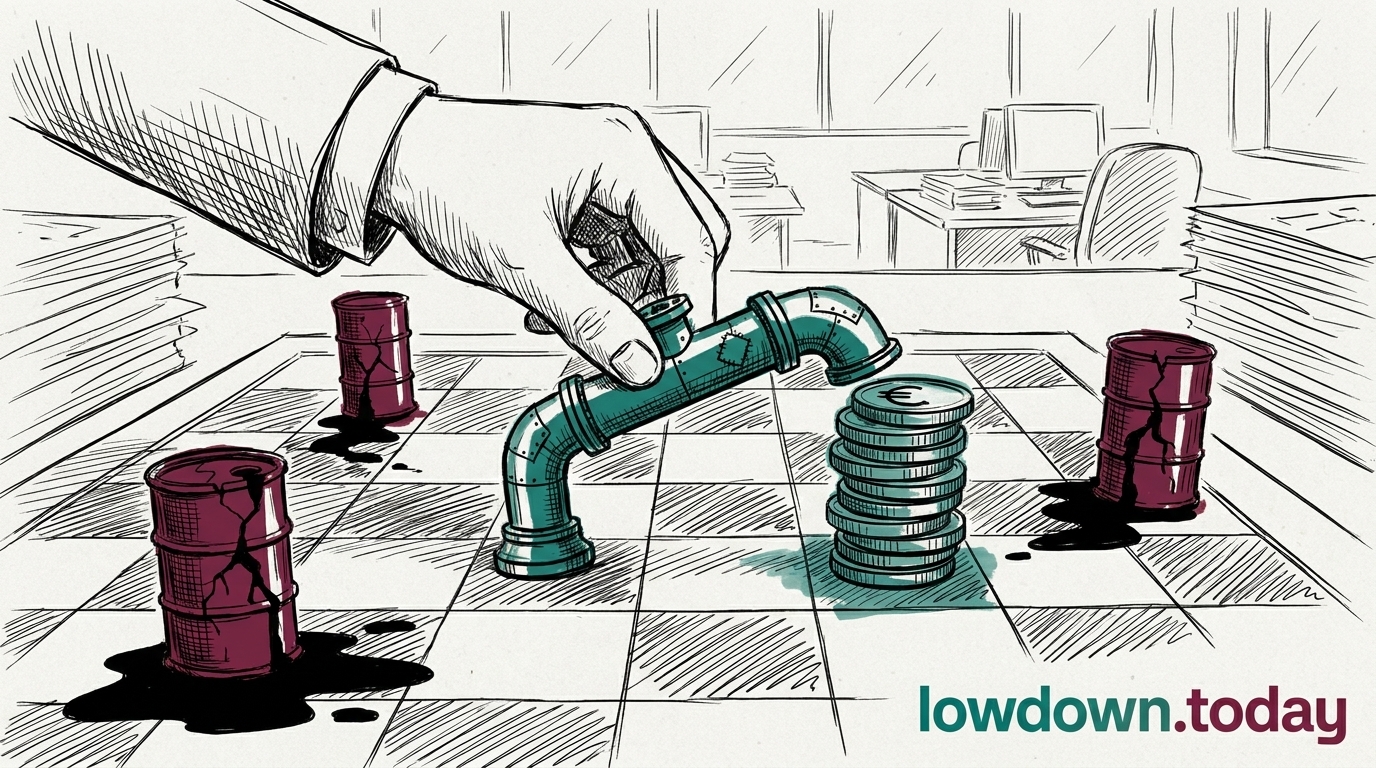
Drones hit two of Kuwait's largest refineries, triggering fires at both — the first Iranian attack on Kuwaiti energy infrastructure and an expansion beyond Iran's own declared target list.

ConflictDeveloping
Key takeaway

Iran has ended decades of restraint toward Kuwait, eliminating The Gulf's last functioning neutral buffer.

Iranian drones struck the Mina Al-Ahmadi refinery — with 730,000 barrels per day capacity, among the Middle East's largest — and the Mina Abdullah refinery in Kuwait on 19 March, triggering fires at both facilities⁠1. No injuries were reported. The attacks were the first Iranian strikes on Kuwaiti Energy infrastructure since the war began on 28 February.

Kuwait has historical reasons to regard attacks on its oil facilities with particular gravity. Iraq's 1990 invasion destroyed or set fire to more than 700 Kuwaiti oil wells; the environmental and economic damage took years to repair. The Iran-Iraq War of 1980–88 saw Iranian forces attack Kuwaiti oil tankers in the so-called Tanker War, prompting the United States to reflag Kuwaiti vessels under the American flag in Operation Earnest Will — Washington's first major naval commitment in The Persian Gulf. The pattern repeats: Kuwait's oil infrastructure draws fire from regional conflicts in which it is not a principal belligerent.

The IRGC's targeting of Kuwait is an expansion beyond its own declared scope. When it issued facility-specific warnings on 17 March, it named installations in Saudi Arabia, Qatar, and the UAE. Kuwait was absent from that list. The 19 March strikes therefore hit a country Iran had not formally warned — a widening that makes the remaining Gulf states' calculations about their own vulnerability more acute. Secretary of State Marco Rubio fast-tracked $8 billion in air defence radar sales to Kuwait on the same day, bypassing congressional review through an emergency waiver⁠2. The timing illuminates the gap between need and capability: the systems Kuwait requires are in contracts, not on launchers.

Kuwait had maintained cautious diplomatic distance from the conflict's principal actors. The strikes compress that space to near zero. Saudi Foreign Minister Prince Faisal bin Farhan had already warned on 17 March that Gulf patience is "not unlimited" and that trust with Tehran has been "completely shattered". Qatar expelled Iranian military attachés the same day. Kuwait now faces the same forced choice: its refineries are burning, its neutrality has provided no protection, and the air defence architecture that might shield its 2.4 million barrels per day of refining capacity does not yet exist. The last time Iran struck Kuwaiti oil assets — tankers in the 1980s — it drew the US Navy into permanent Gulf operations. Whether Kuwait's exposure now accelerates the allied naval commitment that seven nations expressed "readiness" for on 19 March, without committing a single vessel, remains the operative question.

Deep Analysis

In plain English

Kuwait has tried to stay out of this war. It has diplomatic relations with Iran and did not join any anti-Iran Coalition. Yet Iran struck two of its largest oil refineries on 19 March. Mina al-Ahmadi is one of the biggest refineries in the entire Middle East — it handles the majority of Kuwait's oil exports. The strike signals that hosting US military forces, as Kuwait does, is now enough for Iran to treat a country as a valid target regardless of its official neutrality. No Gulf state that hosts US forces can now consider itself safely outside the conflict.

Deep Analysis
Synthesis

The Kuwait strikes reveal Iran is prosecuting a campaign against the entire Gulf energy export architecture, not only against states actively engaged in hostilities. This transforms the conflict from a bilateral exchange into a regional infrastructure war in which formally neutral states become collateral targets based solely on their US basing arrangements.

Root Causes

Kuwait's strategic ambiguity — maintaining Iranian diplomatic relations while hosting US forces — was sustainable during lower-intensity periods. Iran's willingness to absorb international condemnation for striking a non-belligerent reflects a doctrine shift: infrastructure denial now overrides diplomatic buffer management when the target state facilitates US operations in theatre.

Escalation

Kuwait hosts US forces at Ali Al Salem Air Base and Camp Arifjan. Iran's strike signals that military hosting of US assets now supersedes diplomatic neutrality in Tehran's targeting calculus. This threatens to draw Bahrain, Qatar, and the UAE — all hosting substantial US forces — into the conflict's target set.

What could happen next?
  • Precedent

    Iran has struck a formally non-belligerent Gulf state, establishing US base-hosting as a sufficient condition for targeting regardless of the host state's declared position.

    Immediate · Assessed
  • Risk

    Kuwait's government faces domestic pressure to either join the anti-Iran coalition or demand US forces depart — both options carry severe strategic consequences.

    Short term · Suggested
  • Consequence

    Loss of Mina Al-Ahmadi and Mina Abdullah removes the majority of Kuwait's refining capacity, forcing crude onto an already constrained export market as unprocessed barrels.

    Short term · Assessed
  • Risk

    Bahrain (Fifth Fleet HQ), Qatar (Al Udeid), and the UAE must now recalculate their own exposure as hosts of major US military installations.

    Short term · Suggested
First Reported In

Update #42 · Iran hits four countries; Brent at $119

PBS· 20 Mar 2026
Read original →
Causes and effects
This Event
Iran strikes Kuwait refineries
The strikes eliminate Kuwait's ability to maintain diplomatic distance from the conflict and expand Iran's energy infrastructure campaign to a country it had not previously warned or targeted, widening the war's geographic footprint across the Gulf.
Different Perspectives
Bulgarian government
Bulgaria's Prime Minister, Rumen Radev, said the sinking of HS Dignity "benefits the Russian Federation" while saying Bulgaria lacked solid evidence to accuse anyone, and Defence Minister Dimitar Stoyanov asked NATO for air defence on 16 October. The request comes from a government that stopped state military aid to Ukraine in June.
Radoslaw Sikorski
Radoslaw Sikorski
Poland's foreign minister challenged Elon Musk on X after SpaceX capped Ukraine's Starshield terminals on 14 October. Poland pays about $50m a year for Ukraine's Starlink subscriptions, so Warsaw speaks as the paying customer as well as the ally.
Andy Burnham
Andy Burnham
Burnham fast-tracked £10m of a £45m air-defence missile delivery when Zelenskyy visited London on 14 October, and his ministers are lobbying allies to ban maritime services for Russian liquefied natural gas. The measure targets insurers and shipowners, many of them in London, rather than the gas itself.
Ministry of External Affairs (India)
India's foreign ministry said after the 16 September House vote that New Delhi would take all necessary measures to protect its trade.
European Council
European Council
EU leaders on 15-16 October rejected a US idea to hand Washington the roughly €200bn of frozen Russian assets held in Europe, and Kaja Kallas said the decision belongs to Europeans. The same summit put off a decision on financing Ukraine, saying leaders "will revert to the issue in a timely manner".
Donald Trump
Donald Trump
Trump signed the 16 October order that sets the Graham Act's duties and waives them under section 115(a), with a certification sent to Congress. He says the United States has not stopped sharing intelligence with Ukraine, and on 11 October he said both sides had agreed to halt attacks on energy infrastructure.

Written with AI from Lowdown's published reporting. Not individually reviewed by an editor. Editorial standards.
