Skip to content
You can now search across every topic, entity and event.What's new
Pandemics and Biosecurity
21JUL

US bans entry from DRC, Uganda, S Sudan

3 min read
09:12UTC

On 18 May the United States imposed a 21-day entry ban on nationals of three African states, including green-card holders, three days before WHO formally advised against exactly such restrictions.

ScienceDeveloping
Key takeaway

The US entry ban runs against live WHO advice for the first time since the 2014 Ebola response.

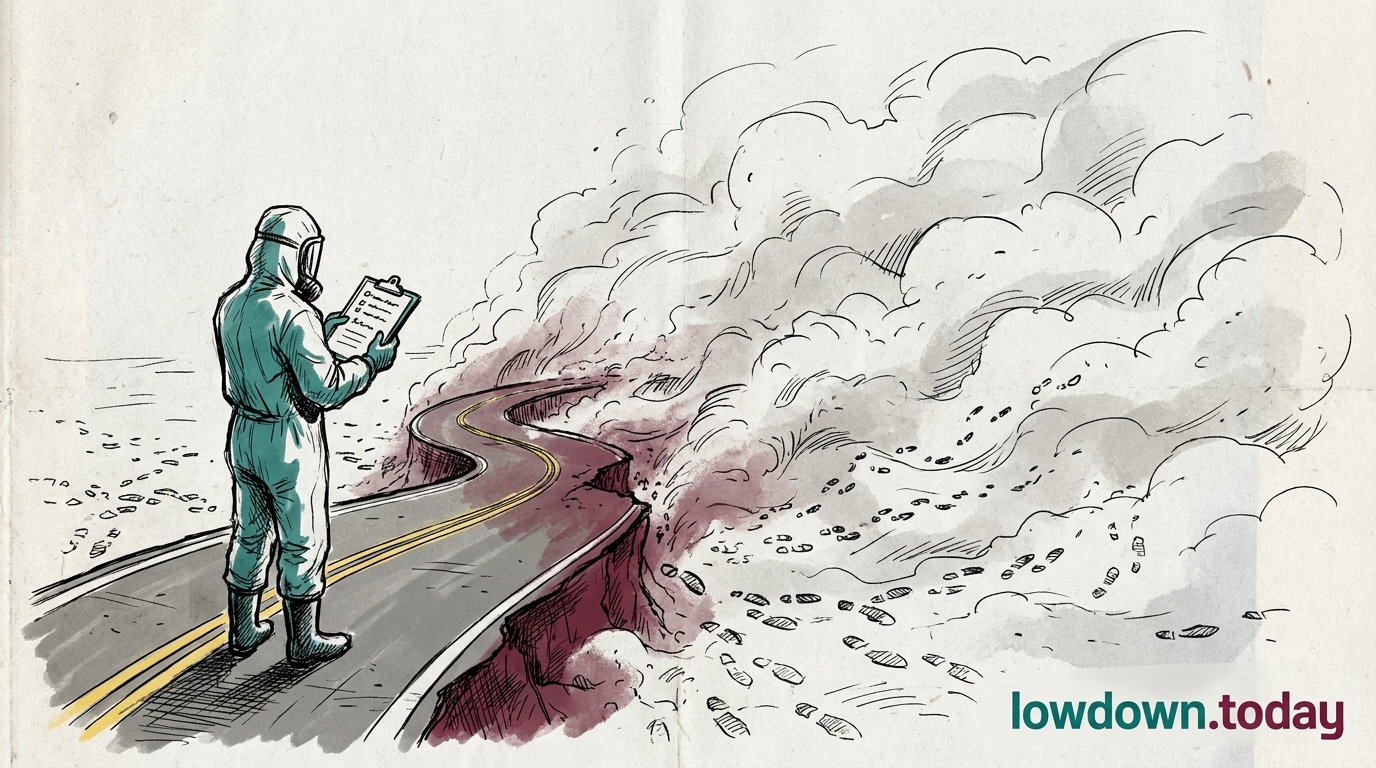
On 18 May the United States imposed a 21-day entry ban on nationals of the Democratic Republic of Congo, Uganda and South Sudan, including green-card holders 1. US citizens may still enter but face enhanced public-health screening at George Bush Intercontinental Airport in Houston from 26 May 2. South Sudan was included despite having no confirmed Bundibugyo cases, on the stated logic of porous borders with the DRC 3. The measure followed three days after WHO declared the Bundibugyo emergency .

The ban came first; four days later WHO's Emergency Committee issued Temporary Recommendations advising against travel and trade restrictions, and the ban has not been lifted since 4. Africa CDC publicly opposed the restrictions on 19 May 5. A major power has now banned travel against live WHO advice during an active emergency for the first time since the West Africa Ebola crisis of 2014, whose travel-ban failures the IHR exit-screening model was written to replace.

Entry bans push exposed travellers toward unscreened land routes and onward third-country flights, the exact behaviour exit screening at source is built to capture, and they discourage the honest disclosure border co-operation depends on. Bans also operate on nationality rather than exposure: a green-card holder WHO has not left the US in a year falls under the bar, while the screening of returning US citizens at Houston targets actual travel history. The 21-day entry ban therefore catches people by passport, not by where they have been.

Washington's reach for a border measure rather than a deployment has a structural backdrop. The USAID outbreak-response unit that would have surged personnel to Ituri had already been disbanded before the emergency , leaving entry restriction as one of the few levers still readily available. For readers planning travel, the practical effect is narrow: the bar falls on green-card holders and nationals of the three countries, while US citizens face questions and a temperature check at Houston, not exclusion.

Deep Analysis

In plain English

On 18 May 2026, the United States banned entry for nationals of three countries: the Democratic Republic of Congo, Uganda, and South Sudan. The ban includes people with US permanent residency (green cards). South Sudan was included even though no Ebola cases had been confirmed there. Public-health experts consistently oppose travel bans during Ebola outbreaks because they do not stop the virus, they drive sick or worried people to use unofficial routes where they cannot be monitored. They also make healthcare workers from affected countries reluctant to volunteer to help, which is exactly the opposite of what a response needs. Four days after the ban was imposed, the WHO's own expert committee formally recommended against travel or trade restrictions.

Deep Analysis
Root Causes

The US entry ban tracks a structural gap left by the dismantling of USAID's outbreak-response unit: with no 90-person CDC field presence deployable to Ituri, the only publicly visible US action available is a border measure. Entry bans are administratively simple and politically legible; field surge deployment requires an institutional apparatus the current US government no longer has.

South Sudan's inclusion despite zero cases reflects the conflation of geographic proximity with epidemic risk. The Ituri-South Sudan border does carry genuine surveillance risk given ungated population movement, but including South Sudan in a travel ban without a confirmed case is epidemiologically unjustifiable and was designed to signal political decisiveness rather than epidemiological precision.

What could happen next?
  • Risk

    Travel bans that push affected-country nationals to use informal border crossings reduce the WHO's ability to conduct exit screening, the single most evidence-based border measure for Ebola.

  • Consequence

    Uganda and South Sudan nationals working abroad in healthcare roles may delay return to their countries of origin, reducing the human resource pool available for the Ituri response surge.

First Reported In

Update #4 · Ebola triples, response misfires

STAT News· 24 May 2026
Read original
Causes and effects
This Event
US bans entry from DRC, Uganda, S Sudan
It is the first time since 2014 that a major power has banned travel against live WHO advice during an active emergency.
Different Perspectives
UK Government
UK Government
The Biological Security Strategy implementation report published 14 July commits the UK to deciding within twelve months whether to make DNA-synthesis screening mandatory, backed by GBP 1.83bn for biosecurity centres. It is a preemptive move on a threat that has not yet produced a UK incident.
Cambodia's Ministry of Health
Cambodia confirmed a nine-month-old girl in Phnom Penh as its fourth 2026 H5N1 case on 11 July, the country supplying four of the world's seven new human cases since February. The ministry's confirmed-case cadence is running well ahead of a US surveillance system that has recorded nothing new since March.
Knowledge Ecology International
KEI published proposed annex text on the day IGWG7 opened that would attach benefit-sharing duties to a product's market registration, regardless of whether the manufacturer used shared samples or only downloaded sequence data. It is the Africa Group's fallback position if the sample-based bargain fails to bind.
European Union
European Union
The EU and other industrialised states backed a hybrid model built on centralised infrastructure with more flexible access terms, the opposite design choice from the Africa Group's. Brussels wants conditions handled contractually once samples reach shared facilities, not attached to national custody of the material itself.
Africa Group / Algeria
Algeria, speaking for the Africa Group at IGWG7, backed distributed national and regional laboratories under binding access conditions, arguing that supplying states must keep legal control of samples rather than surrender them into shared infrastructure.
Uganda's Ministry of Health
Uganda discharged its last confirmed patient on 16 July and opened a 42-day countdown to declaring its own outbreak over, closing at 20 cases and 2 deaths with no new case since 21 June. This is a closing chapter running alongside DR Congo's still-worsening one, contingent on a border DRC can no longer see across.
