Skip to content
You can now search across every topic, entity and event.What's new
Pandemics and Biosecurity
21JUL

USAID outbreak unit gone by PHEIC

3 min read
09:12UTC

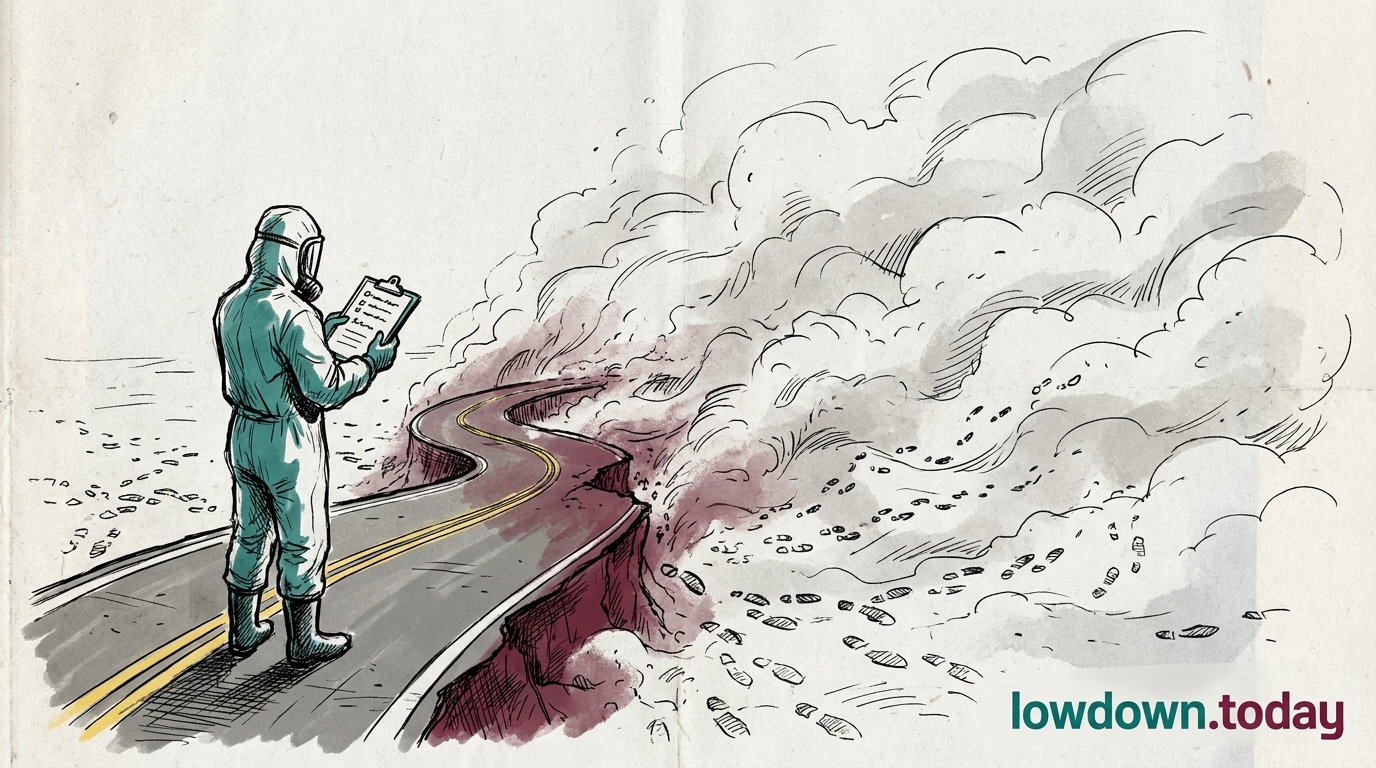
Craig Spencer told a 15 May specialist panel that USAID's outbreak-response unit of roughly 60 staff, including around 10 Ebola specialists, no longer exists in any operational form; US CDC is named as a partner by Africa CDC but absent from WHO AFRO's release.

ScienceDeveloping
Key takeaway

The American surge teams that crushed 2018 Equateur are not in the chain for Bundibugyo 2026.

The 2018 Equateur outbreak in western DR Congo was crushed by Ervebo ring vaccination, Inmazeb and Ebanga inside a clinical trial, and a US response footprint of roughly 90 deployed CDC subject-matter experts backed by US$266 million in USAID assistance for DRC Ebola programmes from 2018 onwards. The 2018 outbreak ended with 54 cases and 33 deaths in three months, controlled by Ervebo vaccination of 3,302 contacts. USAID's outbreak-response capacity was wound down in early 2025. Craig Spencer, the MSF Guinea 2014 veteran now at Brown University, told the same Friday panel that the agency's outbreak unit of "roughly 60 staff, including around 10 Ebola specialists, no longer exists in any operational form" 1.

In 2018, those staff ran contact-tracing convoys out of Mbandaka, ferried Ervebo doses to Iboko and underwrote nine of every ten dollars spent on the DRC response. None of that workflow has a US institutional owner today. Africa CDC's 16 May coordination statement names US CDC as a response partner; the confirmation release from WHO AFRO lists WHO and partners but does not name deployed US CDC personnel 2. The Idaho dairy H5N1 surge to 59 quarantined herds illustrates the simultaneous demand compression on the same federal response apparatus that would otherwise be the partner of record in Bunia and Mongbwalu. Ebola containment runs on logistics before it runs on bedside care; the embedded layer that supplied that logistics in 2018 is the layer that is now absent.

Deep Analysis

In plain English

When Ebola broke out in the DRC's Equateur Province in 2018, the United States sent about 90 disease experts and spent $266 million in aid to help stop it. The outbreak was contained in three months. That team no longer exists. The US foreign aid agency USAID was restructured in 2025, and the Ebola-response unit was one of the casualties. When the Bundibugyo outbreak struck in 2026, the US has far less to offer than it did eight years ago. America is also simultaneously dealing with a bird flu outbreak in Idaho dairy farms {{EVREF:/t/pandemics-and-biosecurity/2/idaho-dairy-h5n1-1-to-59-herds-in-twelve-days/}}, which stretches the same public health budget further.

Deep Analysis
Root Causes

USAID's outbreak-response unit was wound down as part of the second Trump administration's broader USAID restructuring, which began in January 2025 and eliminated roughly 83% of USAID's foreign aid contracts by March 2025. The Global Health Security agenda office, which housed the Ebola-specific staff Craig Spencer documented, was consolidated or eliminated.

The structural root cause predates the current administration: the Global Health Security Act of 2014 (passed after the West Africa Ebola crisis) funded outbreak response capacity but did not mandate permanent staffing levels, meaning the unit could be eliminated by executive action without Congressional approval.

What could happen next?
  • Consequence

    MSF, EU HERA, and UK FCDO bilateral teams now carry a materially larger share of the external response burden than in any Ebola outbreak since 2014.

  • Risk

    CDC is named in Africa CDC's coordination statement but absent from WHO AFRO's operational release, suggesting the agency's field presence is either limited or still being arranged, creating a coordination gap in the early weeks when response decisions matter most.

First Reported In

Update #3 · WHO calls Ebola PHEIC, no treatment exists

Public panel discussion, 15 May 2026· 17 May 2026
Read original
Different Perspectives
UK Government
UK Government
The Biological Security Strategy implementation report published 14 July commits the UK to deciding within twelve months whether to make DNA-synthesis screening mandatory, backed by GBP 1.83bn for biosecurity centres. It is a preemptive move on a threat that has not yet produced a UK incident.
Cambodia's Ministry of Health
Cambodia confirmed a nine-month-old girl in Phnom Penh as its fourth 2026 H5N1 case on 11 July, the country supplying four of the world's seven new human cases since February. The ministry's confirmed-case cadence is running well ahead of a US surveillance system that has recorded nothing new since March.
Knowledge Ecology International
KEI published proposed annex text on the day IGWG7 opened that would attach benefit-sharing duties to a product's market registration, regardless of whether the manufacturer used shared samples or only downloaded sequence data. It is the Africa Group's fallback position if the sample-based bargain fails to bind.
European Union
European Union
The EU and other industrialised states backed a hybrid model built on centralised infrastructure with more flexible access terms, the opposite design choice from the Africa Group's. Brussels wants conditions handled contractually once samples reach shared facilities, not attached to national custody of the material itself.
Africa Group / Algeria
Algeria, speaking for the Africa Group at IGWG7, backed distributed national and regional laboratories under binding access conditions, arguing that supplying states must keep legal control of samples rather than surrender them into shared infrastructure.
Uganda's Ministry of Health
Uganda discharged its last confirmed patient on 16 July and opened a 42-day countdown to declaring its own outbreak over, closing at 20 cases and 2 deaths with no new case since 21 June. This is a closing chapter running alongside DR Congo's still-worsening one, contingent on a border DRC can no longer see across.
