Skip to content
You can now search across every topic, entity and event.What's new
Pandemics and Biosecurity
21JUL

IHR committee meets, rejects travel bans

3 min read
09:12UTC

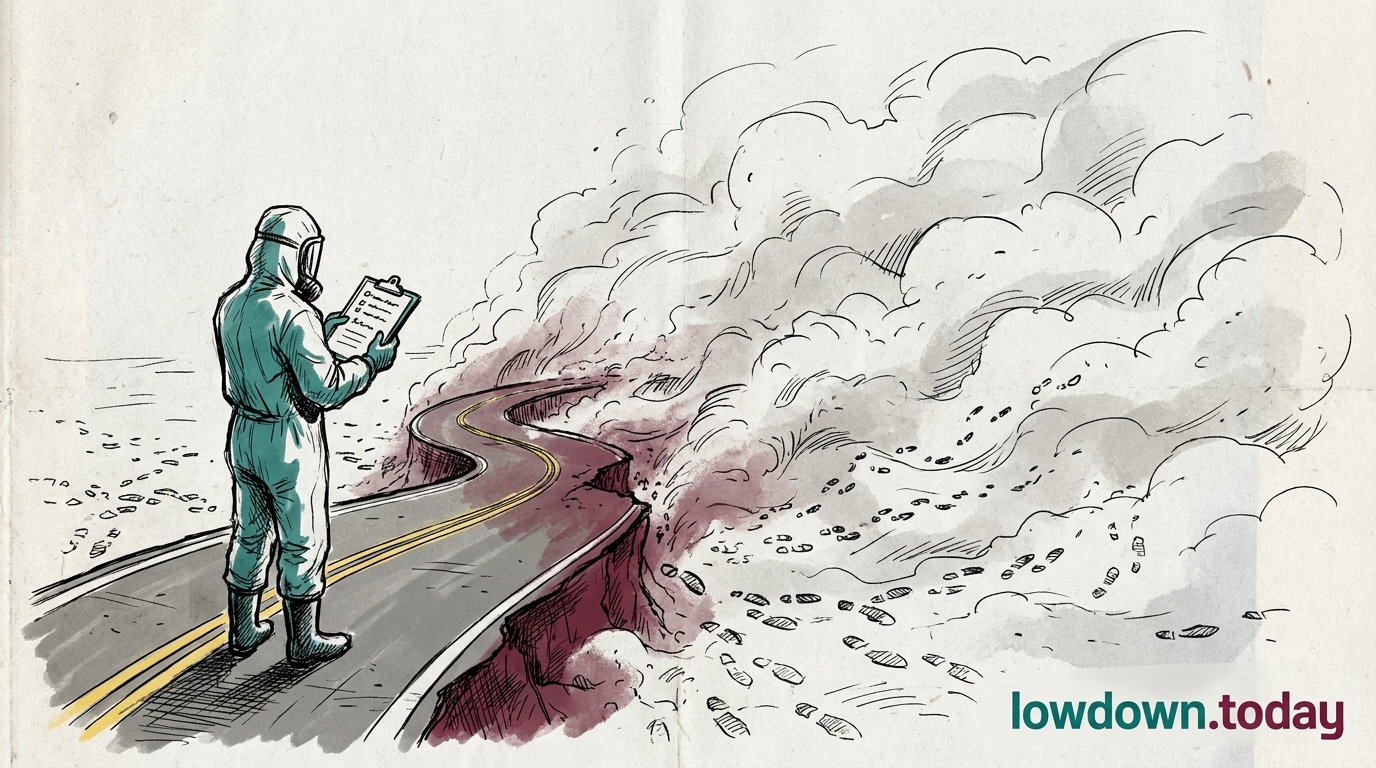
The expert panel Tedros bypassed to declare the emergency faster convened on 19 May and issued recommendations on 22 May: exit screening and tracing, and no travel or trade restrictions.

ScienceDeveloping
Key takeaway

The IHR committee's advice against travel bans is the codified 2014 lesson, not a discretionary preference.

The Emergency Committee under the International Health Regulations (IHR), the binding treaty governing cross-border outbreak response, convened on 19 May 1. This is the standing expert panel that Tedros Adhanom Ghebreyesus had bypassed when he declared the Bundibugyo emergency faster than procedure normally allows . Its Temporary Recommendations, issued 22 May, call for exit screening at borders, 21-day contact tracing and safe burials, and explicitly advise against travel or trade restrictions 2. The committee confirmed the emergency but stopped short of the higher Pandemic Emergency tier.

The 2005 IHR replaced cordon-style border closures with exit screening at source precisely because the West Africa Ebola response in 2014 showed that bans drive disease underground without stopping it: travellers hide their movements and slip in by other routes. By advising exit screening and against entry bans, the committee is enforcing the rule the regulations were rewritten to encode, not weighing options afresh.

That advice arrives into a contradiction. A 21-day entry ban from a major power was already in force when the recommendations published, which sets the committee's codified guidance directly against a member state's unilateral measure within the same week. The committee can recommend, but the IHR carries no enforcement teeth; its authority rests on reciprocity, the expectation that states follow shared rules because they need others to. When that breaks, the treaty's recommendations become advice a government can read and ignore.

Deep Analysis

In plain English

The IHR Emergency Committee is a panel of international disease experts that normally advises the WHO's director-general before a global health emergency is declared. This time, the WHO chief Tedros declared the emergency first (on 17 May) and only convened the committee afterwards, because the outbreak was growing fast and he had legal authority to act alone. The committee then met on 19 May and issued formal recommendations on 22 May. Those recommendations said countries should screen travellers at borders, trace contacts for three weeks if they have been near a case, and ensure safe burial practices to prevent further spread. The IHR committee explicitly advised against travel or trade bans from affected countries, on the grounds that bans drive affected people to informal crossing points where they cannot be screened. Travel bans push sick people away from official routes.

What could happen next?
  • Precedent

    Tedros's pre-committee PHEIC declaration sets a procedural precedent; future WHO directors-general may face pressure to declare faster in politically contested outbreaks, before the technical committee can provide cover for the decision.

  • Consequence

    The committee's no-travel-restriction advice, issued four days after the US entry ban was imposed, puts the United States formally in violation of IHR Temporary Recommendations with no legal enforcement mechanism to compel compliance.

First Reported In

Update #4 · Ebola triples, response misfires

World Health Organization· 24 May 2026
Read original
Different Perspectives
UK Government
UK Government
The Biological Security Strategy implementation report published 14 July commits the UK to deciding within twelve months whether to make DNA-synthesis screening mandatory, backed by GBP 1.83bn for biosecurity centres. It is a preemptive move on a threat that has not yet produced a UK incident.
Cambodia's Ministry of Health
Cambodia confirmed a nine-month-old girl in Phnom Penh as its fourth 2026 H5N1 case on 11 July, the country supplying four of the world's seven new human cases since February. The ministry's confirmed-case cadence is running well ahead of a US surveillance system that has recorded nothing new since March.
Knowledge Ecology International
KEI published proposed annex text on the day IGWG7 opened that would attach benefit-sharing duties to a product's market registration, regardless of whether the manufacturer used shared samples or only downloaded sequence data. It is the Africa Group's fallback position if the sample-based bargain fails to bind.
European Union
European Union
The EU and other industrialised states backed a hybrid model built on centralised infrastructure with more flexible access terms, the opposite design choice from the Africa Group's. Brussels wants conditions handled contractually once samples reach shared facilities, not attached to national custody of the material itself.
Africa Group / Algeria
Algeria, speaking for the Africa Group at IGWG7, backed distributed national and regional laboratories under binding access conditions, arguing that supplying states must keep legal control of samples rather than surrender them into shared infrastructure.
Uganda's Ministry of Health
Uganda discharged its last confirmed patient on 16 July and opened a 42-day countdown to declaring its own outbreak over, closing at 20 cases and 2 deaths with no new case since 21 June. This is a closing chapter running alongside DR Congo's still-worsening one, contingent on a border DRC can no longer see across.