Skip to content
Briefings are running a touch slower this week while we rebuild the foundations.See roadmap
Iran Conflict 2026
12MAY

Brent peaks at $126 — record war high

4 min read
09:32UTC

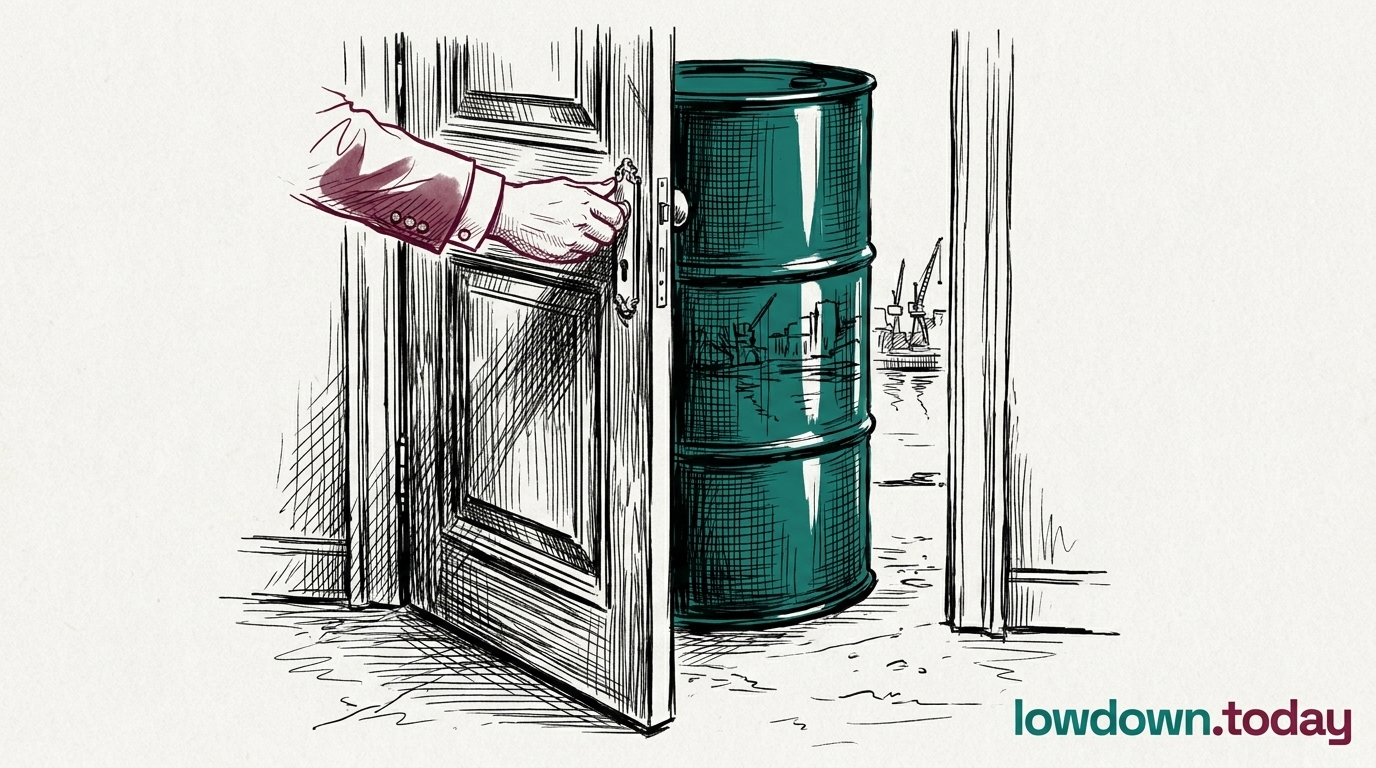
Oil prices have nearly doubled since the war began, driven by the largest supply disruption the IEA has ever recorded. Strategic reserve releases bought days, not weeks.

ConflictDeveloping
Key takeaway

At $114 settled, markets are pricing a durable disruption — the IEA's four-day reserve buffer confirms this.

Brent Crude peaked at $126 per barrel this week before settling around $114 — a 70% increase over the pre-war price of $67.41. The trajectory has been unbroken: $100.21 on 16 March , $108.65 three days later after Netanyahu claimed Israel was helping reopen Hormuz , $112.19 by Thursday , and NOW a new spot high. Bloomberg had already reported a record $14.20-per-barrel backwardation — the premium buyers pay for immediate physical delivery over next-month futures — meaning refiners were effectively paying $126 or more for delivered crude before the headline price caught up .

The International Energy Agency's March report documented the cause: global output down 8 million barrels per day, Gulf production curtailed by at least 10 million bpd including condensates — the largest supply disruption in the agency's history 1. IEA member states responded with a 400 million barrel coordinated drawdown from strategic petroleum reserves, the largest ever. That volume covers roughly four days of global consumption. The IEA called it "a stop-gap measure" without swift conflict resolution 2. The IRGC's toll system at Hormuz89 to 90 vessels transited under Iranian clearance in the first half of March, at fees up to $2 million per passage — has replaced a military blockade with selective commercial control, but it has not restored the volume that moved freely before 28 February 3.

The supply-side interventions the Trump administration has attempted have not altered the price curve. The Treasury's waiver on 140 million barrels of sanctioned Iranian crude already on tankers equals 1.5 days of global consumption. The Venezuela authorisation and 60-day Jones Act waiver address distribution, not the underlying shortfall. Charter rates have quadrupled to $800,000 per day, and war-risk premiums on very large crude carriers run between $3.6 million and $6 million per voyage 4. These costs compound through the supply chain before reaching consumers.

The distance to the next threshold is shrinking. Daan Struyven, Goldman Sachs's head of oil research, warned earlier this week that Brent could exceed its 2008 all-time intraday record of $147.50 if Hormuz flows remain depressed for 60 days . Ann-Louise Hittle of Wood Mackenzie forecast $150 "soon," with $200 "not outside the realms of possibility" . Oxford Economics assessed that $140 per barrel triggers a mild global recession at negative 0.7% GDP 5. At the current rate of increase — roughly $6 per barrel per week since the war began — that threshold arrives in late April without a change in supply conditions.

Deep Analysis

In plain English

Oil is priced on global markets where traders buy and sell futures contracts. When they believe a supply cut will last months rather than days, they push prices up immediately to reflect future scarcity. The $114 settled level — still 70% above pre-war — signals traders do not expect a quick resolution. The $126 peak captured the moment of maximum uncertainty. The partial retreat to $114 reflects some hope that diplomacy or reserve releases might partially offset supply loss — not that the crisis is resolving. The distinction matters: a settled high price is more economically damaging than a spike, because businesses and households cannot plan around it.

Deep Analysis
Synthesis

The IEA releasing 400 million barrels to cover four days of global consumption exposes a fundamental inadequacy in the strategic reserve architecture. That architecture was designed for brief supply shocks — 1970s-scale embargoes lasting weeks — not sustained chokepoint blockades of indefinite duration. The mismatch between available tool and disruption scale is now fully visible to markets.

Root Causes

Decades of underinvestment in bypass infrastructure left Hormuz structurally irreplaceable. The UAE's Habshan–Fujairah pipeline handles roughly 1.5 million bpd — under 10% of normal Hormuz throughput. No comparable alternative route exists for LNG or condensate flows, which cannot be rerouted via pipeline at all.

Escalation

The $12 retreat from $126 to $114 is fragile. Any Iranian strike on Saudi Aramco facilities or UAE terminals — explicitly included in the Khatam al-Anbiya counter-threat — could push prices through the $140 recession-triggering level within a single trading session.

What could happen next?
  • Risk

    If Iran executes counter-strikes on Gulf energy infrastructure, $126 becomes a price floor rather than a ceiling.

    Immediate · Assessed
  • Consequence

    The IEA reserve release exhausts the primary coordinated institutional buffer, leaving no further tool available short of conflict resolution.

    Short term · Assessed
  • Risk

    Tanker insurance markets may move toward blanket war-risk exclusions, rendering transit commercially impossible regardless of IRGC toll arrangements.

    Short term · Suggested
  • Precedent

    A sustained Hormuz blockade will accelerate long-term investment in bypass pipeline and LNG infrastructure outside the Gulf, permanently reshaping energy trade routes.

    Long term · Suggested
First Reported In

Update #45 · Ultimatum expires; Iran tolls Hormuz at $2m

IEA· 23 Mar 2026
Read original
Different Perspectives
International human rights monitors (NetBlocks, IHR, Hengaw)
NetBlocks recorded 1,704 cumulative hours of near-total internet blackout for roughly 90 million Iranians on Day 74, while IHR documented ongoing executions under emergency provisions. These organisations are the only active monitoring windows into a civilian population cut off from the global internet for 71 consecutive days.
UK / France coalition
The Royal Navy confirmed HMS Dragon's Hormuz deployment on its own website on 11 May, converting a press-reported presence into declared force posture; UK and French defence ministers hosted a coalition meeting the same day. Britain and France are now the only named contributors to a Hormuz escort mission all five allies Trump originally asked had declined.
Saudi Aramco / Gulf producers
Saudi Aramco CEO Amin Nasser warned on 11 May that a Hormuz closure could remove 100 million barrels of weekly supply from global markets (roughly 15 million barrels per day for a week), a figure that dwarfs any OPEC+ swing capacity. The warning functions as both a price-floor signal and a public pressure on Washington to protect transit.
Beijing / Chinese Government
China has not publicly acknowledged the four Hong Kong-registered entities designated on 11 May or extended MOFCOM's Blocking Rules cover to HK-domiciled firms. Xi Jinping hosts Trump on 14–15 May having already de-risked state-bank balance sheets via NFRA's quiet loan halt, entering the summit partially compliant before any negotiation.
Tehran / Iranian Government
Foreign Minister Araghchi described Iran's 10-point counter-proposal as 'reasonable and responsible' via spokesman Baqaei on 11 May, and widened the mediator pool by meeting Turkish, Egyptian, and Dutch counterparts in a single day. Tehran is buying procedural runway while Trump's verbal rejection went unmatched by any written US counter.
Trump White House
Trump White House
Trump called the ceasefire 'on massive life support' and dismissed Iran's 10-point counter-proposal as 'a piece of garbage' on 11 May, while departing for Beijing two days later with no signed Iran instrument to show Congress. The verbal maximum and the paper void coexist: the administration is running a legal pressure campaign through Treasury while the president free-lances the rhetoric.