Skip to content
Welcome, thoughtbot's Giant Robots listeners!Start here
Iran Conflict 2026
10MAY

IEA: Gulf-Asia freight tops $37 a barrel

3 min read
14:22UTC

The IEA says moving Gulf crude to Asia now costs over five times the pre-war rate, while Kpler shows Middle East shipments back above pre-war levels.

ConflictDeveloping
Key takeaway

Gulf oil still reaches buyers, but freight to Asia now costs over five times its pre-war rate.

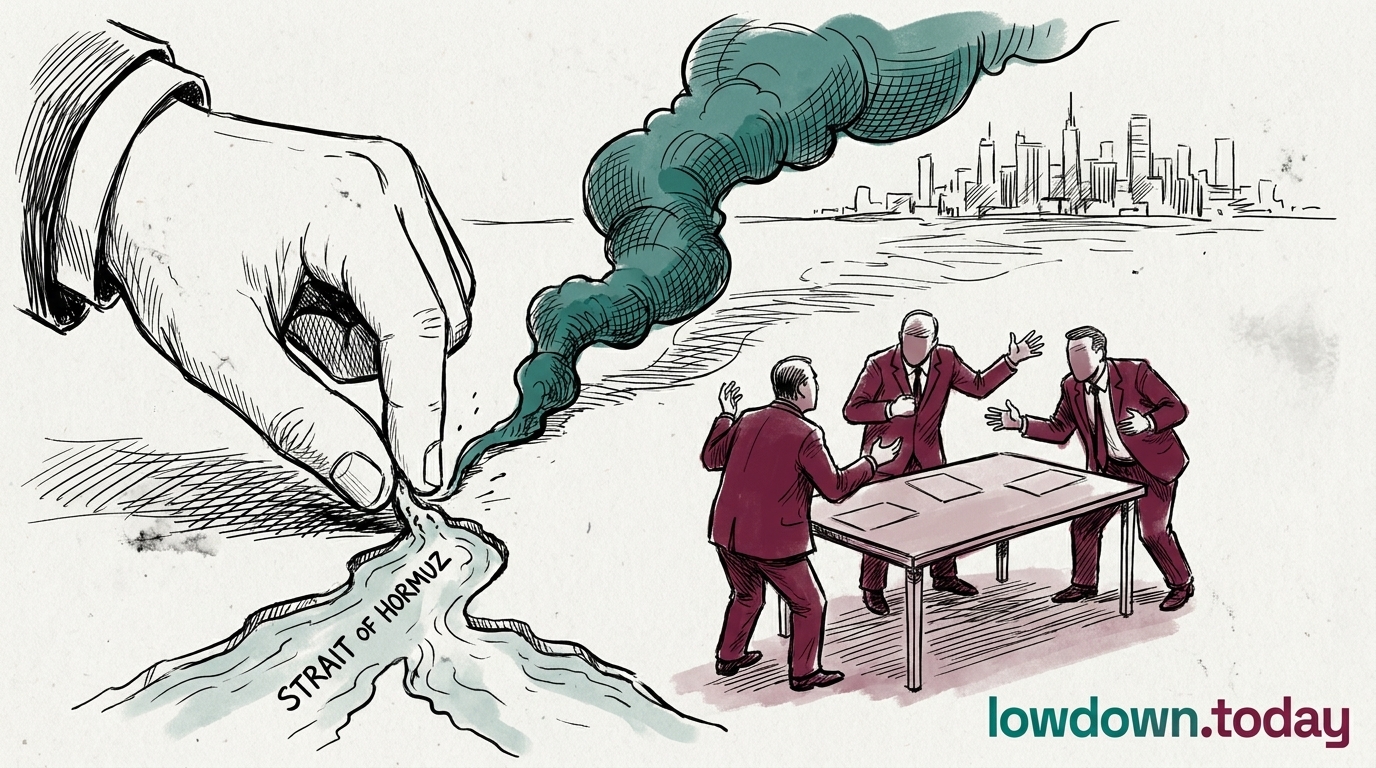
The International Energy Agency (IEA) said on Wednesday 21 October that shipping crude from The Gulf to Asia cost more than $37 a barrel by mid-October, over five times the pre-war rate⁠1. That is about 23 US cents on every litre of crude before it is refined. A supertanker carrying 2 million barrels now pays more than $74m in freight per cargo, against under $15m before the war. Supertanker owners were already booking record earnings in September.

Brent Crude, the global oil benchmark, traded at $112.27 a barrel on Thursday 22 October, about 3.2% above Tuesday's settlement and above Tuesday's five-month intraday high of $111.99, the Associated Press reported⁠2. It had settled at $109.55 on Monday 19 October, then $108.79 on Tuesday, Reuters reported⁠3. West Texas Intermediate, the US benchmark, closed at $103.66 on Monday, its highest since 15 September⁠4.

Kpler, a ship-tracking data firm, put Middle East oil shipments above 24 million barrels a day in the week to 18 October, against a pre-war average of 23.3 million, the Wall Street Journal reported. Through Hormuz itself, flows run at about 82% of pre-war, so close to a fifth of the strait's old traffic has not returned. Pipelines now carry about 40% of the region's crude exports around the strait, against 17% before the war, which still leaves about 60% passing through Hormuz⁠5.

The ship-to-ship transfers that keep volume whole happen in The Gulf of Oman, outside the strait; the Revolutionary Guards say they hit transfers inside The Persian Gulf, and have not claimed any off Oman. The Group of Seven (G7) release of up to 100 million barrels from government stockpiles adds oil on land and does nothing for freight.

Deep Analysis

In plain English

Brent Crude is the main world price for oil. When it rises, petrol, diesel and heating fuel usually cost more. Oil from The Gulf still reaches buyers, mostly in Asia. But tanker owners now charge much more to carry it, because of attacks on ships and higher insurance costs. That extra cost is added to the price buyers pay.

Deep Analysis
Root Causes

Freight costs rise for three reasons at once: longer voyages around blocked routes, war-risk insurance priced per voyage, and fewer owners willing to send ships into The Gulf. Each adds cost without removing a barrel.

Pipelines carry about 40% of the region's crude exports, against 17% before the war, which keeps volumes up. But pipeline capacity is fixed, and about 60% of exports still pass through Hormuz.

What could happen next?
  • Consequence

    Asian refiners may shift some purchases away from Gulf crude towards Atlantic Basin grades while freight stays high.

  • Opportunity

    Pipelines that bypass Hormuz gain value, which may support new investment in export routes to the Red Sea and Gulf of Oman.

First Reported In

Update #182 · Iran says it mined Hormuz and hit 7 ships

CBS News· 22 Oct 2026
Read original →
Different Perspectives
Office for Budget Responsibility
The OBR's 28 October forecast assumed $82 oil for 2026 and 2027, from market prices for the ten working days to 19 August, and blamed dearer wholesale energy on the war without naming Iran. It expects CPI inflation close to 4% in early 2027 even at that price.
Hengaw, Kurdish rights group
Hengaw reported the 3 November hangings of Amirhossein Maleki and Amirhossein Ebrahimi in Isfahan, saying Ebrahimi was tortured into confessing and that nine of 12 people sentenced to death in the case have now been hanged. Iran's judiciary holds that the defendants killed members of the security forces.
FINTRAC, Canada's financial intelligence unit
FINTRAC worked with the US Treasury on the 6 November designation of eight money services businesses in British Columbia, Ontario and Quebec. Treasury says the businesses still operate, some under new names, so closing them falls to Ottawa.
Abdul Qadir al-Dakhil, Governor of Nineveh
Al-Dakhil cancelled three Mosul International Airport contracts on 7 November over alleged links to armed groups, after meeting Prime Minister Ali al-Zaidi in Baghdad. He named no group or company, and said the contracts will go to international companies.
Kuwait
Kuwait
Kuwait condemned the Houthi missile fired towards the Madinah region on 5 November and restated its support for Saudi Arabia, the Qatar News Agency reported. Its state tanker company, Kuwait Oil Tankers Company, is among the Gulf state fleets on Iran's expanded Hormuz list.
Scott Bessent, US Treasury Secretary
Treasury designated an alleged Chandigarh false-flag network on 4 November and eight Canadian exchangers on 6 November, while State sanctioned alleged MANPADS intermediaries. None of the actions touches an oil buyer; they target the paper, cash and procurement around Iran's trade.

Written with AI from Lowdown's published reporting. Not individually reviewed by an editor. Editorial standards.
