Skip to content
Briefings are running a touch slower this week while we rebuild the foundations.See roadmap
Iran Conflict 2026
29APR

Record oil reserve release fails fast

4 min read
09:17UTC

The IEA released 400 million barrels — the biggest coordinated draw in its 50-year existence. Three tanker attacks and Iran's blockade declaration erased the effect before markets closed.

ConflictDeveloping
Key takeaway

Strategic reserves buffer temporary shocks; a sustained intentional blockade has exposed the architecture's design limits.

The International Energy Agency released 400 million barrels from member nations' strategic petroleum reserves on Wednesday — the largest coordinated drawdown in the agency's 50-year history. The previous record, 60 million barrels released during Libya's 2011 civil war, was less than one-sixth the size. The United States committed 172 million barrels from the Strategic Petroleum Reserve — 43% of the total. The action was designed to signal abundant supply and arrest the price rally that has driven Brent from $67.41 on 27 February into the $90–95 range.

The signal lasted hours. Three cargo ship attacks in the strait of Hormuz on Wednesday, combined with the IRGC's declaration that "not a litre of oil" would pass through the strait, erased the effect before US markets closed. Oil traders price barrels available today, not barrels promised over months. The US contribution requires 120 days to deliver at planned discharge rates. Delivery begins next week. The shortage is now.

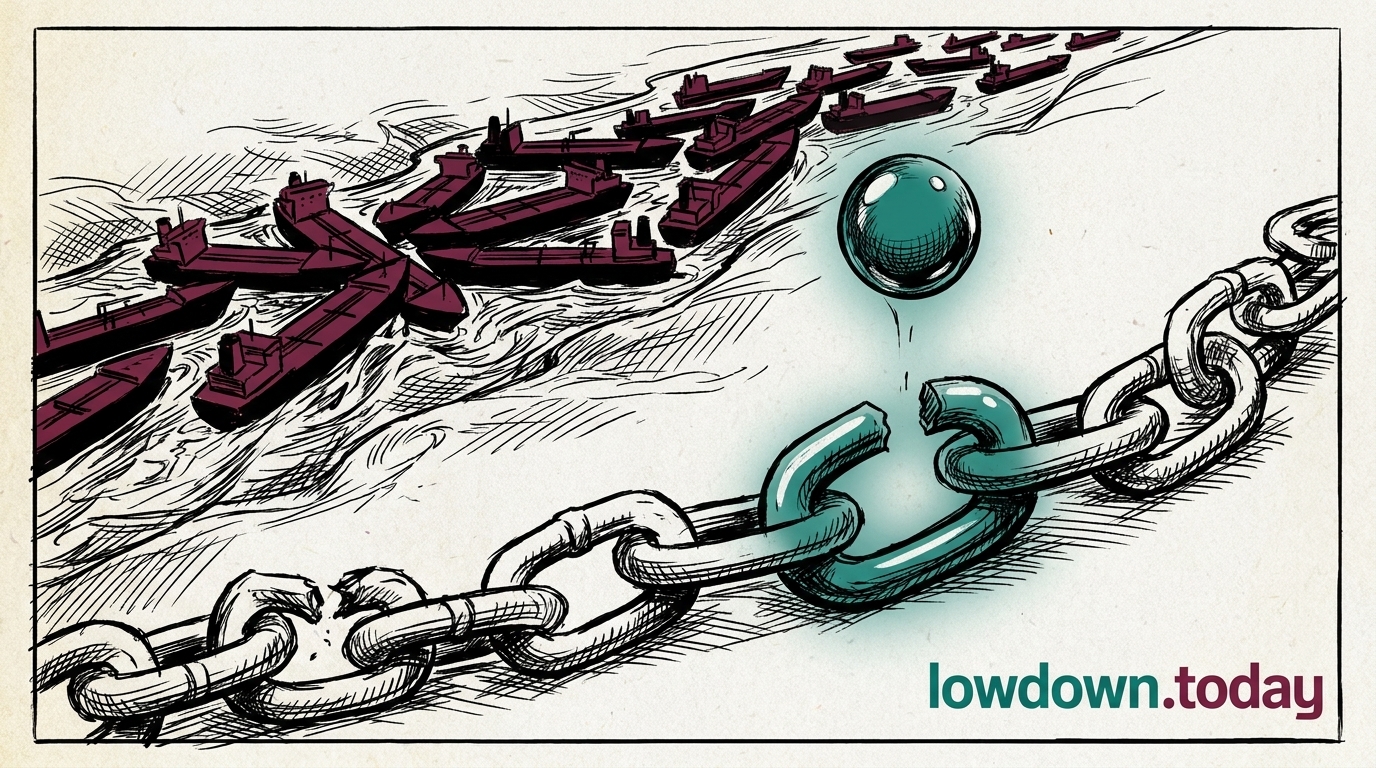
The failure is structural, not tactical. Strategic petroleum reserves were created after the 1973 Arab Oil Embargo to buffer temporary supply disruptions — a hurricane shutting Gulf of Mexico platforms, a pipeline failure, a brief conflict. The IEA's 2005 release after Hurricane Katrina stabilised markets because the disruption was localised and temporary. The 2011 Libya release worked because Saudi Arabia's spare production capacity replaced most of the lost Libyan output. Neither condition holds here. The disruption is expanding — Kuwait has declared force majeure on all exports , approximately 3.5 million barrels per day of Gulf production is shut in or unable to reach buyers, and Saudi spare capacity exists but cannot transit a strait open only to Chinese-linked vessels . Qatar's energy minister warned of $150 per barrel if Hormuz remains closed . The conditions prompting that warning have not changed. The IEA has deployed its strongest mechanism. The market absorbed it in a single session.

Deep Analysis

In plain English

Western governments built up huge oil stockpiles after the 1973 oil crisis — enough to release in emergencies and prevent prices from spiking. Wednesday's release was the biggest in the system's 50-year history. Oil prices rose anyway within hours, because the problem is not a temporary shortage but an active blockade of the world's most important oil shipping route. Releasing stored oil is like pouring water into a bucket with a hole — until the hole is closed, prices keep rising regardless of what governments tip in from their reserves.

Deep Analysis
Synthesis

The failure of the largest strategic reserve release in history is not merely an energy story — it is the empirical demonstration that the post-1973 international energy security architecture has no effective tool for a sustained, intentional chokepoint blockade. This will accelerate medium-term policy shifts toward demand-side emergency measures, alternative route investment, and a fundamental rethink of IEA reserve adequacy standards and replenishment doctrine.

Root Causes

The IEA and SPR architecture assumes geographically isolated, temporary disruptions affecting one country's supply. A declared blockade of Hormuz — through which approximately 20% of global oil supply transits — is qualitatively different: intentional, affecting multiple supplier states simultaneously, with no predictable end date. The instrument was not architected for this threat profile; its failure is structural, not operational.

Escalation

The US SPR was already at its lowest levels since the early 1980s before this release, following prior drawdowns. Depleting 172 million barrels further reduces the remaining buffer for any subsequent shock — a second Hormuz incident, a domestic refinery disruption, or a winter demand spike. The US has less energy shock-absorption capacity now than at any point in the last four decades.

What could happen next?
2 consequence1 precedent2 risk
  • Consequence

    US SPR reserves are now at their lowest point since the early 1980s, reducing the buffer available for any subsequent energy shock during the conflict's remaining duration.

    Immediate · Assessed
  • Precedent

    The failure of the largest reserve release in IEA history against a sustained blockade will force a fundamental reassessment of SPR adequacy standards and reserve architecture globally.

    Long term · Assessed
  • Risk

    Import-dependent Asian economies — India, South Korea, Japan — face balance-of-payments pressure and potential currency instability if $95+ oil persists beyond 30 days.

    Short term · Assessed
  • Risk

    Commercial inventory depletion from tanker attacks and delivery uncertainty may trigger diesel and jet fuel shortages in non-Hormuz-dependent markets via refinery feedstock disruption.

    Short term · Suggested
  • Consequence

    Governments that have avoided demand-side emergency measures since 1979 may be compelled to implement rationing or industrial fuel allocation if sustained $100+ oil persists beyond 30 days.

    Medium term · Suggested
First Reported In

Update #32 · UN condemns Iran 13-0; ceasefire blocked

CNBC· 12 Mar 2026
Read original
Causes and effects
This Event
Record oil reserve release fails fast
The IEA deployed its most powerful supply-side tool and the market absorbed it in a single trading session. Strategic reserves are designed for temporary disruptions, not sustained blockades of the world's most important oil chokepoint. The mechanism's failure leaves no institutional tool capable of capping prices while the strait remains contested.
Different Perspectives
International human rights monitors (NetBlocks, IHR, Hengaw)
NetBlocks recorded 1,704 cumulative hours of near-total internet blackout for roughly 90 million Iranians on Day 74, while IHR documented ongoing executions under emergency provisions. These organisations are the only active monitoring windows into a civilian population cut off from the global internet for 71 consecutive days.
UK / France coalition
The Royal Navy confirmed HMS Dragon's Hormuz deployment on its own website on 11 May, converting a press-reported presence into declared force posture; UK and French defence ministers hosted a coalition meeting the same day. Britain and France are now the only named contributors to a Hormuz escort mission all five allies Trump originally asked had declined.
Saudi Aramco / Gulf producers
Saudi Aramco CEO Amin Nasser warned on 11 May that a Hormuz closure could remove 100 million barrels of weekly supply from global markets (roughly 15 million barrels per day for a week), a figure that dwarfs any OPEC+ swing capacity. The warning functions as both a price-floor signal and a public pressure on Washington to protect transit.
Beijing / Chinese Government
China has not publicly acknowledged the four Hong Kong-registered entities designated on 11 May or extended MOFCOM's Blocking Rules cover to HK-domiciled firms. Xi Jinping hosts Trump on 14–15 May having already de-risked state-bank balance sheets via NFRA's quiet loan halt, entering the summit partially compliant before any negotiation.
Tehran / Iranian Government
Foreign Minister Araghchi described Iran's 10-point counter-proposal as 'reasonable and responsible' via spokesman Baqaei on 11 May, and widened the mediator pool by meeting Turkish, Egyptian, and Dutch counterparts in a single day. Tehran is buying procedural runway while Trump's verbal rejection went unmatched by any written US counter.
Trump White House
Trump White House
Trump called the ceasefire 'on massive life support' and dismissed Iran's 10-point counter-proposal as 'a piece of garbage' on 11 May, while departing for Beijing two days later with no signed Iran instrument to show Congress. The verbal maximum and the paper void coexist: the administration is running a legal pressure campaign through Treasury while the president free-lances the rhetoric.