Skip to content
Briefings are running a touch slower this week while we rebuild the foundations.See roadmap
Iran Conflict 2026
25APR

Hormuz trickle: five then seven vessels

3 min read
20:34UTC

Kpler logged five vessel transits through the Strait of Hormuz on 9 April and seven on 10 April, against a pre-war baseline of 120 to 140 a day. ADNOC's chief executive told reporters the strait is not open.

ConflictDeveloping
Key takeaway

Hormuz is delivering fewer transits under ceasefire than under Iran's own toll regime.

Kpler recorded 5 vessel transits through the Strait of Hormuz on 9 April and 7 on 10 April, against a pre-war baseline of 120 to 140 daily 1. The ceasefire is delivering fewer movements than the 20 transits per day Iran's own toll regime was carrying on 5 April . More than 600 vessels remain stranded inside The Gulf, including 325 oil tankers.

Sultan Al Jaber, chief executive of ADNOC (Abu Dhabi National Oil Company), told reporters on Friday that "the strait of Hormuz is not open. Access is being restricted, conditioned and controlled" 2. Ana Subasic, a Kpler analyst, projects a ceiling of 10 to 15 transits per day even if the ceasefire fully holds.

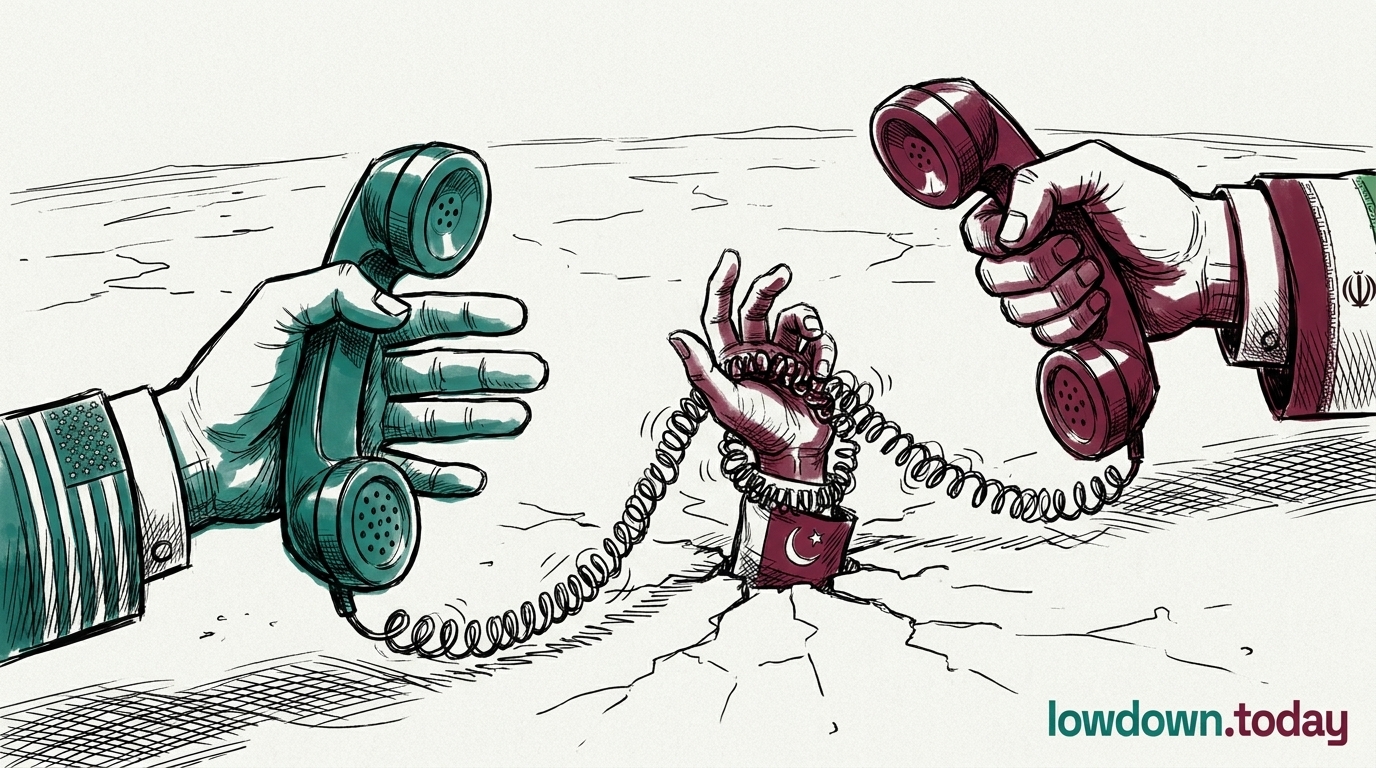
That ceiling is roughly one-tenth of the pre-war baseline and half of Iran's own toll volume last week. It implies structurally tight oil throughput regardless of Brent's headline price , and no single-day breakthrough is likely to restore pre-war flow. The Gulf is moving at a trickle because the physical problem in the water is larger than the political problem in the hotel in Islamabad.

Deep Analysis

In plain English

Before the war, 120 to 140 ships passed through the Strait of Hormuz every day carrying oil from Gulf states to the rest of the world. In the three days since the ceasefire, that number has fallen to five or seven — not much more than zero. The ceasefire stopped the bombing, but it did not clear the sea mines, lift the shipping insurance bans, or dissolve the Iranian inspection system. A political peace agreement does not automatically move oil.

Deep Analysis
Root Causes

The trickle is not a ceasefire failure in the usual sense. It reflects three compounding physical constraints that the diplomatic process cannot resolve: uncharted Iranian mines making navigation hazardous, the IRGC corridor system restricting passage to specific channels near Larak Island , and the withdrawal of war-risk insurance coverage from standard commercial operators.

The UN Security Council's 11-2 vote for a Hormuz reopening resolution was vetoed by Russia and China — both of whom benefit from the toll architecture their own tankers already use. The multilateral route to maritime normalisation is therefore closed, leaving only bilateral US-Iran negotiation or unilateral force, neither of which resolves the physical mine problem.

What could happen next?
  • Consequence

    Brent crude will remain structurally elevated at 40-60% above pre-war levels until mine clearance and insurance normalisation occur, regardless of which diplomatic outcome Islamabad produces.

  • Risk

    GL-U expiry on 19 April would simultaneously criminalise the 325 stranded tankers' cargo under US sanctions while they remain physically unable to move, creating a compound maritime-legal crisis.

First Reported In

Update #65 · Iran lost its own minefield

Al Jazeera· 11 Apr 2026
Read original
Different Perspectives
International human rights monitors (NetBlocks, IHR, Hengaw)
NetBlocks recorded 1,704 cumulative hours of near-total internet blackout for roughly 90 million Iranians on Day 74, while IHR documented ongoing executions under emergency provisions. These organisations are the only active monitoring windows into a civilian population cut off from the global internet for 71 consecutive days.
UK / France coalition
The Royal Navy confirmed HMS Dragon's Hormuz deployment on its own website on 11 May, converting a press-reported presence into declared force posture; UK and French defence ministers hosted a coalition meeting the same day. Britain and France are now the only named contributors to a Hormuz escort mission all five allies Trump originally asked had declined.
Saudi Aramco / Gulf producers
Saudi Aramco CEO Amin Nasser warned on 11 May that a Hormuz closure could remove 100 million barrels of weekly supply from global markets (roughly 15 million barrels per day for a week), a figure that dwarfs any OPEC+ swing capacity. The warning functions as both a price-floor signal and a public pressure on Washington to protect transit.
Beijing / Chinese Government
China has not publicly acknowledged the four Hong Kong-registered entities designated on 11 May or extended MOFCOM's Blocking Rules cover to HK-domiciled firms. Xi Jinping hosts Trump on 14–15 May having already de-risked state-bank balance sheets via NFRA's quiet loan halt, entering the summit partially compliant before any negotiation.
Tehran / Iranian Government
Foreign Minister Araghchi described Iran's 10-point counter-proposal as 'reasonable and responsible' via spokesman Baqaei on 11 May, and widened the mediator pool by meeting Turkish, Egyptian, and Dutch counterparts in a single day. Tehran is buying procedural runway while Trump's verbal rejection went unmatched by any written US counter.
Trump White House
Trump White House
Trump called the ceasefire 'on massive life support' and dismissed Iran's 10-point counter-proposal as 'a piece of garbage' on 11 May, while departing for Beijing two days later with no signed Iran instrument to show Congress. The verbal maximum and the paper void coexist: the administration is running a legal pressure campaign through Treasury while the president free-lances the rhetoric.