Skip to content
Briefings are running a touch slower this week while we rebuild the foundations.See roadmap
Iran Conflict 2026
23APR

GL-U lapses on a cable-TV quote

4 min read
08:02UTC

US Treasury Secretary Scott Bessent told Tribune India on 16 April that General License U would not be renewed; OFAC signed a Russia replacement the next day and excluded Iran by name. No Federal Register instrument followed for Iran.

ConflictDeveloping
Key takeaway

Treasury signed Russia's wind-down the day Iran's expired; the Islamic Republic got the carve-out, not a licence.

US Treasury Secretary Scott Bessent, the cabinet official responsible for the Office of Foreign Assets Control (OFAC) sanctions framework, told Tribune India on 16 April: "We will not be renewing the general license on Russian oil and Iranian oil. That was oil that was on the water prior to March 11th. All that has been used" 1. The Federal Register carried zero Iran or OFAC documents between 15 and 18 April. The White House presidential-actions index for 15 April listed nine Enbridge Energy pipeline permits and a budget sequestration order, with nothing on Iran .

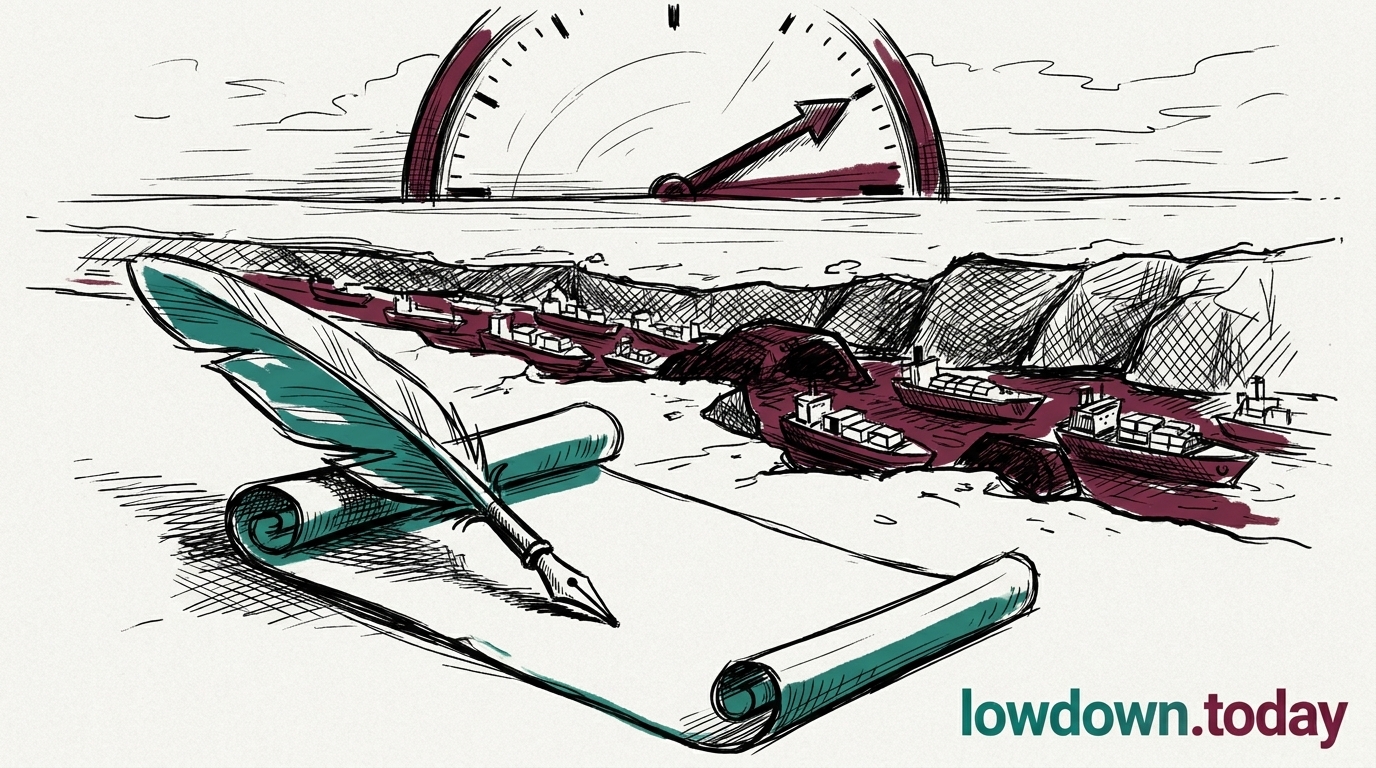
General License U (GL-U), the Treasury authorisation that kept Iranian crude in transit legal under a narrow wind-down rule, therefore lapses at 00:01 EDT on Sunday 19 April with no replacement instrument and no published wind-down schedule. Approximately 325 tankers carrying roughly $31.5 billion of cargo lose legal cover at that moment . Secondary-sanction exposure shifts to Indian refiners and third-country buyers from the same minute, and compounds on top of the IRGC enforcement exposure already pricing the corridor since the blockade began .

OFAC Director Bradley T. Smith signed General License 134B (GL 134B) on 17 April at 14:38 EDT, authorising the delivery and sale of Russian-origin crude and petroleum products loaded on vessels as of that date, valid through 12:01 EDT on 16 May 2026 2. The instrument supersedes GL 134A, dated 19 March 2026 and expired on 11 April. GL 134B explicitly excludes from its authorisation "Any transaction involving a person located in or organized under the laws of the Islamic Republic of Iran" and separately bars any transaction involving "Iranian-origin goods or services" prohibited under the Iranian Transactions and Sanctions Regulations (31 CFR part 560). Russia received a signed 30-day wind-down by the same OFAC machinery that produced nothing for Iran.

Scott Bessent said on 16 April that Treasury would not renew the Russian or Iranian general licence; the signed instrument published the following day extended Russia's wind-down and wrote Iran out by name. Treasury signed paper for Russia on the same day Iran's compliance window was narrowing to hours. Compliance officers at Indian state refiners, Chinese teapots, and commodity trading houses will each apply their own reading of "Bessent said" because no OFAC instrument enumerates the prohibited-transactions scope for Iran, the grace period, or the replacement. Enforcement discretion sits with the first OFAC designation published after Sunday, whenever that arrives. The 49-day zero-Iran-instrument record the White House index confirms now includes a regulatory cliff built inside that same silence, and a Russia parallel that shows the machinery was available.

Deep Analysis

In plain English

A US Treasury rule that kept Iranian oil cargoes legal while they were already at sea expires on Saturday 19 April. Treasury Secretary Bessent confirmed it on television; there is no written order spelling out what happens next. Roughly 325 tankers carrying $31.5 billion of crude oil face potential US sanctions from Saturday morning with no official document to check for guidance.

Deep Analysis
Root Causes

OFAC's 49-day Iran silence reflects a specific structural constraint: any Iran instrument the Trump administration publishes becomes a permanent record of what the war's legal architecture looks like, and that record can be subpoenaed by Congress, cited in litigation, and read by Iranian negotiators as a statement of conditions. Keeping the war on verbal authority avoids creating a discoverable paper trail that defines the administration's legal theory of the conflict.

GL-U was originally a wind-down instrument; it authorised delivery of crude already loaded before 20 March, not new purchases. Treasury issued it to prevent a sudden price spike from stranding cargoes already at sea.

Its lapse completes the transition from a sanctioned market in wind-down to a fully prohibited market with no grace period. OFAC never published what happens to cargoes loaded between 20 March and the lapse date: those vessels fall into a legal category Treasury created by omission, not by design.

What could happen next?
  • Meaning

    Indian state refiners holding Iranian-origin crude delivery contracts face secondary-sanction exposure from 19 April with no published OFAC text defining the scope, forcing each compliance department to make an independent legal judgement.

    Short term · Assessed
  • Meaning

    The absence of a Federal Register instrument means the first OFAC designation after Saturday will define the enforcement perimeter by example rather than by published rule, giving OFAC discretionary control over which counterparty receives the first action.

    Short term · Assessed
  • Meaning

    P&I clubs covering the 325 affected tankers will treat the GL-U lapse as a material change in risk coverage terms, potentially voiding existing voyage policies for cargo already at sea.

    Short term · Assessed
  • Meaning

    A 49-day zero-instrument record (ID:2495) ending with a lapse-by-quotation establishes a precedent that the Trump administration can change sanctions conditions through media statements, undermining the Federal Register as the authoritative channel for sanctions compliance.

    Short term · Assessed
First Reported In

Update #72 · Hormuz opens and closes in 24 hours

Tribune India· 18 Apr 2026
Read original
Different Perspectives
International human rights monitors (NetBlocks, IHR, Hengaw)
NetBlocks recorded 1,704 cumulative hours of near-total internet blackout for roughly 90 million Iranians on Day 74, while IHR documented ongoing executions under emergency provisions. These organisations are the only active monitoring windows into a civilian population cut off from the global internet for 71 consecutive days.
UK / France coalition
The Royal Navy confirmed HMS Dragon's Hormuz deployment on its own website on 11 May, converting a press-reported presence into declared force posture; UK and French defence ministers hosted a coalition meeting the same day. Britain and France are now the only named contributors to a Hormuz escort mission all five allies Trump originally asked had declined.
Saudi Aramco / Gulf producers
Saudi Aramco CEO Amin Nasser warned on 11 May that a Hormuz closure could remove 100 million barrels of weekly supply from global markets (roughly 15 million barrels per day for a week), a figure that dwarfs any OPEC+ swing capacity. The warning functions as both a price-floor signal and a public pressure on Washington to protect transit.
Beijing / Chinese Government
China has not publicly acknowledged the four Hong Kong-registered entities designated on 11 May or extended MOFCOM's Blocking Rules cover to HK-domiciled firms. Xi Jinping hosts Trump on 14–15 May having already de-risked state-bank balance sheets via NFRA's quiet loan halt, entering the summit partially compliant before any negotiation.
Tehran / Iranian Government
Foreign Minister Araghchi described Iran's 10-point counter-proposal as 'reasonable and responsible' via spokesman Baqaei on 11 May, and widened the mediator pool by meeting Turkish, Egyptian, and Dutch counterparts in a single day. Tehran is buying procedural runway while Trump's verbal rejection went unmatched by any written US counter.
Trump White House
Trump White House
Trump called the ceasefire 'on massive life support' and dismissed Iran's 10-point counter-proposal as 'a piece of garbage' on 11 May, while departing for Beijing two days later with no signed Iran instrument to show Congress. The verbal maximum and the paper void coexist: the administration is running a legal pressure campaign through Treasury while the president free-lances the rhetoric.