Skip to content
Briefings are running a touch slower this week while we rebuild the foundations.See roadmap
Iran Conflict 2026
21APR

Tehran says ball is in America's court

3 min read
10:51UTC

Iran says it holds an initial draft accord relayed via Pakistan and is waiting on the United States' final counter-text, inverting the Western framing of who is holding up the deal.

ConflictDeveloping
Key takeaway

Tehran says it holds the draft and is waiting on Washington, reversing the question of who is stalling the deal.

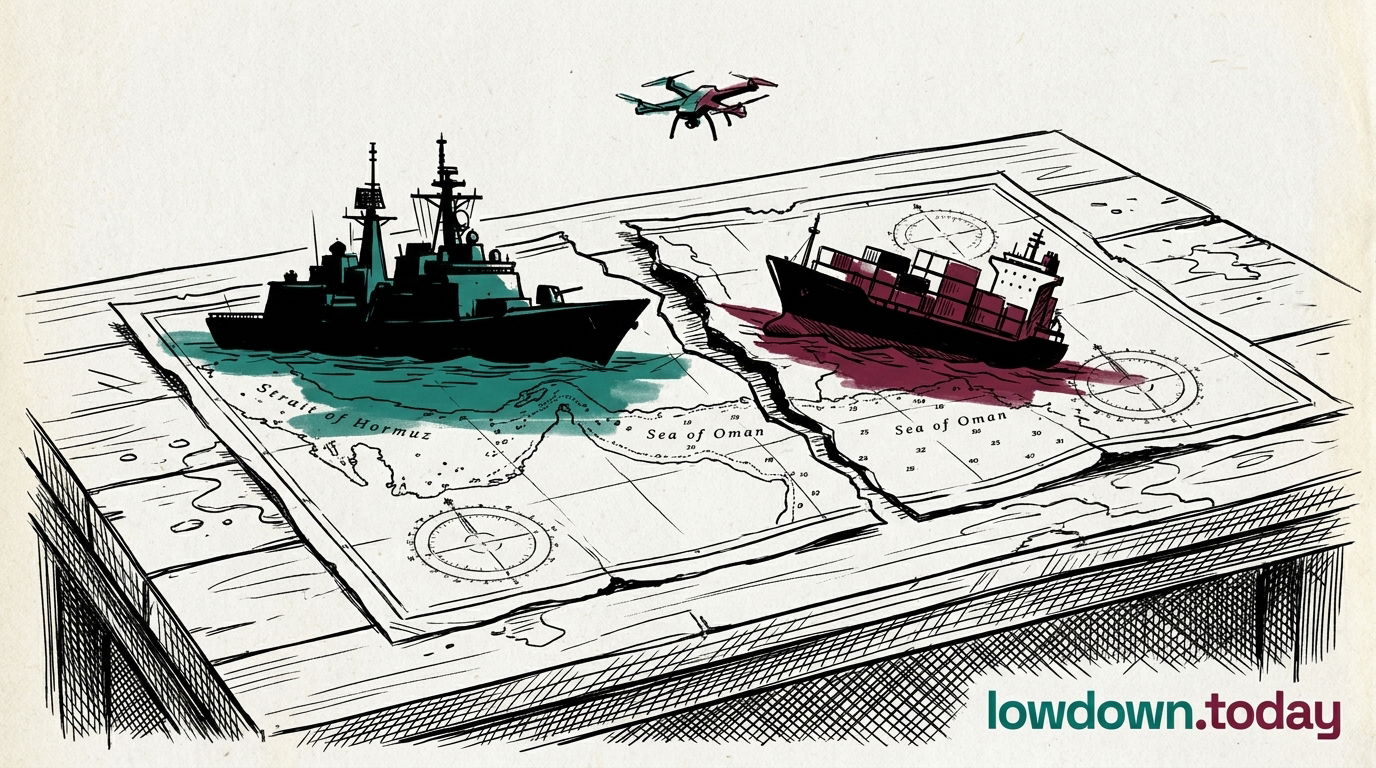
Iran has obtained an initial draft memorandum of understanding (MOU) through Pakistani mediation and is awaiting the United States' finalised counter-text, according to a strategic analyst who told the Iranian state-linked network SNN that "the ball is now in America's court" 1. Islamabad has shuttled messages between the two capitals for weeks, and Tehran's account places the unanswered move on Washington's side of the table.

The framing inverts the Western narrative. In Trump's telling, the deal was "largely negotiated" and awaiting Iranian follow-through ; in Tehran's, the draft is already in Iran's hands and the United States is the one yet to respond. Both cannot be the waiting party. The contest over who is stalling is not cosmetic, because each government answers to a domestic audience that punishes the side seen to be conceding and rewards the side seen to be holding firm.

The procedural record gives Tehran's version some support. Trump's own condition, posted on 24 May, is that the naval blockade stays in place until any agreement is certified and signed , which rules out a partial or verbal text. If Washington will only lift the blockade on a fully signed instrument, then the next move genuinely does sit with the party that has to draft, certify and sign that paper.

The inversion is a deliberate piece of narrative positioning, amplified through a state-linked outlet, and it works precisely because the underlying facts are ambiguous enough to support more than one reading. With no published text from either side, the public account of who holds the draft is itself a negotiating instrument, and Tehran has chosen to wield it.

Deep Analysis

In plain English

Pakistan has been acting as a go-between for the US and Iran throughout this conflict. Iran says Pakistan delivered an initial draft of the peace agreement (the memorandum of understanding) to Tehran, and now Iran is waiting for the United States to send back its version with any changes. This flips who looks like they are holding things up. US Secretary of State Marco Rubio had promised "good news in hours" on a deal; that timeline had slipped to "a couple of days". Meanwhile, an analyst speaking on Iranian state TV said the ball is now in America's court. This is about managing public perception as much as actual negotiating. Iran wants to be seen as cooperative and waiting, with Washington as the slow party. Whether the US has actually received a specific text to respond to, or whether this is Iran's framing of a more fluid situation, is not confirmed from outside sources.

Deep Analysis
Root Causes

Pakistan's army-chief channel emerged because the civilian tracks, Araghchi's foreign ministry, Vance's Islamabad visit (cancelled after Iran walked back), and the Doha session, all stalled on the same nuclear sequencing problem.

The Pakistani military has institutional access to both Iran's IRGC command (where nuclear decisions actually live) and to the US national security apparatus (via CENTCOM interoperability). No civilian diplomatic track has that dual access. The result is that the deal's most sensitive concessions travel through a channel that bypasses elected governments on both sides.

Trump's "blockade holds until certified and signed" condition creates the specific procedural problem Iran is now exploiting: if the US insists on a signed final instrument before lifting the blockade, Tehran can frame every day of blockade continuation as American delay, even as the MOU draft sits unresponded-to in Washington's inbox.

What could happen next?
  • Meaning

    Iran's procedural-inversion framing on 26 May shifts domestic and international optics: any further delay in signing can now be attributed to US procrastination rather than Iranian resistance.

  • Consequence

    Pakistan's army-chief channel becoming the primary MOU conduit means Islamabad's general-officer corps has structural authority over the deal's final text, an institutional outcome that changes Pakistan's regional leverage regardless of whether the deal is signed.

First Reported In

Update #108 · US strikes Bandar Abbas as deal talk stalls

CBS News· 26 May 2026
Read original
Different Perspectives
Israel
Israel
The IDF struck a Lebanese army unit on 6 June, killing a colonel, and privately told Moscow that shelling near Bushehr was accidental, per Putin's SPIEF disclosure. Israel is advancing in Lebanon past an unenforced ceasefire text while maintaining a back-channel to Russia on nuclear-site deconfliction.
Lebanon
Lebanon
President Aoun told CNN on 5 June that Iran uses Lebanon as a bargaining chip and urged Hezbollah toward diplomacy; on 6 June an IDF strike killed a Lebanese army colonel on the Khardali-Nabatieh road. The Lebanese state is publicly rejecting Iranian tutelage while the army sustains casualties from Israeli fire and the Washington framework remains unenforced.
Bahrain
Bahrain
Bahrain's US Fifth Fleet headquarters was among the targets in the 5-6 June two-country salvo; its PAC-3 magazine stands at 87 per cent depletion with an 18-month resupply gap and no comparable arms sale has been announced. The state is defending a critical US regional command on a thinning interceptor stock.
Kuwait
Kuwait
Kuwait received a $1.98bn US counter-drone sale approval on the same day IRGC missiles targeted its bases; it expelled two Iranian diplomats on 4 June and filed a formal protest. The arms approval gives Kuwait a future capability but leaves a 6-18 month delivery gap that the salvo tempo is already pressing.
Russia
Russia
Putin reaffirmed Russia's offer to hold Iran's 440.9 kg HEU at SPIEF on 6 June, said Russia is not arming Iran, and disclosed that both the US and Israel privately told Moscow that shelling near Bushehr was accidental. The restatement casts Moscow as the only remaining mediator both sides call, a position serving Russian interests whatever the nuclear file produces.
Iran
Iran
The IRGC, per Iranian state media, fired seven ballistic missiles at US bases in Kuwait and Bahrain, the largest two-country salvo of the war, and framed the launches as lawful retaliation; Foreign Minister Araghchi rejected Aoun's bargaining-chip accusation and Velayati warned Beirut against diplomatic naivety. Tehran has sent no HEU counter-proposal since Araghchi confirmed no progress on 4 June.