Skip to content
You can now search across every topic, entity and event.What's new
Iran Conflict 2026
21APR

IRGC declares Hormuz will never reopen

3 min read
10:51UTC

Iran says mines stay in the water and the strait's pre-war status is gone permanently.

ConflictDeveloping
Key takeaway

Iran has declared the strait's pre-war status permanently over, not conditionally suspended.

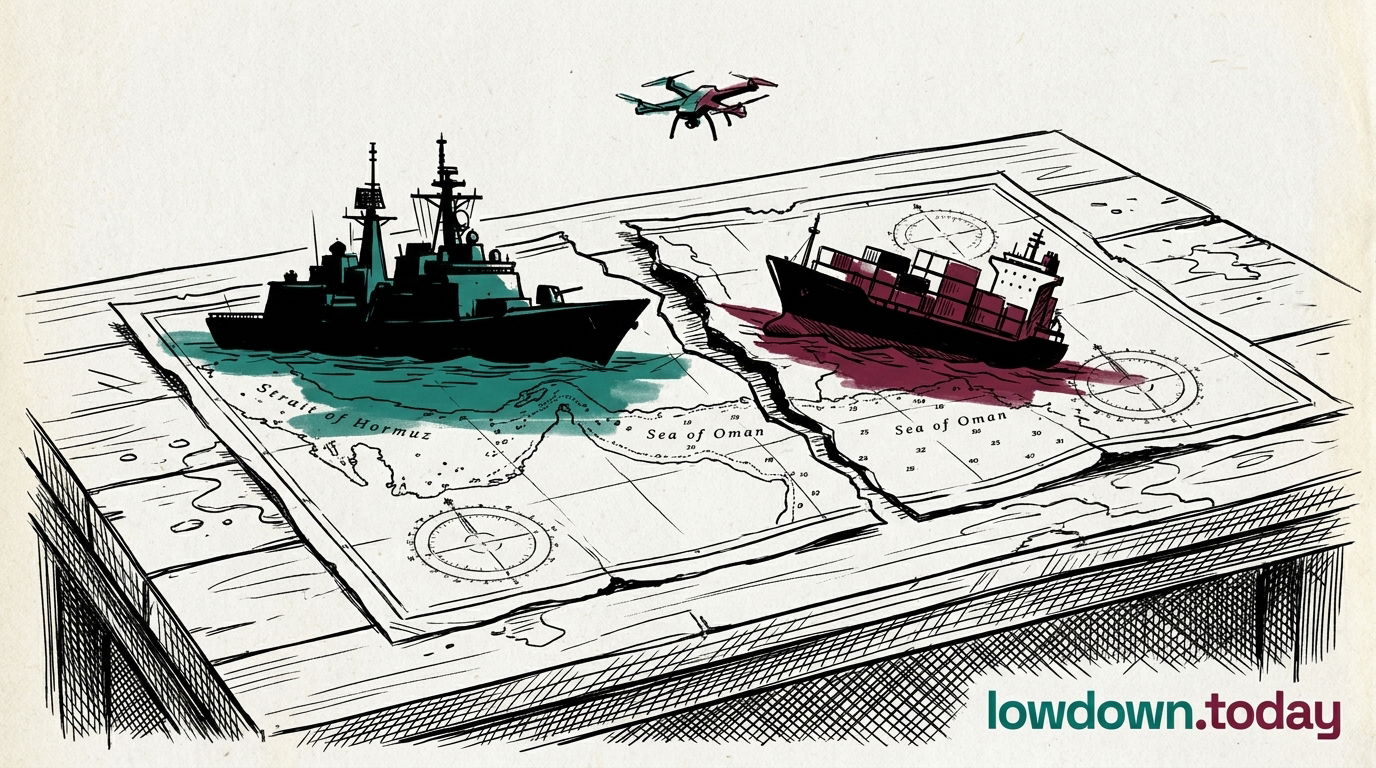
The IRGC (Islamic Revolutionary Guard Corps) stated that mines remain in the Strait of Hormuz and that the waterway "will never return to its previous status." Commercial traffic sits at roughly 8.0% of the pre-war daily baseline: Kpler data shows 5 to 11 transits per day against a pre-war norm of 120 to 140 .

More than 600 vessels, including 325 oil tankers, remain stranded inside the Gulf, according to Lloyd's List Intelligence. Iran is vetting each vessel individually before granting passage, a process that analysts expect will cap throughput at 10 to 15 ships per day even if the vetting posture loosens. At that rate, clearing the backlog alone would take weeks.

The IRGC's language is worth parsing carefully. "Will never return" is not a negotiating position; it is a declaration of a new permanent status. It aligns with Iran's Islamabad proposal, which sought to impose fees on every vessel passing through the strait, reportedly $1 to $2 million per ship. If formalised, that would create a precedent for every maritime chokepoint globally.

For consumers, the blockade's persistence translates directly. Roughly 20 million barrels per day of oil that normally passes through Hormuz is absent from global supply. Oxford Economics projects that disruption will cut world GDP growth by 1.2 percentage points in 2026. That cost is accumulating daily while the strait stays effectively closed.

Deep Analysis

In plain English

Before this war, about 120 ships a day passed through the Strait of Hormuz carrying oil to Asia, Europe, and North America. Now fewer than 10 a day are getting through, and Iran is choosing which ones. The IRGC, Iran's elite military force, has now said publicly that the strait 'will never return to its previous status'. That is a statement that even after any deal is done, they intend to keep some form of control over who passes through. There are also naval mines still in the water that Iran says it placed there, and some of which Iran itself cannot locate. Those mines are a physical danger to any ship trying to transit, separate from the political question of permission.

Deep Analysis
Root Causes

Iran's 'will never return' framing reflects a strategic objective that predates the current conflict: control over Hormuz transit has been an IRGC doctrine since the 1980s Tanker War, when the corps first demonstrated it could enforce selective passage. The ceasefire did not alter that doctrine; it merely paused its full implementation.

The $1-2 million per-vessel toll demand, reportedly already being charged informally, represents an attempt to monetise the closure into a permanent revenue stream. If institutionalised, Hormuz tolls would provide the IRGC with an independent hard-currency revenue source that bypasses sanctions on oil exports.

What could happen next?
  • Precedent

    If the IRGC's 'will never return' declaration stands unchallenged, it establishes the first successful post-1945 precedent for a coastal state permanently altering the legal status of an international strait, with implications for the Bab el-Mandeb, Malacca, and Taiwan Strait.

    Long term · Medium
  • Consequence

    The 325 stranded oil tankers represent approximately 16 days of total OECD oil reserve draw-down at current consumption rates; the longer they remain trapped, the greater the probability of strategic reserve releases that would cap but not eliminate the price spike.

    Short term · High
  • Risk

    Iran's acknowledged inability to locate all its own mine placements means the risk of an unintentional mine detonation by a commercial vessel is non-trivial and independent of any political or diplomatic development.

    Immediate · High
First Reported In

Update #66 · Islamabad collapses: 10 days to expiry

CENTCOM· 12 Apr 2026
Read original
Different Perspectives
Jordan
Jordan
Jordan's armed forces downed three Iranian missiles on Tuesday with no casualties, a second successful interception since the 19 July strike on Muwaffaq Salti that killed three US service members. Amman has neither confirmed nor denied ISW's assessment that its intelligence sharing is a Russia-China cover story.
Operation Aspides
Operation Aspides
Operation Aspides has not needed to intervene against the Houthi Bab al-Mandab embargo: six vessels, including the Chinese VLCC Xin Long Yang, reversed course after radio hailing alone, with no vessel boarded, fired on or stopped by force.
Pete Hegseth, US Secretary of War
Hegseth told the Senate Appropriations Committee the campaign has cost $37.5 billion so far, without saying whether the figure is obligated, appropriated or incremental. It is the first cost Washington has put on the war, arriving as OMB seeks $87.6 billion for the wider supplemental.
Iran's IRGC and Artesh
Iran's IRGC and Artesh reported destroying radar and Patriot installations at four Gulf bases on Tuesday night, the fifth dated iteration of the same claim against the same sites since 13 July. Neither Kuwait nor Bahrain has named or confirmed a single base as destroyed.
Saudi Arabia
Saudi Arabia
Riyadh has pressed Washington to end the Hormuz blockade specifically to remove Tehran's incentive for the Houthis to escalate Bab al-Mandab beyond radio warnings. It treats the embargo as coordinated pressure on Saudi shipping tied to the Hormuz campaign, not an independent Yemeni action.
Kuwait's Ministry of Electricity, Water and Renewable Energy and defence ministry
Kuwait reported power and desalination stations struck for a fourth consecutive day and four cruise missiles plus 21 drones intercepted since dawn Wednesday, while its defence ministry statement used only the word interception, never destruction. Kuwait has confirmed no Iranian claim of a destroyed base.