Skip to content
You can now search across every topic, entity and event.What's new
Iran Conflict 2026
21APR

Iran delivers 14-point ceasefire text via Pakistan

3 min read
10:51UTC

Foreign Minister Abbas Araghchi handed Islamabad a written 14-point ceasefire proposal on 1 May, with a 30-day deadline, war reparations and an end to the fighting in Lebanon among the conditions.

ConflictDeveloping
Key takeaway

Iran's fourth written text fixes Lebanon as a clause in the Tehran negotiation with a 30-day clock attached.

Iran's Foreign Minister Abbas Araghchi delivered a written 14-point ceasefire proposal to Pakistan for onward transmission to Washington on Friday 1 May 1. Pakistan has been the documented mediation channel for US-Iran exchanges since the opening weeks of the war; the new text advances the fourth-text framework already delivered through the same conduit . Where the earlier two-phase and three-phase proposals were sequenced negotiating sketches, the 14-point document is structured as a single ceasefire instrument with a 30-day deadline.

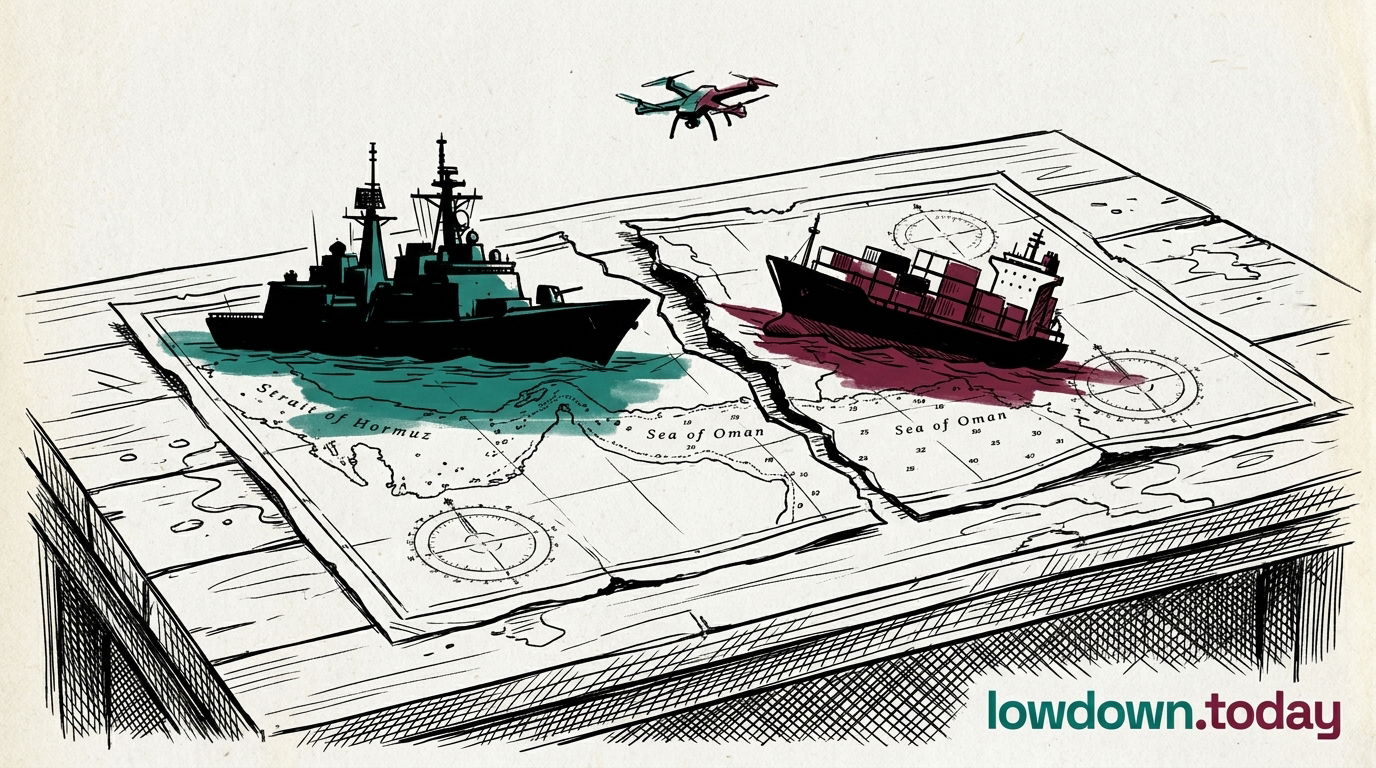
Tehran demands lifting of the CENTCOM naval blockade, release of Iranian foreign-currency reserves frozen under US sanctions, payment of war reparations, US withdrawal from Iran's periphery, an end to the fighting in Lebanon, and a new transit-governance mechanism for the Strait of Hormuz, the 33-kilometre chokepoint at the mouth of the Persian Gulf through which roughly a fifth of global oil shipments pass. The Hormuz clause asks Washington to negotiate around the IRGC's informal toll mechanism rather than dismantle it.

'An end to the fighting in Lebanon' inside the Iranian text is the document's most consequential structural move. Washington has treated the Lebanon war as a parallel theatre handled through its monitoring track in Beirut. Tehran has now pulled it inside the Iran negotiation as a deliverable. That linkage means any 30-day Iranian timeline now requires Israeli operational restraint in southern Lebanon to count as compliance. The Pakistani channel becomes the evidentiary trail for whether the demand is met; if the channel falters, both sides lose their record of what was offered and what was refused.

Deep Analysis

In plain English

Iran's foreign minister sent a detailed, 14-item peace proposal to the United States through Pakistan on 1 May. Think of it as a formal written demand list rather than a casual offer. Iran wants a ceasefire within 30 days, an end to the US naval blockade that is stopping Iranian ships, compensation for war damage, release of Iranian funds frozen abroad, US military bases pulled back from Iran's neighbourhood, an end to fighting in Lebanon, and a new agreed rulebook for who controls the Strait of Hormuz. The US has not yet produced any written reply.

Deep Analysis
Root Causes

Iran's civilian government, specifically Foreign Minister Araghchi, faces a structural problem: it negotiates in writing while the IRGC negotiates by fact on the water. Every written text Tehran submits that the US rejects strengthens the IRGC's argument that diplomacy cannot secure Iran's minimum demands.

The 14-point text is therefore as much an internal Iranian instrument as an external one: it commits the IRGC leadership to a written set of terms they cannot later deny, while giving Araghchi documented proof he pursued a diplomatic route.

The inclusion of war reparations and frozen-asset release reflects Iran's economic position: with OFAC GL-V wind-downs imminent and Chinese refineries under simultaneous legal pressure, Tehran needs dollar-denominated asset access to fund reconstruction whether or not the war ends. The 14-point text packages economic demands inside a diplomatic instrument to give them ceasefire legitimacy.

What could happen next?
  • Consequence

    Pakistan's role as text-carrier gives Islamabad formal status in any eventual ceasefire architecture; a US refusal to engage in writing leaves Pakistan holding an unanswered diplomatic instrument with no procedural mechanism to close the gap.

    Short term · 0.8
  • Risk

    The Lebanon clause (end to fighting in Lebanon as a condition) structurally links the Iran ceasefire timeline to IDF operational tempo in southern Lebanon; Israeli escalation in Lebanon directly undermines Iran's stated terms.

    Short term · 0.85
  • Opportunity

    The 14-point written format, unlike earlier verbal signals, gives negotiators on both sides a reference document from which individual points can be quietly dropped in back-channel exchanges without requiring public admission of movement.

    Medium term · 0.6
First Reported In

Update #87 · China blocks OFAC; Iran writes; Trump tweets

NPR· 3 May 2026
Read original
Different Perspectives
International Group of P&I Clubs
The Group has kept its Hormuz war-risk exclusion in force through the entire shipping recovery, even as London hull war-risk premiums fell to about 2% of vessel value. A burning LNG carrier off Limah is now the fresh case for holding that line, with mutual pooling meaning one hit reprices the strait for every owner at once.
Jordan
Jordan
Jordan's government said no threats existed at Aqaba hours before Iranian missiles landed there, and has not addressed the IRGC's claim that Jordanian civilians and soldiers supplied targeting intelligence for the strike. Amman hosts forces it does not command and is saying as little as it can.
United States (CENTCOM)
The Pentagon named two of the seventeen American dead, 1st Lieutenant Tyler Feehan and Private Isabella Gonzales, both killed at Jordan's Muwaffaq Salti Air Base, days after its Amman embassy had warned citizens away from Aqaba's airport and seaport. Washington is naming its own cost while flagging threats it declines to attribute publicly.
Iran
Iran
Iran said on Monday it disabled two oil tankers crossing the Strait of Hormuz without its permission, asserting a right to license passage through the strait it borders. Tehran named neither vessel, and CENTCOM had already denied a comparable Iranian claim on 18 July.
Qatar
Qatar
Qatar moved from summoning Iran's deputy ambassador on 8 July to a dated written claim at the UN Security Council thirteen days later, citing Resolution 2817 and reserving its Article 51 right of self-defence. Doha is building a permanent record while still hosting CENTCOM's forward headquarters and mediating with Tehran.
CENTCOM
CENTCOM
CENTCOM confirmed a third American service member died in northern Iraq on 19 July clearing unexploded ordnance from a downed Iranian drone, and recovered unidentified remains at Muwaffaq Salti Air Base in Jordan. The Pentagon has framed its Khuzestan strikes as degrading IRGC capacity, a rationale that stretches to explain a reactor foundation with no nuclear material in it.