Skip to content
You can now search across every topic, entity and event.What's new
Iran Conflict 2026
20APR

Three Iranian principals, three incompatible lines

2 min read
10:10UTC

Lowdown Analysis

ConflictDeveloping
Key takeaway

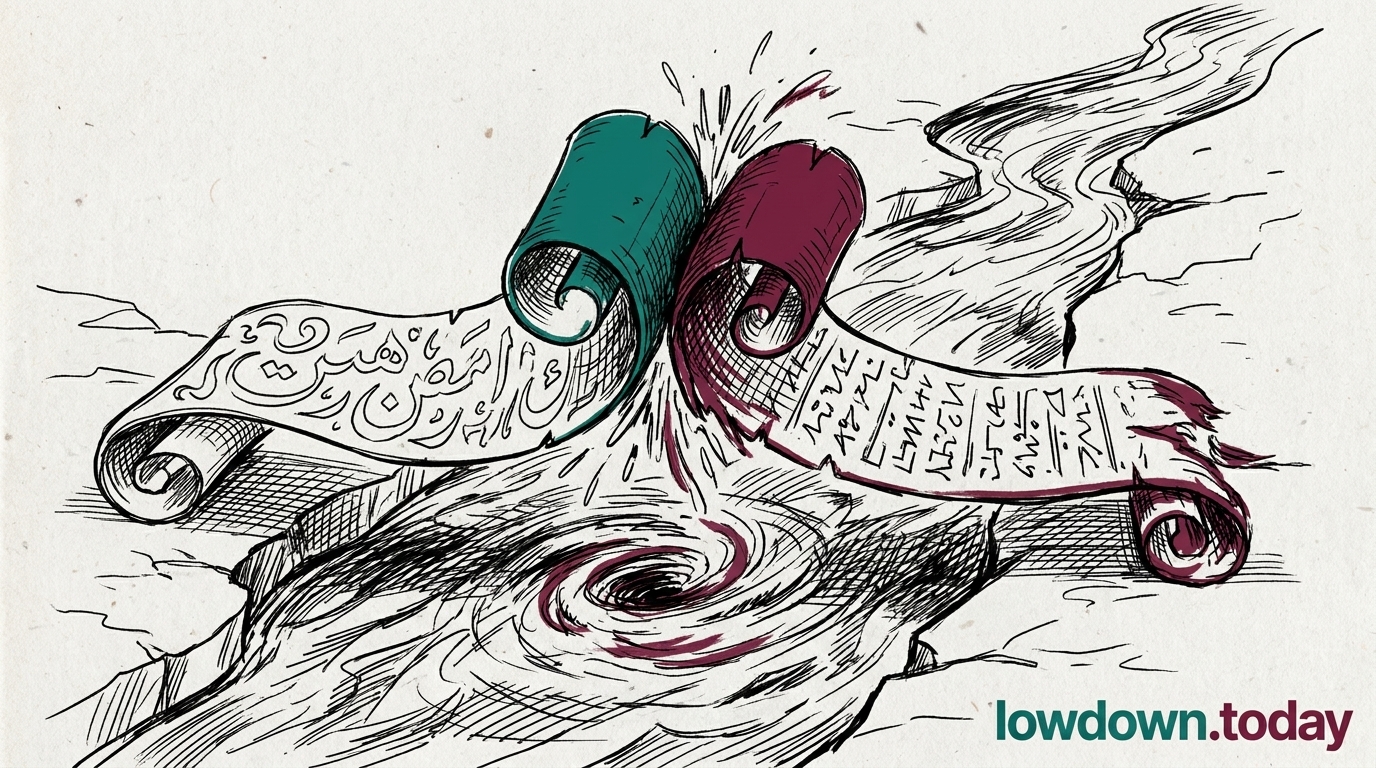
Vahidi, Araghchi and Ghalibaf's office published three incompatible positions on the extension on 21 April.

Ahmad Vahidi, commanding the Islamic Revolutionary Guard Corps (IRGC, Iran's parallel military), told deputies on 21 April that the IRGC opposes negotiation while the blockade stands 1. Foreign Minister Abbas Araghchi called the blockade 'an act of war and thus a violation of the ceasefire' to Farsi-language press the same day 2. A senior adviser to parliamentary speaker Mohammad Bagher Ghalibaf separately described the extension as 'a ploy to buy time for a surprise strike'.

The three lines landed on the same day President Masoud Pezeshkian, Ghalibaf and foreign ministry spokesman Esmaeil Baqaei had already hardened their rhetoric . This is the same civilian-IRGC deadlock that broke the Islamabad round on 12 April, when the IRGC's blockade-first condition held the door shut . Washington has now set an exit trigger whose fulfilment requires Tehran to resolve a split the Islamabad collapse proved it cannot resolve under pressure.

Deep Analysis

In plain English

Iran does not have a single government speaking with one voice. It has two parallel power structures: an elected civilian government, led by President Pezeshkian and Foreign Minister Araghchi, and the Islamic Revolutionary Guard Corps (IRGC), a powerful military and business organisation that answers to a different chain of command. On 21 April, IRGC commander Ahmad Vahidi said Iran would not negotiate while the US blockade continues. Foreign Minister Abbas Araghchi called the blockade 'an act of war and a violation of the ceasefire'. A third figure, the parliament speaker's adviser, called the ceasefire extension a trap for a surprise strike. All three statements came on the same day. Trump's extension requires Iran to deliver a single 'unified proposal'. But the three people who would need to agree on that proposal publicly disagreed about what was even happening. That is why the exit condition is, at present, unreachable.

Deep Analysis
Root Causes

Iran's civilian-IRGC split on negotiation has a structural origin that predates the 2026 war. The IRGC's economic empire , construction, energy, and banking conglomerates representing an estimated 10-20% of GDP , directly benefits from the blockade posture by controlling smuggling and alternative trade routes that replace sanctioned official channels. Vahidi's 'no negotiations while blockade stands' position protects IRGC economic interests as much as it expresses military doctrine.

The absence of a unifying supreme authority since Khamenei's death removes the one constitutional mechanism capable of overriding Vahidi. Mojtaba Khamenei was installed under IRGC pressure and has issued no directive forcing alignment. The civilian government cannot produce a unified proposal because the IRGC that would need to sign off on it is also the institution blocking access to Mojtaba Khamenei.

What could happen next?
  • Risk

    Vahidi's institutionally binding blockade-first veto means the exit condition cannot be met regardless of civilian diplomatic progress, leaving the extension as a mechanism for prolonging the status quo.

  • Consequence

    Three incompatible Iranian positions on one day confirm the Islamabad round's structural failure was not accidental, making a further Vance shuttle likely to produce the same outcome.

First Reported In

Update #76 · Trump posts an exit Iran can't reach

NBC News· 22 Apr 2026
Read original
Different Perspectives
International Group of P&I Clubs
The Group has kept its Hormuz war-risk exclusion in force through the entire shipping recovery, even as London hull war-risk premiums fell to about 2% of vessel value. A burning LNG carrier off Limah is now the fresh case for holding that line, with mutual pooling meaning one hit reprices the strait for every owner at once.
Jordan
Jordan
Jordan's government said no threats existed at Aqaba hours before Iranian missiles landed there, and has not addressed the IRGC's claim that Jordanian civilians and soldiers supplied targeting intelligence for the strike. Amman hosts forces it does not command and is saying as little as it can.
United States (CENTCOM)
The Pentagon named two of the seventeen American dead, 1st Lieutenant Tyler Feehan and Private Isabella Gonzales, both killed at Jordan's Muwaffaq Salti Air Base, days after its Amman embassy had warned citizens away from Aqaba's airport and seaport. Washington is naming its own cost while flagging threats it declines to attribute publicly.
Iran
Iran
Iran said on Monday it disabled two oil tankers crossing the Strait of Hormuz without its permission, asserting a right to license passage through the strait it borders. Tehran named neither vessel, and CENTCOM had already denied a comparable Iranian claim on 18 July.
Qatar
Qatar
Qatar moved from summoning Iran's deputy ambassador on 8 July to a dated written claim at the UN Security Council thirteen days later, citing Resolution 2817 and reserving its Article 51 right of self-defence. Doha is building a permanent record while still hosting CENTCOM's forward headquarters and mediating with Tehran.
CENTCOM
CENTCOM
CENTCOM confirmed a third American service member died in northern Iraq on 19 July clearing unexploded ordnance from a downed Iranian drone, and recovered unidentified remains at Muwaffaq Salti Air Base in Jordan. The Pentagon has framed its Khuzestan strikes as degrading IRGC capacity, a rationale that stretches to explain a reactor foundation with no nuclear material in it.