Skip to content
Briefings are running a touch slower this week while we rebuild the foundations.See roadmap
Iran Conflict 2026
18APR

UK names Typhoons, HMS Dragon for Hormuz

3 min read
14:57UTC

The UK Ministry of Defence on 13 May named Typhoon fighters, HMS Dragon, autonomous mine-clearance vessels and reconnaissance drones for the 40-nation Hormuz mission. Defence Secretary John Healey had co-chaired the planning meeting with French counterpart Catherine Vautrin on 12 May.

ConflictDeveloping
Key takeaway

Healey and Vautrin committed UK Typhoons and HMS Dragon to the 40-nation Hormuz mission on 13 May.

The UK Ministry of Defence announced on 13 May 2026 that British forces will commit Typhoon fighters, the Type 45 destroyer HMS Dragon, autonomous mine-clearance vessels and reconnaissance drones to the 40-nation Hormuz mission 1. Defence Secretary John Healey had co-chaired the coalition planning meeting with French counterpart Catherine Vautrin on 12 May. The announcement is the first multi-platform European force commitment for the strait since the Paris conference of 17 April.

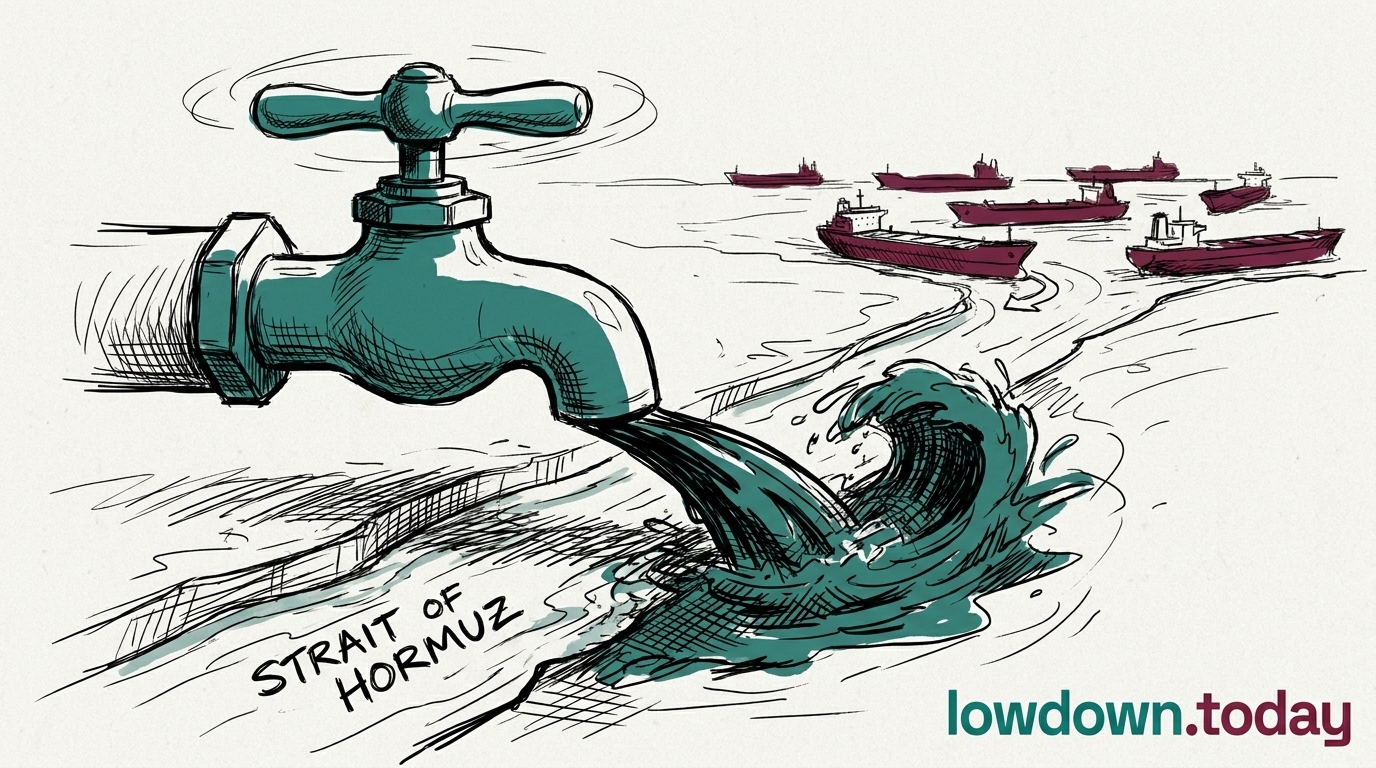
The Strait of Hormuz is the 33-kilometre maritime chokepoint between Iran and Oman through which roughly a fifth of global oil and a fifth of global LNG transits daily. The 40-nation mission is the European-led successor framework: under UNCLOS (United Nations Convention on the Law of the Sea) transit-passage doctrine, freedom of navigation through international straits cannot be conditioned on tolls or permits. The UK and France used that doctrine to reject Trump's earlier Hormuz toll proposal. HMS Dragon's earlier first-party confirmation as the Royal Navy's forward platform is now operationalised at multi-platform level; Dragon's Sea Viper air-defence suite is the first European interception capability sized for IRGC drones and cruise missiles inside the strait.

In maritime law the first credible multilateral framework usually holds, and subsequent arrangements negotiate against it rather than displace it. The post-war Hormuz rulebook is being drafted in London and Paris while the Pentagon, despite running the only active blockade, sits on the briefing list rather than the drafting list. CENTCOM still runs the parallel US blockade, with 61 cumulative vessel redirections logged by 10 May ; both blockades operate in the same strait with incompatible written orders. John Healey set the mission's deployment trigger as "when conditions are met", meaning after a Ceasefire, so the 13 May commitment buys legal and institutional architecture rather than live combat power.

P&I (Protection and Indemnity) clubs cannot underwrite Hormuz transits at non-war-zone rates until the 40-nation rules of engagement are published, leaving shipping stranded in the Persian Gulf and Brent above $107. The European text, once finalised, becomes the insurance industry's reference document for resumption.

Deep Analysis

In plain English

The Strait of Hormuz is a narrow shipping channel between Iran and Oman, roughly as wide as Greater London is long. About one-fifth of all the world's oil passes through it every day, along with a similar share of liquefied natural gas. Britain has now formally committed specific military assets to a 40-country mission to keep the strait open after any ceasefire. Those assets include Typhoon fighter jets, a Type 45 destroyer called HMS Dragon, and unmanned vessels that clear underwater mines. HMS Dragon carries an air-defence system called Sea Viper, which is designed to shoot down drones and cruise missiles, the kind of weapons Iran has used in the region before. The UK is not deploying these now; it is pledging to send them once a ceasefire is agreed, so the coalition is ready the moment fighting stops.

Deep Analysis
Root Causes

P&I (Protection and Indemnity) clubs, the syndicates that underwrite war-risk cover for merchant shipping, cannot reopen Hormuz underwriting until there is a written multilateral rules-of-engagement document they can cite in their actuarial models. The European mission is building that document. Britain's named platforms and France's co-chairmanship are the credibility collateral the insurers need to see before they will price a reopening.

CENTCOM's blockade operates on US executive authority with no published UNCLOS justification, while the European framework rests on UNCLOS transit-passage doctrine binding 168 state parties. Whichever framework publishes its rules of engagement first becomes the reference document for the insurance industry and for subsequent diplomatic disputes about who controls the strait's post-war regime.

What could happen next?
  • Precedent

    The UK-France co-chaired 40-nation framework, underpinned by UNCLOS transit-passage doctrine, sets the reference architecture for post-conflict strait governance, potentially displacing the US CENTCOM blockade regime as the default international legal framework.

    Medium term · 0.75
  • Risk

    Two simultaneous military frameworks, the European UNCLOS mission and the US CENTCOM blockade, operating in the same strait with incompatible written orders risk a command-and-control incident once the coalition is active.

    Short term · 0.65
  • Opportunity

    If the European mission publishes its rules of engagement before a ceasefire, P&I clubs may begin pricing a partial Hormuz reopening, softening the structural oil premium ahead of any political resolution.

    Medium term · 0.55
First Reported In

Update #96 · Hegseth: no AUMF needed. Trump flies east

Voice of Emirates· 13 May 2026
Read original
Causes and effects
This Event
UK names Typhoons, HMS Dragon for Hormuz
Europe is now naming platforms and dates for the post-war Hormuz architecture while the Pentagon, despite running the only active blockade, remains on the briefing list rather than the drafting list.
Different Perspectives
Lloyd's of London underwriters
Lloyd's held its Hormuz war-risk rate at $10-14 million per voyage; underwriters need a UN Security Council resolution or formal PGSA de-listing before repricing, not a Senate testimony. The PGSA remains on the SDN list under EO 13224, so any vessel transiting a nominally reopened strait still deals with a sanctioned counterparty.
Saudi Arabia and Gulf states
Brent crude at $95-97 on 2-3 June reflects Gulf producers benefiting from the conflict premium; a genuine Hormuz deal would likely cut that premium by $10-15 per barrel. Riyadh's $87 per barrel budget breakeven means the current price is comfortable, reducing the Gulf's urgency to push for a rapid settlement.
China
China
OFAC's Nobitex designation leaves China's informal bilateral currency-swap lines with Iran as the CBI's remaining rial-defence mechanism; Chinese financial institutions face secondary-sanctions risk if they interact with successor wallets. Beijing's MOFCOM Blocking Rules protect mainland refineries from direct designation but do not shield informal swap-line counterparties.
Lebanon / Hezbollah
Lebanon / Hezbollah
Lebanon's Washington delegation demanded full Israeli withdrawal and the return of 1.2 million displaced; Hezbollah deployed an FPV drone that killed an Israeli soldier at Yohmor while talks ran, demonstrating it can impose costs even at Israel's deepest penetration point. Lebanon's government cannot deliver the Hezbollah disarmament guarantee Israel demands.
Israel / Benjamin Netanyahu
Israeli forces seized Beaufort Castle above the Litani on 1-2 June and advanced to within 10 km of the Zaharani river while ceasefire delegations sat in Washington; the advance ran entirely outside the Beirut-only truce Netanyahu accepted on 1 June. Each kilometre taken raises Israel's withdrawal price before any permanent text is signed.
Iran: Foreign Ministry and domestic population
Araghchi rang six capitals in 48 hours to reopen talks the SNSC had suspended, calling the IRGC line 'speculation'; at home, 37 political prisoners were executed since 19 March while students marched in Tehran, Mashhad and Hamadan. The diplomatic thaw has not eased the state's wartime repression tempo.