Skip to content
You can now search across every topic, entity and event.What's new
Iran Conflict 2026
18APR

Project Freedom announced via Truth Social

3 min read
14:57UTC

Trump announced Project Freedom on 3 May, deploying roughly 15,000 personnel and 100-plus aircraft into the Strait of Hormuz from 4 May, with no signed presidential instrument behind the order.

ConflictDeveloping
Key takeaway

Trump launched the war's biggest US military action by Truth Social post with no signed presidential instrument.

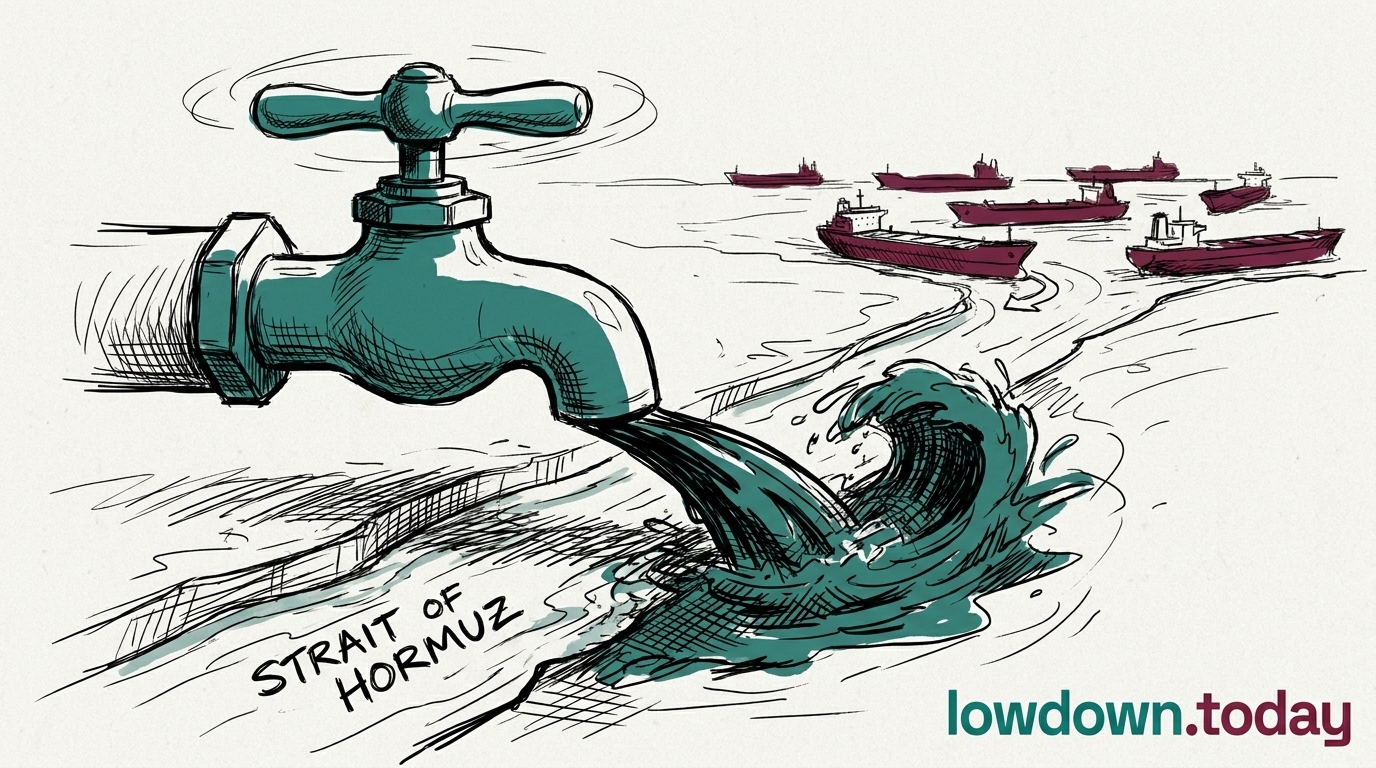
Donald Trump announced Project Freedom on 3 May 2026 via Truth Social, designating a US Central Command (CENTCOM) escort operation that would deploy approximately 15,000 US service members, guided-missile destroyers, more than 100 land- and sea-based aircraft, and multi-domain unmanned platforms into the Strait of Hormuz from 4 May. Trump framed the deployment as "a humanitarian gesture on behalf of the United States, Middle Eastern Countries but, in particular, the Country of Iran", warning that interference would be "dealt with forcefully". 1

the strait of Hormuz is the 21-mile chokepoint through which roughly a fifth of the world's seaborne crude transits. CENTCOM is the US combatant command responsible for the Middle East. The announcement was the second named US military operation of the war, alongside Operation EPIC FURY, which Pete Hegseth named in his 29 April FY27 Posture Statement. The White House and Pentagon declined further detail. 2

No signed presidential instrument backed the order. Three days earlier Trump had sent Speaker Johnson and President Pro Tempore Grassley the War Powers Resolution "hostilities terminated" letter . The same administration that declared hostilities terminated then deployed 15,000 personnel into the same theatre on a Truth Social post and a CENTCOM operations order. The White House presidential-actions index records nothing for Iran on 1, 2, 3 or 4 May; the most recent presidential instrument of any kind is a 1 May Cuba executive order.

Standing Unified Command Plan authority lets CENTCOM run a named escort without a fresh Title 10 finding. The legal aperture is whether escort of foreign-flag vessels constitutes "hostilities" under the 1973 War Powers statute, which defines the term by activity rather than intent. The first vessel queried by an IRGC small-boat will test which document the destroyer's captain reads.

Deep Analysis

In plain English

The United States has sent 15,000 military personnel, destroyers, and more than 100 aircraft to the Strait of Hormuz, which is the narrow waterway through which about 20% of the world's oil normally passes. The plan, called Project Freedom, is meant to escort stranded cargo ships safely through the strait, which has been largely blocked since the Iran war began in February. The unusual part is how it was announced: via a post on Trump's social media platform, with no formal legal document authorising it. Normally when the US deploys this many forces to a combat zone, the president signs an executive order and notifies Congress. That has not happened here. The same week, the White House also declared the war was over, creating a legal puzzle: you cannot simultaneously say the war has ended and then send 15,000 troops to an active conflict zone.

Deep Analysis
Root Causes

The unsigned character of Project Freedom connects to a structural pattern running 65 days: the Trump administration has conducted the entire Iran war without a single signed presidential instrument.

The mechanism is executive discretion expanded to its outer limit: standing CENTCOM authority under the Unified Command Plan gives Admiral Cooper enough authority to deploy forces without a new presidential finding, as long as no one tests whether that deployment constitutes 'hostilities' under the WPR.

The humanitarian framing serves a second structural purpose. By describing Project Freedom as a gesture on Iran's behalf, the White House avoids the legal classification that would require formal notification and trigger the WPR's 60-day withdrawal clock, which the administration simultaneously claims has already expired.

Escalation

Project Freedom's first week carries three distinct escalation windows. First, the 3 May small-boat attack on a cargo ship near the strait shows the IRGC testing response patterns before the escort force is fully operational. Second, the Majlis national security commission has pre-authorised treating Project Freedom as a ceasefire violation, giving Tehran a parliamentary rationale for a formal military response.

Third, the IRGC declared 60% of its small-boat fleet intact on 2 May, meaning the force most likely to contest an escort convoy is operational and self-declared ready. The absence of published US rules of engagement leaves unclear what happens if an IRGC vessel approaches an escorted ship.

What could happen next?
  • Risk

    An IRGC small-boat contact with a Project Freedom escort vessel in the first operational week could force the US to respond under unclear ROE, escalating from escort mission to combat engagement without a legal framework.

    Immediate · 0.72
  • Precedent

    A successful US escort mission without a signed presidential instrument normalises the use of Truth Social posts as military orders, removing the last procedural check on unilateral executive force deployment.

    Long term · 0.68
  • Opportunity

    If Project Freedom successfully escorts even 50-100 vessels, the P&I insurance market may begin repricing Hormuz risk downward, unlocking stranded shipping that has been unable to obtain cover since April.

    Short term · 0.55
  • Consequence

    The contradiction between the WPR termination letter and the Project Freedom deployment strengthens the Murkowski AUMF coalition's argument that Congress must legislate clarity before a contact event creates facts on the ground.

    Short term · 0.78
First Reported In

Update #88 · 15,000 troops unsigned; Pakistan carries first reply

Washington Post· 4 May 2026
Read original
Different Perspectives
Hengaw and Iranian protest detainees
Hengaw documented three secret executions of protest-linked detainees at Isfahan and Karaj on 15 and 16 July, including Mohammad Amini Dehaghani, hanged over a January arson charge with no public trial record. Tehran is carrying out capital punishment against 2026 protesters while global attention stays fixed on the war with the US.
Russia
Russia
OFAC named Moscow aviation firm Avratek OOO and its principals Mariya Selina and Vadim Druzhbin directly for the first time in this war's Iran arms track, under an Executive Order 13382 designation issued 15 July. The designation converts years of rhetorical claims about Russian arms supply to Iran into named, sanctionable individuals and a documented company.
Bahrain
Bahrain
Bahrain sounded air-raid sirens during Iran's 14 July Gulf-wide barrage and was struck again in the 16 July Artesh claim against Sheikh Isa air base, home to the US Fifth Fleet. Manama's air-defence stocks were already reported near-exhausted before this second strike claim against the same base in a week.
Kuwait
Kuwait
Kuwait's armed forces intercepted the drones Iran's Army claimed against Ali Al Salem air base on 16 July and separately reported intercepting missiles and drones in Iran's Gulf-wide barrage on 14 July. Kuwait now absorbs strikes from two rival Iranian commands while hosting Camp Arifjan, the US logistics base Iran also claims to have destroyed.
Iran (Artesh and IRGC)
Iran's regular Army claimed the 16 July drone strikes on Kuwait's Ali Al Salem and Bahrain's Sheikh Isa air bases under its own banner, Operation Saeqeh phase ten, while the IRGC separately claimed a mine strike closing Hormuz on 18 July. Two Iranian institutions are now claiming parallel operations, with neither claim confirmed by Kuwait, Bahrain or CENTCOM.
United States
United States
CENTCOM bombed the interior cities of Ahvaz and Yazd for the first time overnight into 17 July, Marines began boarding vessels including the tanker Wen Yao, and Treasury let General License X1 lapse at 12:01am the same day. Washington closed every remaining channel for de-escalation without a new executive action, a posture of attrition rather than a wind-down.