Skip to content
You can now search across every topic, entity and event.What's new
Iran Conflict 2026
18APR

Pakistan bids to host US-Iran talks

3 min read
14:57UTC

Four countries are competing to host negotiations that one side claims are productive and the other says do not exist.

ConflictDeveloping
Key takeaway

Pakistan is bidding for strategic relevance by hosting talks no single Western-aligned state can credibly convene.

Pakistan's Army chief Field Marshal Asim Munir spoke to Trump on Monday. Prime Minister Shehbaz Sharif called Iranian President Pezeshkian and wrote that Pakistan "stands ready and honoured" to facilitate talks. An Israeli official told NPR that planning was under way for talks in Islamabad "later this week" 1. Egypt, Oman, and Turkey are also confirmed as intermediaries — four countries NOW competing to host negotiations that Iran formally denies are happening .

Pakistan brings specific assets to the role. It shares a roughly 900-kilometre border with Iran through Balochistan, maintains diplomatic relations with Washington, Tehran, and Riyadh, and is a nuclear-armed state — a status that carries weight in discussions about Iran's nuclear programme. Field Marshal Munir has cultivated close ties with Saudi Arabia's leadership; that dual access to The Gulf Arab camp and to Tehran is Pakistan's core diplomatic offering. Mediators have already used Pakistani channels — CNN reported the US shared its 15-point list of expectations with Iran via Pakistan 2.

The crowded field contrasts sharply with historical precedent. The back-channel that produced the 2015 JCPOA ran exclusively through Oman over two years of quiet bilateral diplomacy. The current scramble — four countries operating simultaneously, no agreed format, no confirmed venue — more closely resembles crisis improvisation than structured negotiation.

Oman's established track record as a US-Iran conduit, Egypt's weight as the Arab world's most populous state, and Turkey's 2010 experience brokering a nuclear fuel swap alongside Brazil each represent distinct diplomatic traditions. That all four are offering at once suggests none has exclusive access to both parties. Whether talks materialise in Islamabad this week will determine whether any mediator can convert public gestures into a functioning channel — or whether the 82nd Airborne's deployment overtakes diplomacy entirely.


Deep Analysis

In plain English

When countries at war won't sit in the same room, they use a go-between. Pakistan is volunteering for that job. But it is not neutral — it has a gas pipeline deal with Iran, deep economic ties with China (which backs Iran), and depends on US financial support. Whether Islamabad can be trusted equally by all sides is the central question diplomats are privately asking.

Deep Analysis
Synthesis

The competitive multiplicity of intermediaries is analytically significant in itself. The 1978 Camp David process and 1995 Dayton Accords each succeeded in part because a single mediating power held authoritative leverage over both parties. A five-party relay — each intermediary with distinct interests — diffuses accountability and makes ambiguous commitments easier to walk back after signature.

Root Causes

Pakistan's offer is driven by three structural pressures: a domestic economic crisis requiring IMF and Gulf financing that demands geopolitical goodwill; the Pakistan Army's institutional tradition of independent foreign-policy entrepreneurship dating to the Cold War; and a desire to reclaim regional relevance lost after the US withdrawal from Afghanistan.

Escalation

Five competing intermediaries — Pakistan, Egypt, Oman, Turkey, and others — signal that neither side trusts a single channel. Parallel tracks create coordination risk: a commitment relayed through one intermediary can be contradicted by communications through another, producing accidental breakdown without either party intending it.

What could happen next?
  • Opportunity

    A Pakistan-hosted channel provides both Washington and Tehran a face-saving forum to make concessions without the optics of direct bilateral talks.

    Immediate · Suggested
  • Risk

    Pakistan's competing obligations to China, Iran, and the US could cause selective relay or filtering of communications, distorting the negotiating process invisibly.

    Short term · Suggested
  • Precedent

    A successful Pakistan-mediated agreement would revive Islamabad's Cold War broker role and reshape South Asian influence architecture for years.

    Long term · Suggested
First Reported In

Update #47 · 82nd Airborne to Gulf; Trump claims victory

NPR· 25 Mar 2026
Read original
Different Perspectives
Hengaw and Iranian protest detainees
Hengaw documented three secret executions of protest-linked detainees at Isfahan and Karaj on 15 and 16 July, including Mohammad Amini Dehaghani, hanged over a January arson charge with no public trial record. Tehran is carrying out capital punishment against 2026 protesters while global attention stays fixed on the war with the US.
Russia
Russia
OFAC named Moscow aviation firm Avratek OOO and its principals Mariya Selina and Vadim Druzhbin directly for the first time in this war's Iran arms track, under an Executive Order 13382 designation issued 15 July. The designation converts years of rhetorical claims about Russian arms supply to Iran into named, sanctionable individuals and a documented company.
Bahrain
Bahrain
Bahrain sounded air-raid sirens during Iran's 14 July Gulf-wide barrage and was struck again in the 16 July Artesh claim against Sheikh Isa air base, home to the US Fifth Fleet. Manama's air-defence stocks were already reported near-exhausted before this second strike claim against the same base in a week.
Kuwait
Kuwait
Kuwait's armed forces intercepted the drones Iran's Army claimed against Ali Al Salem air base on 16 July and separately reported intercepting missiles and drones in Iran's Gulf-wide barrage on 14 July. Kuwait now absorbs strikes from two rival Iranian commands while hosting Camp Arifjan, the US logistics base Iran also claims to have destroyed.
Iran (Artesh and IRGC)
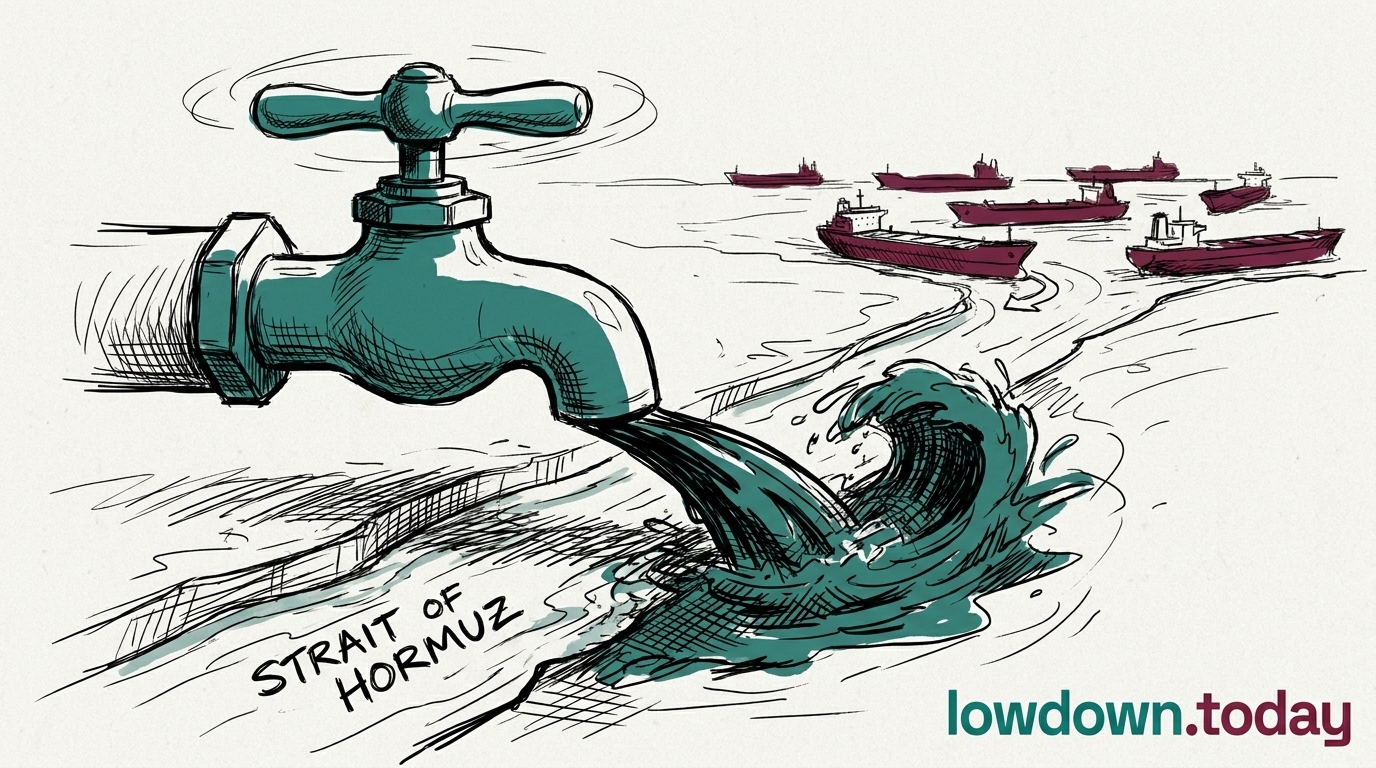
Iran's regular Army claimed the 16 July drone strikes on Kuwait's Ali Al Salem and Bahrain's Sheikh Isa air bases under its own banner, Operation Saeqeh phase ten, while the IRGC separately claimed a mine strike closing Hormuz on 18 July. Two Iranian institutions are now claiming parallel operations, with neither claim confirmed by Kuwait, Bahrain or CENTCOM.
United States
United States
CENTCOM bombed the interior cities of Ahvaz and Yazd for the first time overnight into 17 July, Marines began boarding vessels including the tanker Wen Yao, and Treasury let General License X1 lapse at 12:01am the same day. Washington closed every remaining channel for de-escalation without a new executive action, a posture of attrition rather than a wind-down.



