Skip to content
You can now search across every topic, entity and event.What's new
Iran Conflict 2026
18APR

Iran Exempts Iraq From Hormuz as Oil Output Collapses

3 min read
14:57UTC

Iraq lost three-quarters of its oil production to the blockade. Tehran granted relief and called it brotherhood.

ConflictAssessed
Key takeaway

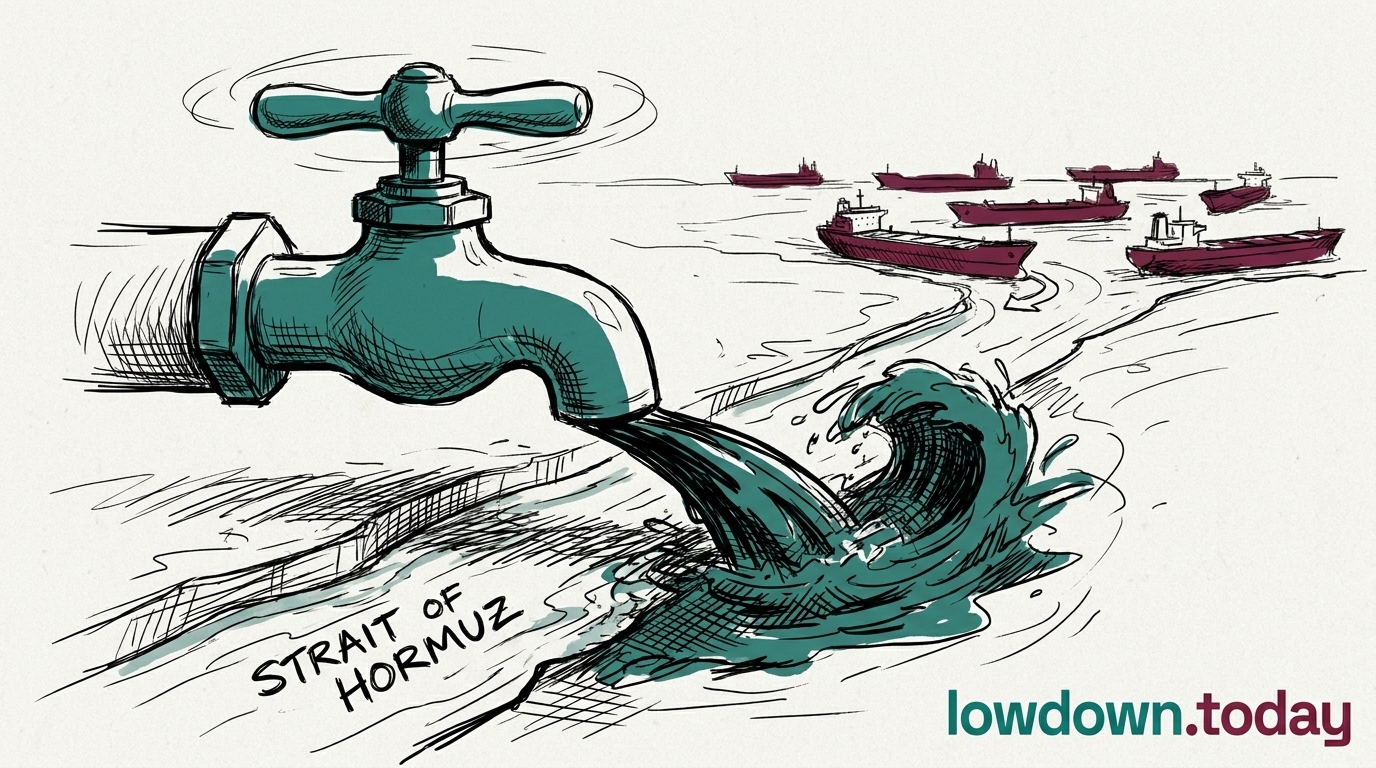
Iran is converting Hormuz from a blockade into a bilateral licensing system it controls.

Iran exempted Iraq from all Strait of Hormuz restrictions on 5 April, citing "brotherly" ties. 1 Iraq's oil production had collapsed from 4.3 to 1.2 million barrels per day under the blockade, a 72% drop costing roughly $200 million daily. Oil is the single revenue source that funds Iraq's government. The exemption is a survival measure for both sides: Iraq's economy cannot function without Hormuz access, and Iran needs at least one friendly neighbour whose state has not been destroyed by Iranian policy.

Weekly Hormuz transits rose to 53 last week, up from 36, but still down over 90% from the pre-war normal of roughly 966. The increase is driven entirely by bilateral exemptions: the Philippines, France , Japan, Oman, and now Iraq. Each deal further normalises Tehran's sovereignty claim over international waters. The coalition posture Washington maintained since the blockade began is dissolving into a series of licensing arrangements administered by Tehran.

Ali Vaez of the International Crisis Group assessed that Hormuz control is "much more potent than even a nuclear weapon." Former CIA Director Bill Burns said Tehran has "tasted its power and leverage and won't soon give it up." US intelligence simultaneously assessed Iran will not open Hormuz "any time soon." 2


Deep Analysis

In plain English

Iran is blocking most ships from passing through a narrow waterway that most of the world's oil passes through. Iraq, which is Iran's neighbour and has historically friendly relations with Tehran, was losing three-quarters of its oil income because of the blockade. Iran has now said Iraq's ships can pass through. This sounds like a concession, but it is actually something more significant: Iran is deciding country by country who gets to use an international waterway, and charging them for the privilege. That is a fundamental change in who controls global oil shipping.

First Reported In

Update #59 · Day 37: A Ground War Inside Iran That Nobody Will Name

Al Jazeera· 5 Apr 2026
Read original
Different Perspectives
Hengaw and Iranian protest detainees
Hengaw documented three secret executions of protest-linked detainees at Isfahan and Karaj on 15 and 16 July, including Mohammad Amini Dehaghani, hanged over a January arson charge with no public trial record. Tehran is carrying out capital punishment against 2026 protesters while global attention stays fixed on the war with the US.
Russia
Russia
OFAC named Moscow aviation firm Avratek OOO and its principals Mariya Selina and Vadim Druzhbin directly for the first time in this war's Iran arms track, under an Executive Order 13382 designation issued 15 July. The designation converts years of rhetorical claims about Russian arms supply to Iran into named, sanctionable individuals and a documented company.
Bahrain
Bahrain
Bahrain sounded air-raid sirens during Iran's 14 July Gulf-wide barrage and was struck again in the 16 July Artesh claim against Sheikh Isa air base, home to the US Fifth Fleet. Manama's air-defence stocks were already reported near-exhausted before this second strike claim against the same base in a week.
Kuwait
Kuwait
Kuwait's armed forces intercepted the drones Iran's Army claimed against Ali Al Salem air base on 16 July and separately reported intercepting missiles and drones in Iran's Gulf-wide barrage on 14 July. Kuwait now absorbs strikes from two rival Iranian commands while hosting Camp Arifjan, the US logistics base Iran also claims to have destroyed.
Iran (Artesh and IRGC)
Iran's regular Army claimed the 16 July drone strikes on Kuwait's Ali Al Salem and Bahrain's Sheikh Isa air bases under its own banner, Operation Saeqeh phase ten, while the IRGC separately claimed a mine strike closing Hormuz on 18 July. Two Iranian institutions are now claiming parallel operations, with neither claim confirmed by Kuwait, Bahrain or CENTCOM.
United States
United States
CENTCOM bombed the interior cities of Ahvaz and Yazd for the first time overnight into 17 July, Marines began boarding vessels including the tanker Wen Yao, and Treasury let General License X1 lapse at 12:01am the same day. Washington closed every remaining channel for de-escalation without a new executive action, a posture of attrition rather than a wind-down.



