Skip to content
Iran Conflict 2026
18APR

20 warships claimed sunk; one confirmed

3 min read
14:57UTC

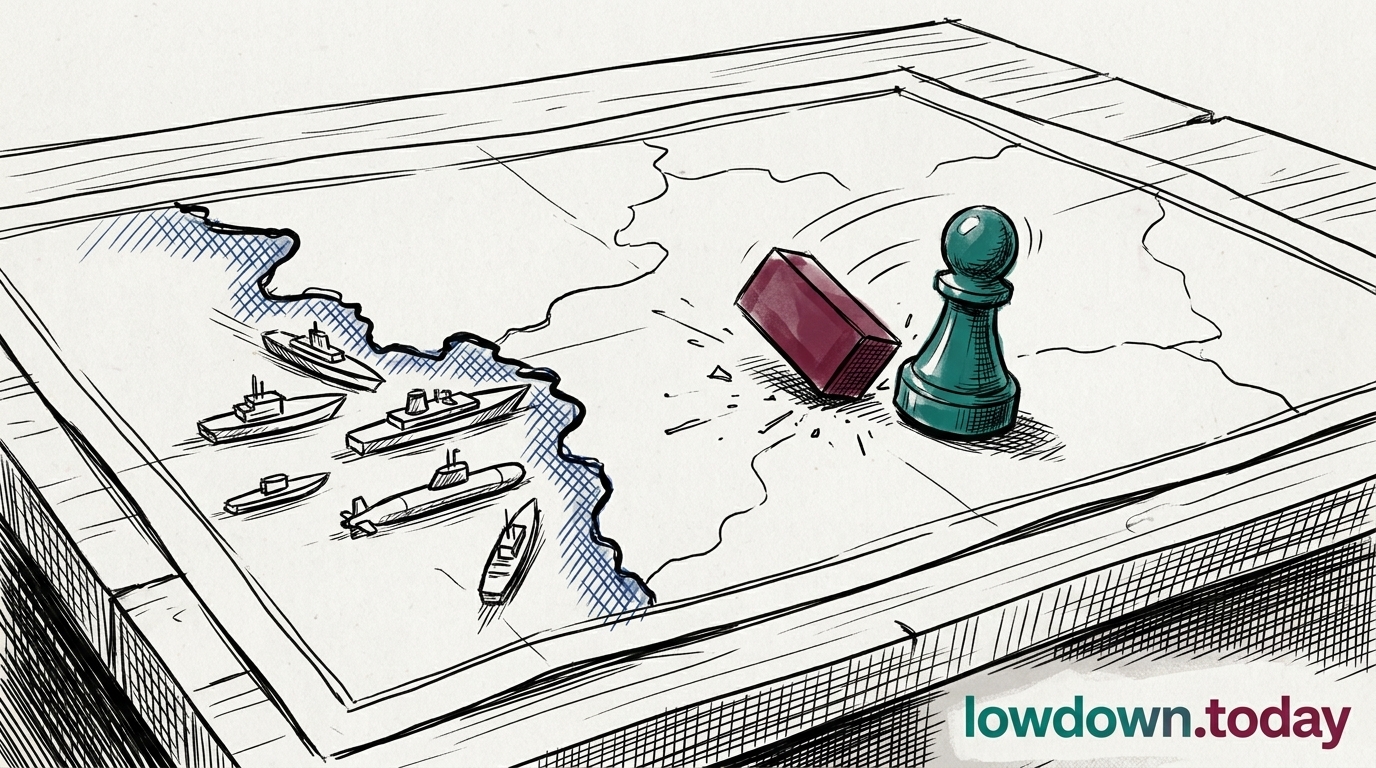
The Pentagon claims Iran has lost more warships in five days than Argentina lost in the entire Falklands War. Independent confirmation exists for exactly one vessel.

ConflictDeveloping
Key takeaway

Unverified claims of 20 sinkings reshape Iranian and international perceptions of Iranian naval power regardless of accuracy, functioning as information dominance even before physical confirmation.

Defence Secretary Hegseth claimed US and Israeli forces have struck more than 2,000 targets and sunk 20 Iranian warships since operations began. The target count has doubled from the 1,000 confirmed roughly 48 hours earlier . Of the 20 claimed warship losses, only one — the frigate IRIS Dena — has been independently confirmed through CENTCOM's statement and the Sri Lankan rescue operation that recovered 32 critically wounded sailors .

The term "warship" is doing work in Hegseth's claim. Iran's regular navy operates five to six frigates and three corvettes — fewer than twenty major surface combatants in total. If the count includes IRGC Navy patrol boats and fast-attack craft, the numbers become more plausible but the term less precise; the IRGC operates dozens of smaller armed vessels. The distinction matters: destroying Iran's blue-water capable ships eliminates its ability to project force beyond its coastline; destroying fast-attack craft degrades but does not eliminate its capacity to threaten Gulf shipping at close range.

If accurate, twenty warships sunk in five days would rank among the heaviest naval losses any state has absorbed in a generation. Argentina lost approximately 11 vessels during the 1982 Falklands War, including the cruiser General Belgrano — which, in a parallel to the Dena, was sunk by a submarine torpedo in circumstances that remain politically contested four decades later. Operation Praying Mantis in 1988 — the last direct US-Iran naval engagement — cost Iran two frigates, a gunboat, and several smaller craft in a single day. Twenty warships in five days would exceed both benchmarks.

The verification gap is structural. Iran's internet blackout, now in its sixth day , has shut down the independent channels — satellite imagery analysts, shipping trackers, on-the-ground reporting — that would normally test such claims. The US Government Accountability Office found after the 1991 Gulf War that Pentagon bomb damage assessments had substantially overstated precision strike effectiveness. Post-war surveys in Kosovo revised NATO's initial claims of Serbian equipment destroyed sharply downward. Wartime damage assessments structurally tend toward overcounting — through double-counting, optimistic battle damage interpretation, and the fog of sustained operations. Nineteen of Hegseth's twenty warships remain unverified.


Deep Analysis

In plain English

The US military says it has sunk 20 Iranian warships, but only one has been publicly confirmed. Iran's navy was never large — its strength lay in swarms of small fast-attack boats, submarines, and shore-based missiles rather than big ships. Losing 20 vessels, if true, would effectively destroy its ability to threaten international shipping in the Gulf. But in active warfare, governments regularly overclaim early and correct later. The number serves a purpose whether or not it is accurate: it tells Iran, the Gulf states, and global shipping markets that Iranian naval power may no longer exist.

Deep Analysis
Synthesis

The 2,000 targets figure, receiving less analytical scrutiny than the warships claim, is the more operationally significant number. At approximately 400 targets per day over five days, this represents an air campaign tempo comparable to the opening phase of Desert Storm — but against a country roughly twice Iraq's area with more dispersed military infrastructure. If accurate, the target set has long since moved beyond purely military objectives into dual-use and civil infrastructure, with implications for IHL assessments.

Root Causes

The mismatch between claimed (20) and confirmed (1) sinkings reflects two structural factors that are not evidence of deliberate deception: the physical difficulty of confirming subsurface or rapid-sinking kills in real time, and standing US policy of not confirming vessel damage during active operations. Both factors can produce a genuine gap between operational knowledge and public confirmation without the underlying claims being false.

What could happen next?
  • Meaning

    Unverified claims of this magnitude reshape Iranian deterrence calculations regardless of accuracy — Tehran must plan for the possibility its navy is largely destroyed, constraining its remaining strategic options.

    Immediate · Assessed
  • Risk

    If the figure is substantially inflated and later revised downward, it will damage US information credibility at precisely the moment diplomatic messaging needs to be believed.

    Short term · Assessed
  • Consequence

    Even partial confirmation would represent the largest destruction of a state's naval force since World War II, permanently altering Iranian power projection capacity in the Gulf.

    Long term · Suggested
First Reported In

Update #19 · First US torpedo kill since 1945

CBS News· 4 Mar 2026
Read original
Causes and effects
This Event
20 warships claimed sunk; one confirmed
Under conditions that make the US military effectively the sole source on its own campaign — Iran's blackout, no independent media access, active combat — the 20-warship claim cannot be verified or falsified, creating an information environment where the scale of military success is asserted rather than demonstrated.
Different Perspectives
Global South governments (Indonesia, Brazil, South Africa)
Neutrality was possible when the targets were military. 148 dead schoolgirls made it impossible — no government can explain that away to its own citizens.
Trump administration
Oscillating between claiming diplomatic progress and threatening escalation, while deploying additional ground forces to the Gulf.
Israeli security establishment
Fears a rapid, vague US-Iran agreement that freezes military operations before the IDF achieves what it considers full strategic objectives. A senior military official assessed the campaign is 'halfway there' and needs several more weeks.
Iraqi government
Iraqi government
Iraq's force majeure is the position of a non-belligerent whose entire petroleum economy has been paralysed by a war between others — storage full, exports blocked, production being cut with no timeline for resumption.
Russia — Ambassador Vassily Nebenzia
Moscow calibrated its position between Gulf states and Iran: abstaining on Resolution 2817 rather than vetoing it, signalling it would not block protection for Gulf states, while refusing to endorse a text that ignores the US-Israeli campaign it regards as the conflict's proximate cause. Russia proposed its own ceasefire text — which failed 4-2-9 — allowing Moscow to claim the peacemaker role while providing Iran with satellite targeting intelligence, a duality consistent with its approach in Syria.
France — President Macron
France absorbed its first combat death in a conflict it has publicly declined to join. The killing of Chief Warrant Officer Frion in Erbil forces Macron to choose between escalating involvement and accepting casualties from the margins.



