Skip to content
Iran Conflict 2026
18APR

1,000 targets struck in 72 hours

3 min read
14:57UTC

The US air campaign against Iran has reached a scale unseen since the 2003 Iraq invasion, systematically dismantling naval, missile, and command infrastructure across a country of 80 million.

ConflictDeveloping

US forces have struck more than 1,000 targets across Iran in 72 hours — naval vessels, submarine pens, missile batteries, communications infrastructure, and IRGC command centres. President Trump claimed nine Iranian warships have been sunk. Combined with Israel's 2,000-plus munitions dropped across 24 of 31 provinces (ID:88), the joint campaign is the most intensive aerial bombardment of a single country since the opening of Operation Iraqi Freedom in March 2003.

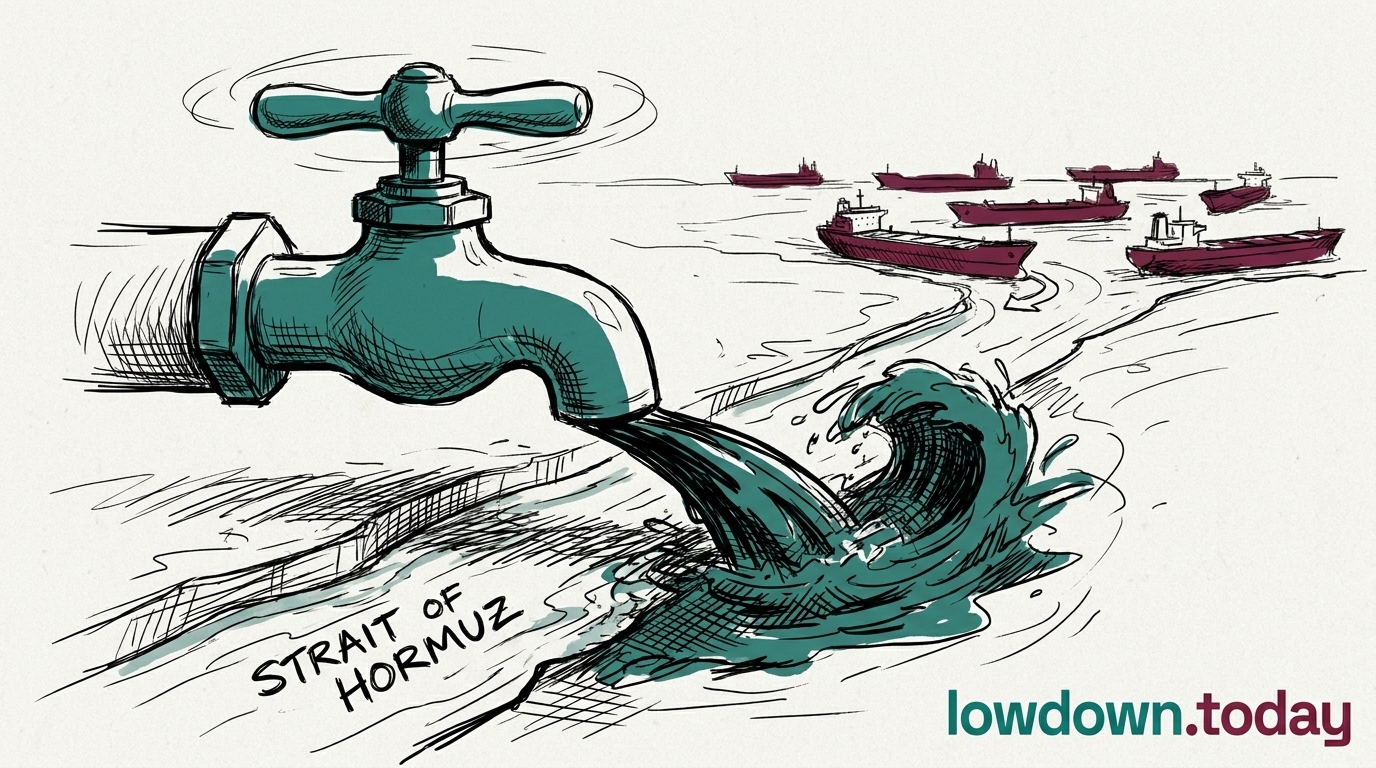
The target categories reveal intent. Submarine pens and warships aim to eliminate Iran's ability to threaten Gulf shipping — the IRGC had broadcast a closure of the strait of Hormuz on VHF Channel 16 . Missile batteries and communications nodes degrade the capacity for further retaliation after Iran fired at 27 US military installations across seven countries (ID:472). IRGC command centres sever the organisational link between Tehran and its network of regional proxies. This is a campaign to dismantle Iran's conventional force projection, not a punitive raid.

Trump stated the campaign would last "four weeks or less" and told CNBC it was "ahead of schedule" . For destroying fixed infrastructure, the timeline is plausible — the US achieved comparable destruction against Iraq in 2003, Serbia in 1999, and Libya in 2011. Each of those campaigns succeeded in eliminating its target's conventional military hardware.

But each also failed to produce a stable political outcome through air power alone. NATO's 78-day bombing of Serbia required negotiation with Slobodan Milošević to end the war. Iraq's military collapse was followed by a decade-long insurgency. Iran, with its senior leadership largely dead , ID:470), presents the same structural problem: the United States can clearly destroy 1,000 targets. What it cannot manufacture from the air is a political authority on the Iranian side capable of agreeing to stop.


Deep Analysis

In plain English

For scale: the 1991 Gulf War air campaign struck approximately 40,000 targets over 43 days. A thousand targets in 72 hours is a deliberately extreme pace, designed to destroy as much of Iran's military capability as possible before international pressure for a halt builds and before Iran can disperse or conceal remaining assets. The communications infrastructure targeting across 24 provinces is designed to sever the chain of command — and Iran's foreign minister's statement that military units are acting independently of central government suggests this has been partially achieved, with consequences that are difficult to control.

Deep Analysis
Synthesis

The 1,000+ figure signals a campaign of strategic depth from which orderly de-escalation is structurally difficult: the adversary has been damaged severely enough to demand continued engagement, and the scale of investment creates political momentum of its own. Breadth across 24 provinces means this does not end cleanly with the destruction of one capability — it requires ending a comprehensive war, not pausing a limited operation. That is a far more demanding diplomatic task, made harder by the breakdown of centralised command authority on the Iranian side: without an interlocutor who has both authority and credibility to enforce a halt, even a willing US-Israeli negotiating partner faces a structural barrier to any conclusion within four weeks.

Root Causes

The target breadth reflects three converging imperatives: eliminating Iran's nuclear programme before weaponisation; destroying Iran's capacity to close Hormuz; and 'left of launch' targeting — destroying missiles, launchers, and command nodes before they can be fired rather than intercepting them in flight. Communications infrastructure is the most geographically dispersed element of the target set; its inclusion across 24 provinces signals an intent to fragment command authority, which Iran's foreign minister's statement suggests has been partially achieved.

Escalation

Iran's military doctrine was built for exactly this scenario: survive the opening strike phase through dispersal and redundancy, then impose costs asymmetrically over an extended period. The first 72 hours — four fronts opened, tankers struck, Hezbollah fully engaged — suggests retaliatory capacity has not been suppressed. The communications infrastructure targeting may be producing the most dangerous outcome: a military with weapons and motivation but without coordinated political direction, unable to negotiate a ceasefire even if elements of the Iranian government wished to.

What could happen next?
1 meaning1 consequence2 risk1 precedent
  • Meaning

    The 1,000+ target campaign signals a US commitment to comprehensive military degradation of Iran rather than a limited punitive or counter-proliferation strike, making de-escalation structurally harder as neither side can easily return to the pre-conflict status quo.

    Immediate · Assessed
  • Consequence

    Iran's reported command breakdown — military units operating independently of central government direction — may be a direct and intended consequence of the communications and command infrastructure targeting component of the campaign, but produces an adversary incapable of negotiating a verifiable ceasefire.

    Immediate · Assessed
  • Risk

    Historical precedent across Yugoslavia (1999), Iraq (1991, 2003), and Afghanistan consistently suggests a significant proportion of Iran's military capacity will survive this air campaign, particularly dispersed missile batteries and asymmetric naval assets, sustaining the conflict beyond the four-week window.

    Short term · Assessed
  • Risk

    Targeting communications infrastructure across 24 provinces, if it successfully fragments command authority, may produce uncoordinated and politically unauthorised retaliatory strikes that are harder to manage diplomatically than a centralised Iranian response would be.

    Immediate · Assessed
  • Precedent

    A 1,000+ target campaign against a major regional power conducted without prior congressional authorisation sets a new threshold for the scale of unilateral executive military action, with durable implications for the separation of powers and future war powers jurisprudence.

    Long term · Assessed
First Reported In

Update #7 · Hezbollah enters; tankers burn in Hormuz

Al Jazeera· 2 Mar 2026
Read original
Causes and effects
This Event
1,000 targets struck in 72 hours
The target count and breadth — naval, missile, communications, command — indicate a campaign to permanently degrade Iran's conventional military capacity, not a limited punitive action. Combined with Israel's parallel operation, this is the most intensive aerial bombardment of a single state in over two decades.
Led to
20 warships claimed sunk; one confirmed
Target count doubled from 1,000+ to 2,000+ in approximately 48 hours
Occurred 4 Mar 2026
Read story →
B-2s sent; Iran buried arsenal survives
Despite striking more than 1,000 targets in initial campaign, Iran's hardened underground missile infrastructure survived, requiring deployment of B-2 stealth bombers with maximum penetration munitions
Occurred 2 Mar 2026
Read story →
787 dead across Iran in four days
US strikes on more than 1,000 targets across 24 provinces produced the civilian casualties counted by the Red Crescent
Occurred 3 Mar 2026
Read story →
Larijani: Iran will not talk to the US
US strikes on more than 1,000 targets in Iran — characterised by Tehran as authorising the killing of its Supreme Leader — led to Larijani's categorical refusal to negotiate.
Occurred 2 Mar 2026
Read story →
France calls UNSC session; Europe breaks
France called for emergency UNSC session in response to ongoing strike campaign
Occurred 28 Feb 2026
Read story →
Spain rebukes Washington over Iran
Spain's condemnation responds to the US-Israeli campaign
Occurred 1 Mar 2026
Read story →
Britain will not join offensive on Iran
Starmer's refusal to join the offensive was a response to the escalating US-Israeli campaign against Iran
Occurred 2 Mar 2026
Read story →
UK opens Diego Garcia for Iran strikes
UK authorised specific bases for US use in response to the ongoing strike campaign, framing involvement as defensive
Occurred 2 Mar 2026
Read story →
Europe condemns war it will not fight
European diplomatic reactions were prompted by the escalating US-Israeli military campaign
Occurred 2 Mar 2026
Read story →
Different Perspectives
Global South governments (Indonesia, Brazil, South Africa)
Neutrality was possible when the targets were military. 148 dead schoolgirls made it impossible — no government can explain that away to its own citizens.
Trump administration
Oscillating between claiming diplomatic progress and threatening escalation, while deploying additional ground forces to the Gulf.
Israeli security establishment
Fears a rapid, vague US-Iran agreement that freezes military operations before the IDF achieves what it considers full strategic objectives. A senior military official assessed the campaign is 'halfway there' and needs several more weeks.
Iraqi government
Iraqi government
Iraq's force majeure is the position of a non-belligerent whose entire petroleum economy has been paralysed by a war between others — storage full, exports blocked, production being cut with no timeline for resumption.
Russia — Ambassador Vassily Nebenzia
Moscow calibrated its position between Gulf states and Iran: abstaining on Resolution 2817 rather than vetoing it, signalling it would not block protection for Gulf states, while refusing to endorse a text that ignores the US-Israeli campaign it regards as the conflict's proximate cause. Russia proposed its own ceasefire text — which failed 4-2-9 — allowing Moscow to claim the peacemaker role while providing Iran with satellite targeting intelligence, a duality consistent with its approach in Syria.
France — President Macron
France absorbed its first combat death in a conflict it has publicly declined to join. The killing of Chief Warrant Officer Frion in Erbil forces Macron to choose between escalating involvement and accepting casualties from the margins.



